From “garbage roads” to flowering streets
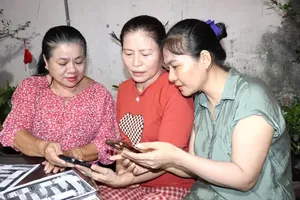
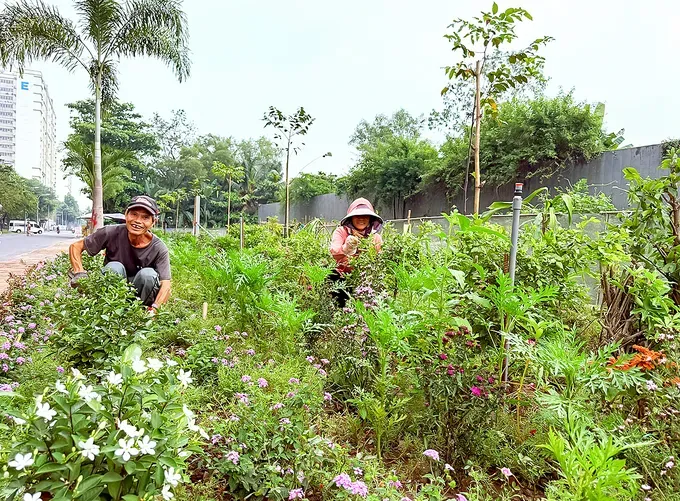
On a weekend morning, Tran Hong Hanh, a resident of Block C-D apartments in the 17.3-hectare area (An Khanh Ward), pushed a stroller taking her nearly 5-month-old son for some sun. Looking across Duong Lam Street from the apartment courtyard, she saw a refreshing green of trees, vegetables, and various flowers showing off their colors in the early sunlight. Beside the flower beds, several ladies and gentlemen were weeding, watering, and chatting animatedly.
Seeing Hanh looking over with surprise, 62-year-old Nguyen Thi Xuan Huong from the same apartment complex, who was exercising nearby, spoke up: “Do you see how much that land over there has changed? Everyone contributed a little effort, and that’s how it got this way.”
Just five months ago, the land along Duong Lam Street was overflowing with trash; today, it is a lush garden of vegetables and flowers. Nguyen Ngoc Chinh, who tends a plot with his wife, noted that the initiative allows households to grow crops while strengthening neighborhood bonds. “It makes life feel more meaningful,” he said.
Nearby, Nguyen Quang Tien is busy nursing colorful flowers to fill his entire plot. He aims for a profuse bloom by the Tet holiday, creating a scenic spot for residents to visit and photograph.
Nguyen Van Dung, Head of Quarter 33’s Front Working Committee, celebrates the transformation of Duong Lam Street. Once a polluted, trash-filled lot, it is now a model green space featuring vegetable and flower gardens. Through the “Trash-Free Street” project, households were assigned plots to cultivate, with some residents even donating tens of millions of VND for beautification. “Everyone is happy to join hands in creating a project of great significance, bringing joy to the community,” Dung shared.
Flowers blooming across routes
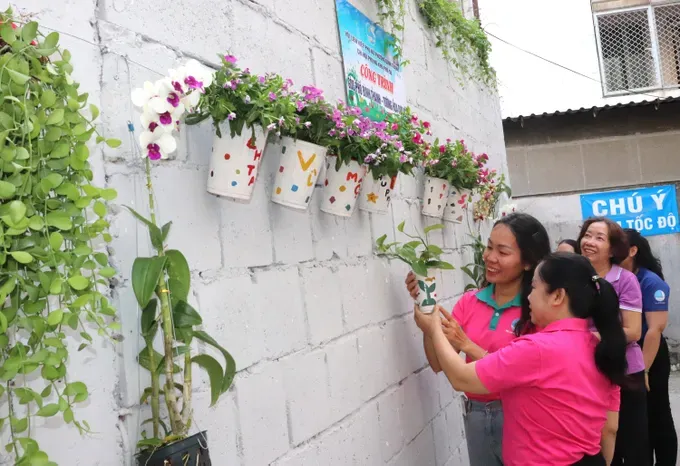
For over 4 months, people passing Alley No.74 of National Highway 13 (Binh Thanh Ward) have been delighted by the wall along the alley, once covered in moss and vines, now bright and beautiful with colorful flowers. The alley, previously degraded with piles of dumped trash, is now spacious, clean, and beautiful.
“Now the lights are on, flowers are planted along the wall, and there are surveillance cameras, so people feel safe passing through here,” shared Huynh Thi Le Tieng, a resident of Alley 74, while watering the flowers. Witnessing the change in the alley after just a few months, Tieng said that since the project started, many residents have also joined hands to care for and maintain flower pots and plant more trees.
Head Bui My Le of the Women’s Union Branch of Neighborhood No.50 in Binh Thanh Ward shared that responding to the “City of Flowers” movement launched by the Vietnam Fatherland Front Committee – HCMC Branch, the neighborhood implemented the “Binh Thanh Corner – Brilliant Flower Wall” project. With the joint effort of many forces, it created a vibrant, colorful, and cool green space.
Brilliant flowers are also present in many other places across HCMC. On a section of over 300m of Cao Van Ngoc Street in Dat Do Commune, a vacant lot has turned into a lush green road with flowers and trees. Chairwoman Tran Thi Kim of the Vietnam Fatherland Front Committee of Dat Do Commune added that the commune has 33 flower routes maintained, cared for, and embellished by hamlets.
The flower route model is considered one of the practical and creative activities contributing to building a green – clean – beautiful environment, improving the quality of life for residents, and creating lively landscapes close to nature.
The Commune Women’s Union also maintains the “Colorful Route” model; the Fatherland Front and socio-political organizations of Dat Do Commune also mobilize households to utilize public spaces to implement projects like Flower Routes, Flower Alleys – Green Alleys, Flower Fences, Community Flower Gardens – Public Miniatures, helping create neighborhoods brilliant with floral colors.
The “City of Flowers” movement, launched by the Vietnam Fatherland Front Committee – HCMC Branch, aims to build green, clean, and beautiful urban and rural areas, improving quality of life through activities planting flowers and trees on streets, alleys, balconies, courtyards, and offices.
The movement for the 2025-2030 period is concretized by many models such as “Flower Alleys,” “Blooming Balconies,” “Parks of a Thousand Flowers,” and “Kitchens of Loving Flowers,” mobilizing people to participate in planting trees, beautifying landscapes, and creating civilized, modern, and compassionate living spaces.