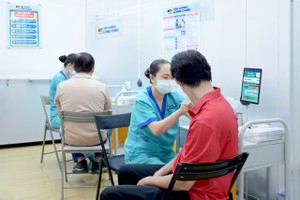
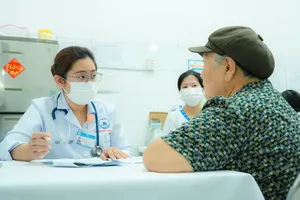
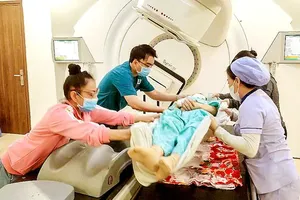
Vietnam is undergoing a period of rapid population aging, creating growing demands for the protection, care, and empowerment of older adults. Alongside policies promoting the development of the silver economy, a range of healthcare, retirement care, and social engagement models for seniors in Ho Chi Minh City and Hanoi have begun to deliver positive results.
Joy in old age
Nguyen Thi Vien, 84, a resident of Khanh Hoi Ward, used to spend most of her time at home while her children were busy with work. Over the past year, her life has changed after joining the Daytime Healthcare Unit for Older Adults at the Ho Chi Minh City Hospital of Rehabilitation and Occupational Diseases Treatment.
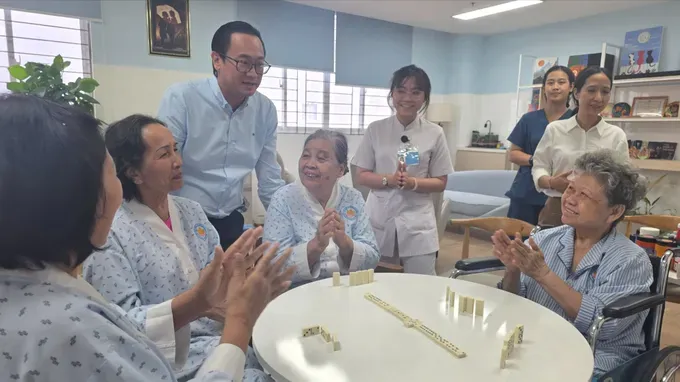
Each morning, her children arrange a ride-hailing vehicle to take her to the hospital, where she exercises, relaxes, and socializes with people of her own age.
"Being alone at home is very lonely because my children are all at work. Here, I have friends and companions, and the atmosphere is always cheerful," Vien said.
The model serves not only healthy older adults but also those requiring rehabilitation. After treatment for polyneuropathy, Thai Thu Tam, 62, a resident of Tan Thuan Ward, experienced slow recovery and limited mobility. Following doctors' recommendations, Tran Dinh Soa, her husband, brought her to the hospital for continued rehabilitation and daytime healthcare.
After nearly two months accompanying his wife, Soa said he had seen significant improvements in her condition. Every morning, the couple exercises together, moving their limbs and joints before Tam continues walking, standing, and sitting exercises under professional supervision. According to Soa, not only has her physical health improved gradually, but her mood has also become more positive, relaxed, and enthusiastic.
HCMC proposes daytime care centers to support aging population
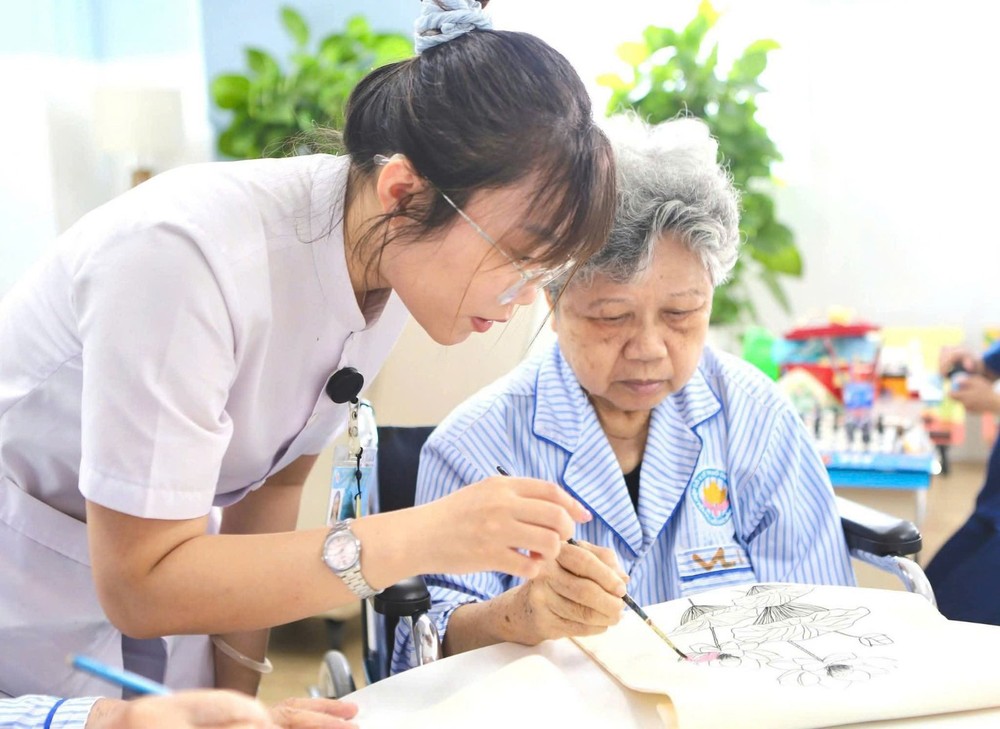
According to the Ho Chi Minh City Department of Health, the city has about 1.57 million residents aged 60 and older, accounting for 11.4 percent of the population, the largest number of older adults nationwide. The figure is projected to exceed 3 million by 2038 and rise to more than 4.6 million by 2048.
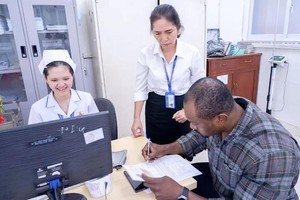
Dr. Huynh Minh Chin, Deputy Director of the Ho Chi Minh City Department of Health, said most older adults are currently cared for at home. However, with family members working throughout the day, providing continuous care is often difficult, particularly for those with chronic illnesses, reduced mobility, or long-term rehabilitation needs.
In response to growing demand, the Ho Chi Minh City Youth Volunteer Force and the Ho Chi Minh City Hospital for Rehabilitation and Occupational Diseases Treatment organized a workshop in late September 2026 aimed at finalizing a proposal to establish community-based daytime healthcare centers for older adults.
Under the proposal, the centers are envisioned as a bridge connecting families, primary healthcare providers, and hospitals. Older adults would receive health monitoring, rehabilitation services, and daytime activities before returning home to their families. The Ho Chi Minh City Youth Volunteer Force would oversee implementation, while affiliated facilities would manage operations. The hospital would provide professional support, staff training, and quality supervision.
Dr. Phan Minh Hoang, Director of the Ho Chi Minh City Hospital for Rehabilitation and Occupational Diseases Treatment, said daytime care is a necessary approach that helps older adults maintain mobility and independent living, improve quality of life, and reduce pressure on families.
At the centers, older adults can participate in group activities and physical exercise suited to their health conditions. They also receive health and mobility assessments to develop appropriate support plans. The model is designed to connect with local health stations and hospitals for health monitoring, early detection of abnormalities, treatment referrals, and rehabilitation support when needed.
According to Dr. Phan Minh Hoang, expanding the model will require clearly defining target groups, the ability to accommodate people with underlying health conditions, levels of dependency, and safety assurance procedures. Care staff must also be trained to recognize warning signs, provide first aid, and coordinate with healthcare facilities.
In addition, an appropriate financing mechanism is needed to clearly distinguish medical examination, treatment, and rehabilitation services covered by health insurance from costs related to daily activities, meals, and care. Such measures are essential to ensure the long-term sustainability of the model and enable lower-income older adults to access the services.
Day-care model for the elderly sees high demand in Hanoi
The day-care model for the elderly in Hanoi is proving effective, helping seniors improve their daily routines, increase social interaction, and receive health care. However, high demand, which is coupled with the limited capacity of existing facilities, has left many people waiting for their turn to join.
After nearly two months in the day-care program, 87-year-old Nguyen Thi Duyet (a resident of Tay Ho Ward) has seen significant changes in her daily life. Previously, due to spinal degeneration, she rarely had the chance to go out or socialize, spending most of her time at home watching television. Now, she has the opportunity to meet and chat with peers, which has greatly improved her state of mind. "Since coming here, I’ve made new friends and taken part in various activities; I feel much more relaxed and cheerful," Ms. Duyet shared.
Elderly woman Tran Thi Chien in Buoi Street, Hanoi, has also noticed positive changes after nearly two months in the program. Thanks to a structured daily routine and regular, balanced meals, her appetite has improved, and she has gained about 1 kilogram. According to Ms. Chien, the seniors engage in daily exercise and health-appropriate activities, enjoy a midday rest, and are provided with nutritious snacks. This well-rounded approach to diet, rest, and attentive care has significantly enhanced the quality of life for the participants.
At the Tay Ho Ward day-care center for the elderly, seniors receive health monitoring, nutritional support, rehabilitation services, and opportunities for mental enrichment. Menus are tailored to individual health conditions, particularly for those with chronic illnesses such as diabetes, gout, or hypertension, and are rotated on a two-week cycle. In addition, elderly participants have electronic health records created for them and receive blood pressure and blood glucose screenings. They also engage in physical therapy, foot soaks, yoga, and balance training exercises. In the afternoon, they receive massages and acupressure treatments based on traditional medicine practices.
Dr. Luu Van Bau, Director of the Tay Ho Ward Health Station, stated that his locality is one of six communes and wards selected by Hanoi to pilot a daytime care model for the elderly. After about two months of operation, the initiative has garnered initial approval and support from both local authorities and residents.
High demand has also been observed at other pilot sites across Hanoi, including Quoc Oai Commune and the wards of Dong Da, Long Bien, Viet Hung, and Bo De. Given that each facility has a capacity of only about 20 beds, admissions must be carefully managed to ensure as many people as possible have the opportunity to participate.
According to the Hanoi Department of Health, the city is home to over 1.4 million elderly people, accounting for 16.3 percent of the population, while existing nursing and elderly care facilities meet only about 3 percent–5 percent of the total demand. Hanoi has set a goal that, by 2030, 70 percent of all communes and wards will have at least one facility or designated site for daytime elderly care. Vice Chairwoman of the Hanoi People’s Committee Vu Thu Ha stated that the city aims to bring elderly care services closer to where seniors reside. The plan involves piloting a day-care model for the elderly in various communes and wards, followed by an evaluation to draw lessons before potentially expanding the initiative further.


)