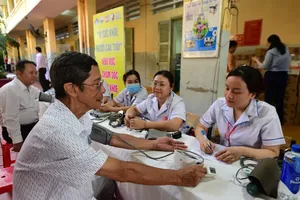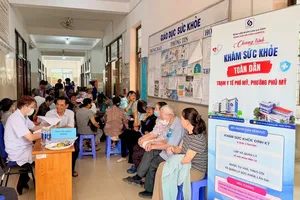
The project applies to elderly residents, families with elderly members, primary caregivers, and organizations and individuals involved in the city's elderly healthcare system.
Under the initiative, the city aims to build a synchronized, interconnected, and tiered healthcare system.
The framework places senior citizens at the center, resting on home- and community-based care, with geriatrics as the professional pillar and health data management serving as the coordination mechanism. The goal is to ensure that elderly individuals live healthy, safe, and independent lives while mobilizing collective responsibility across the political system and society to adapt to population aging.
Ho Chi Minh City will structure elderly care into five unified tiers across the city to ensure continuity, integration, and alignment with care needs, including self-care and health promotion, community-based support, home-based support, residential facility care, and hospital care.
Transitions between tiers will be determined through standard health assessments measuring dependency levels and care requirements under a citywide protocol.
The plan also emphasizes reviewing and compiling lists of senior citizens across wards, communes, and special zones, with regular updates on demographic shifts, living arrangements, risk groups, elderly individuals living alone, and those requiring assistance. Comprehensive health management will be conducted through periodic checkups and the creation of electronic health records.
Additionally, the city plans to foster an age-friendly environment by developing community spaces, public infrastructure, transportation, and housing accessible and safe for seniors. Training programs will also be organized to equip older adults, family members, and caregivers with self-care knowledge and skills.
Other key priorities include workforce development for eldercare, expanding diverse types of care facilities, strengthening healthcare system capacity, advancing geriatrics, and promoting digital transformation and data applications in healthcare delivery. The initiative further highlights public communications, community mobilization, social resource leverage, research, and international cooperation.
The Ho Chi Minh City People's Committee has assigned the Department of Health to lead coordination with relevant departments, agencies, and localities to advise competent authorities on policies required to execute the scheme. The department will also oversee and coordinate the citywide implementation of the five-tier care model.
According to figures from the Ho Chi Minh City Department of Health, the city officially entered an aging population phase in 2017 when the proportion of residents aged 60 and above reached 10.28 percent. By 2025, this figure had risen to 11.40 percent, representing over 1.57 million senior citizens, the highest in the country. The city is projected to become an "aged population" society by 2038 with more than 3 million seniors and a "super-aged population" society by 2048, exceeding 4.6 million seniors.









)