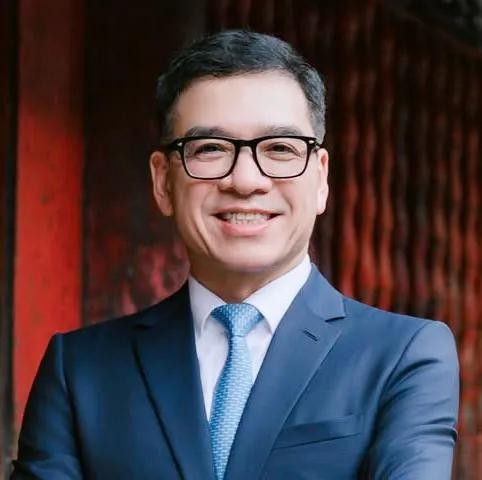
Director General of the Medical Examination and Treatment Administration Department Ha Anh Duc, MD PhD, articulated that Vietnam is currently striving to transform medical tourism into a high value-added service sector, equipped with specific targets concerning international visitors, revenue streams, hospital quality, alongside service products.
The Director General mentioned Vietnam’s advantages in developing this sector, including medical expertise, master of an array of highly specialized techniques spanning cardiology, oncology, surgery, obstetrics, assisted reproduction, organ transplantation, dentistry, and joint replacement. In fact, the proficiency across numerous disciplines unequivocally rivals that of developed nations globally.
Furthermore, the pricing of healthcare services here remains remarkably competitive compared to numerous regional counterparts, while the timeframe for accessing these services has been drastically curtailed. Facilities and equipment are becoming increasingly state-of-the-art; several hospitals have successfully deployed highly specialized techniques and robotic surgeries.
Moreover, operating within a highly stable environment underpinned by robust security, Vietnam can architect highly distinctive products by seamlessly integrating its core strengths in traditional medicine, rehabilitation, and wellness care with resort-style tourism.
For these latent advantages to metamorphose into substantive competitive prowess, besides architecting a comprehensive chain of services and products, it’s imperative to prioritize professional quality, absolute safety, competitive costs, swift access times, alongside the overarching patient experience.
International patients don’t merely select a hospital; they’re deeply invested in the entire journey. Therefore, crucial links desperately need connecting. Medical tourism simply can’t be an isolated narrative confined strictly to hospitals. International patients unequivocally demand seamless service spanning from initial information gathering to immigration, transportation, treatment, accommodation, and subsequent follow-ups.
Consequently, this sector essentially demands intricate coordination across multiple industries. It isn’t just healthcare; tourism, aviation, immigration, insurance, banking, alongside technology must seamlessly align. Pressing bottlenecks surrounding visas, international payments, plus recovery care must be relentlessly ameliorated.
On the healthcare front, it’s imperative to transparently publicize facilities fully qualified to serve international patients. Service packages should be rigorously standardized, medical staff’s foreign language proficiency dramatically elevated, and digital transformation initiatives accelerated.
Recently, the Ministry of Health has promulgated a draft scheme developing medical tourism for the upcoming years. This aims to forge a highly professional, remarkably safe service chain boasting formidable regional competitiveness. When these individual links are seamlessly interconnected, Vietnam won’t merely cultivate superior patient experiences but successfully architect fiercely competitive medical tourism products nationwide.
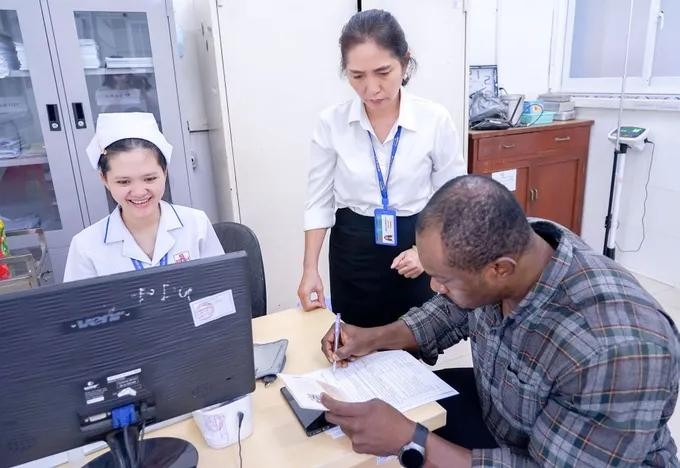
For medical tourism policies to swiftly materialize, Director General Ha Anh Duc highlighted specific regulatory bottlenecks desperately needing urgent dismantling.
Politburo Resolution 72-NQ/TW explicitly addresses the absolute imperative to develop high-quality, specialized medical centers intrinsically linked to fostering medical tourism nationwide. Recently, Resolution 26-NQ/TW has further oriented the rapid elevation of premium wellness products. It heavily emphasizes leveraging traditional medicine alongside modern dentistry, while establishing internationally standardized rehabilitation hubs.
Predicated upon that robust foundation, officials are meticulously finalizing a draft scheme to concretize these orientations into actionable tasks. The strategic trajectory toward 2030 entails establishing a remarkably safe, highly professional medical tourism service chain. It aims to cultivate destinations boasting substantive regional competitiveness, gradually elevating Vietnam’s brand equity globally.
To successfully hit that ambitious target, it’s necessary to first perfect legal corridors alongside coordination mechanisms. This is crucial because this sector intricately intertwines with domains like immigration, insurance, and data management.
Subsequently, authorities must accurately identify products possessing substantive competitive advantages to fiercely avoid scattered development. They’ll strategically select specific localities for pilot implementation, rigorously evaluate them, then selectively replicate successful models.
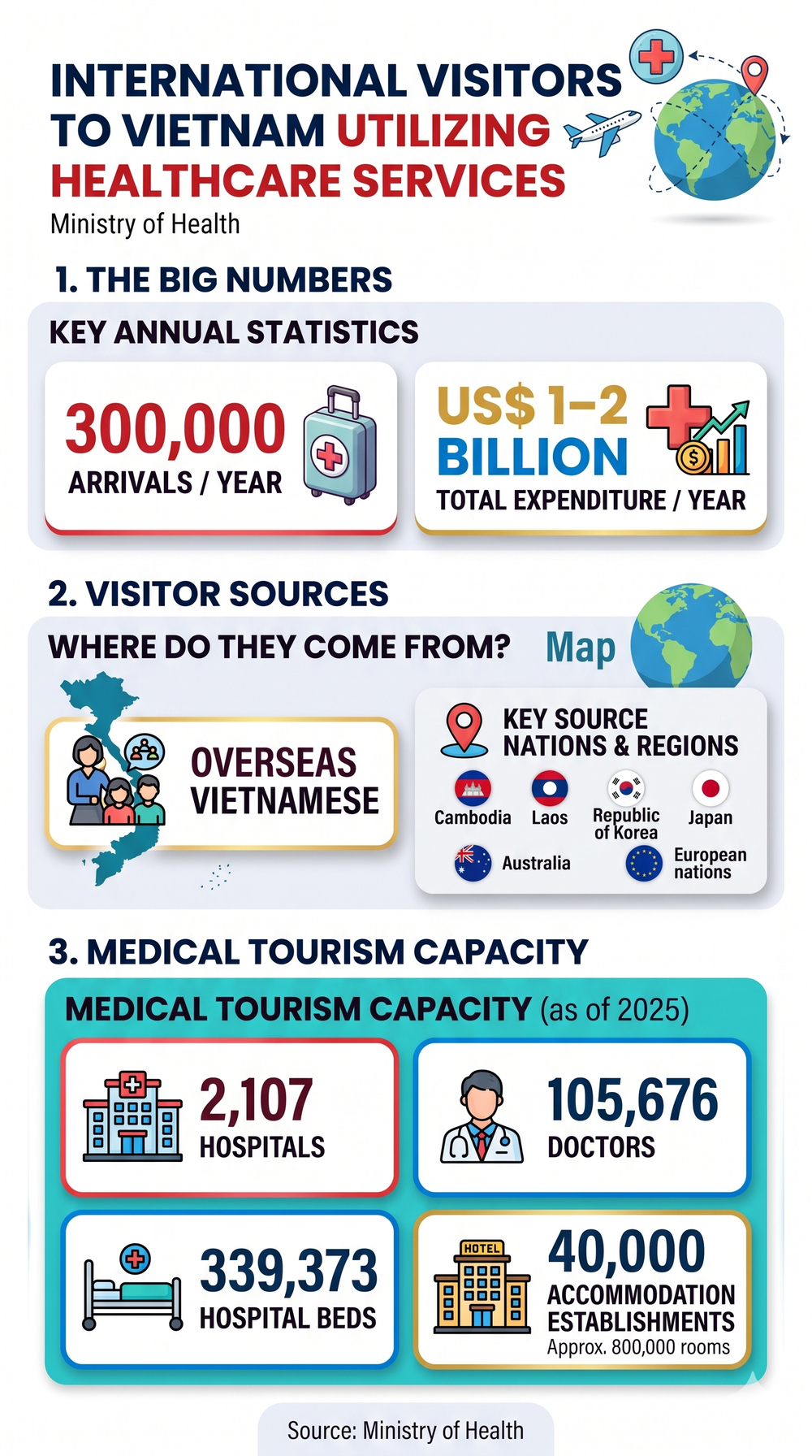
Deputy General Director Cao Trong Kim Tri of Viet My General Hospital in HCMC shared that professional quality and treatment prestige serve as the quintessential cornerstones for attracting international patients. Recently, numerous foreign patients and overseas Vietnamese have opted for the hospital following glowing family recommendations or previously successful treatments.
Besides heavily investing in cutting-edge equipment and comfortable clinical spaces, his hospital proactively prioritizes highly specialized techniques, elevating staff’s linguistic competencies, and standardizing care protocols.
Trust is essentially forged throughout the entire medical journey. From convenient receptions and precise consultations to crystal-clear explanations regarding costs, safety is relentlessly guaranteed, maintaining proactive contact long after patients return home.
Tourism product design expert Phan Yen Ly commented that HCMC possesses abundant advantages to metamorphose into a regional medical tourism hub. It’s propelled by highly skilled doctors, state-of-the-art facilities, and treatment costs consistently evaluated as significantly lower than regional counterparts. The municipality has already initiated distinctive products like dental tourism, health streets, and traditional medicine tours.
However, lingering limitations regarding international service standardization, restrictive medical visa policies, and weak hospital-travel agency linkages actively impede development.
To drastically elevate its competitive prowess, HCMC should systematically construct inter-sectoral coordination mechanisms and rigorously research medical visa policies. It’s imperative to proactively support hospitals attaining JCI accreditation, develop comprehensive multilingual information portals, and amplify promotional campaigns. Crucially, strengthening coordination among management agencies, enterprises, and experts remains key to forging high-quality, competitively priced medical tourism products.
Numerous nations issuing medical visas
Globally, medical tourism has undeniably exploded into a multi-billion-dollar industry. Heavily reliant on cost and technological advantages, nations across Asia and Europe have proactively delineated distinct developmental strategies.
Asia is rapidly ascending as the world’s medical tourism capital, propelled by highly competitive costs, ranging from 40 to 80 percent lower than Western counterparts, and service quality closely approximating 5-star standards.
Thailand unequivocally asserts its leadership via a “hospital-hotel” model, highly specialized in orthopedic surgery, cardiology, IVF, and convalescence in Phuket and Pattaya. Thailand pragmatically issues medical visas valid from 90 days to a full year for patients and up to three accompanying relatives.
Conversely, the Republic of Korea strategically positions itself as the global capital of aesthetics and skincare. To forge an accessible corridor, the government actively deploys specialized medical visa categories, including C-3-3 and G-1-10. These cater to intensive treatment tourists and their caregivers, generously supporting flexible domestic extensions.
Meanwhile, EU citizens traveling to Hungary for dentistry or the Czech Republic for thermal therapies can legitimately request their home country’s national health insurance fund to reimburse costs, optimizing their healthcare budget by 70 to 80 percent.












)




