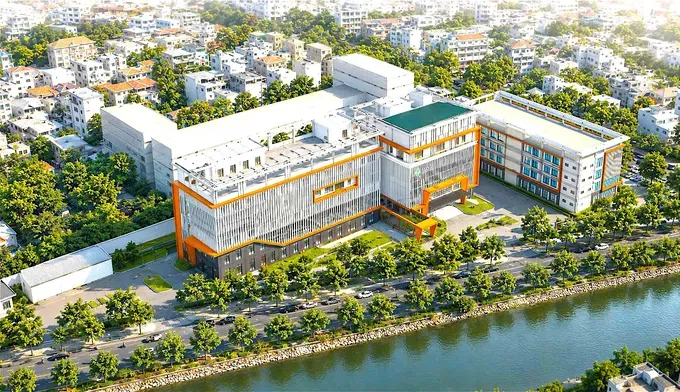
The Ho Chi Minh City Management Board of Civil and Industrial Construction Investment Projects, in coordination with relevant agencies, held a groundbreaking ceremony on the morning of October 15 for Phase 2 of the Ho Chi Minh City Center for Disease Control (HCDC) project in Chanh Hung Ward.
The project is a Grade II civil construction project with a total investment of VND774.9 billion (US$30 million), including equipment costs, and a designed service life of 50 years. It will cover more than one hectare. The main building will comprise five above-ground floors, one basement, and a technical floor, with a total gross floor area of 11,347.1 square meters.
The facility will feature an integrated data and operations center, information technology facilities, an auditorium, specialized departments, and high-tech testing laboratories. Supporting infrastructure, including fire prevention and fighting systems, power and water supplies, and telecommunications, will also be developed in line with advanced standards.

Speaking at the groundbreaking ceremony, Dr. Nguyen Hong Tam, Director of HCDC, described the project as a particularly significant milestone reflecting the city's attention to public health.
Established in late 2017 through the merger of seven specialized units, HCDC has established itself as a key force in protecting public health. Phase 1, with an investment of more than VND81 billion, was completed before the Covid-19 pandemic, providing essential infrastructure that enabled the center to respond effectively during the most challenging period of the outbreak.
Drawing lessons from the pandemic and experience in dealing with endemic infectious diseases, Dr. Nguyen Hong Tam stressed that response capacity must be developed proactively rather than waiting until an outbreak occurs to make investments.
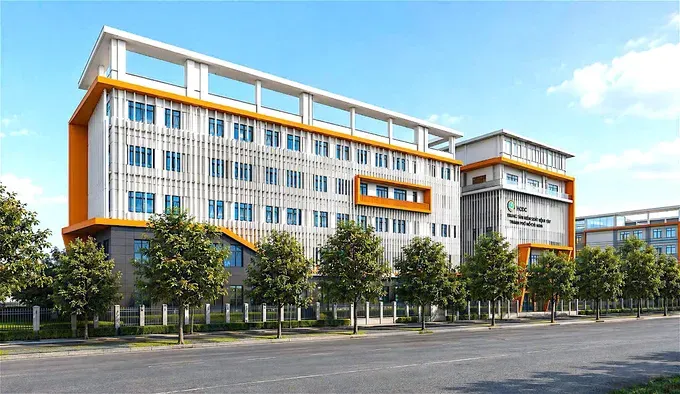
While Phase 1 laid the initial foundation, Phase 2 represents a strategic step toward comprehensively modernizing Ho Chi Minh City's disease control system. Once operational, the new facility is expected to enhance high-tech testing capacity, improve epidemiological surveillance and risk analysis, and advance the application of information technology and data connectivity to enable early detection, rapid alerts, and sustainable responses to public health challenges.
The project is scheduled for completion within 450 days. The project owner has pledged to closely monitor the contractor's compliance with contractual deadlines, strictly control material quality and construction procedures, and ensure occupational safety and environmental sanitation.
HCDC, for its part, has committed to working closely with the project owner to align professional requirements, ensuring that the completed facility delivers the intended investment benefits and better serves public health.










)