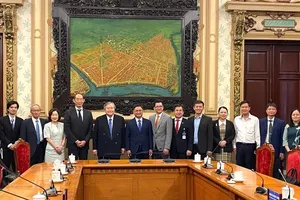
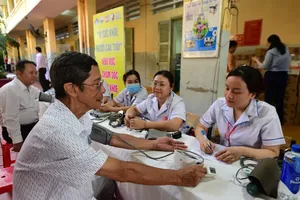
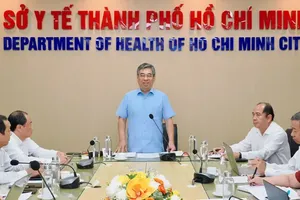
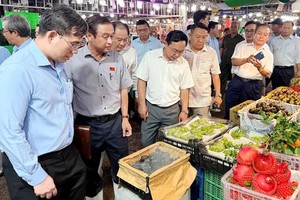
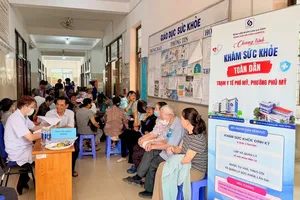
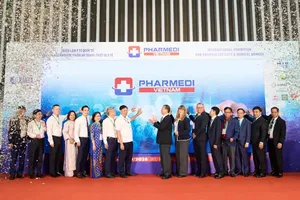
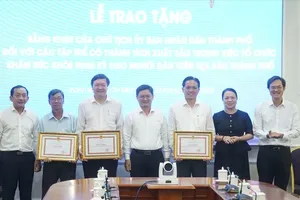
On October 9, Nguyen Manh Cuong, Vice Chairman of the HCMC People's Committee and Head of the HCMC Inter-agency Steering Committee for Food Safety, chaired a steering committee meeting to review performance in the first nine months and deploy key tasks for the remaining three months of 2026.
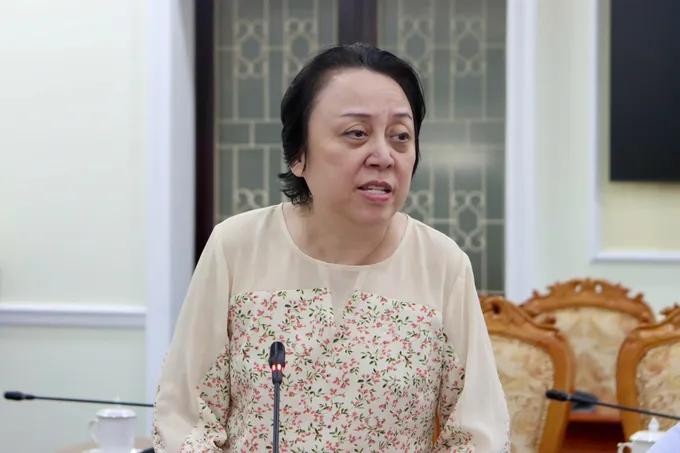
Reporting at the meeting, Pham Khanh Phong Lan, Director of the Department of Food Safety and Standing Vice Head of the committee, stated that the city has strictly and effectively implemented key tasks in state management of food safety.
Specifically, focus was placed on implementing Prime Minister Directive 33/CT-TTg on strengthening food safety assurance in educational establishments, and Directive 15-CT/TU of the HCMC Party Committee Standing Committee on strengthening leadership and direction to ensure food security and safety in HCMC.
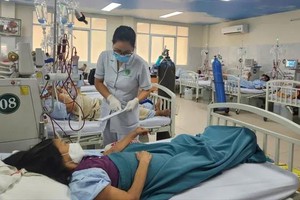
During the first nine months, the city recorded 21 suspected cases of food poisoning, of which 9 were concluded to be food poisoning incidents affecting 637 people, with no fatalities; 12 cases lacked sufficient grounds to conclude food poisoning.
Functional authorities inspected 16,540 food production, trading, and catering service establishments. As a result, 1,135 violating establishments were detected (accounting for 6.86 percent), 1,023 establishments were penalized with a total fine exceeding VND11 billion, and one establishment showing signs of criminal activity was transferred to investigative authorities.
In addition, state management of food safety faces numerous challenges: the boom of social networks and food delivery applications has created a massive online food market and "cloud kitchens," causing difficulties in management and supervision; a shortage of food safety personnel in wards and communes despite a heavy workload; and difficulty in detecting violations through periodic inspections.
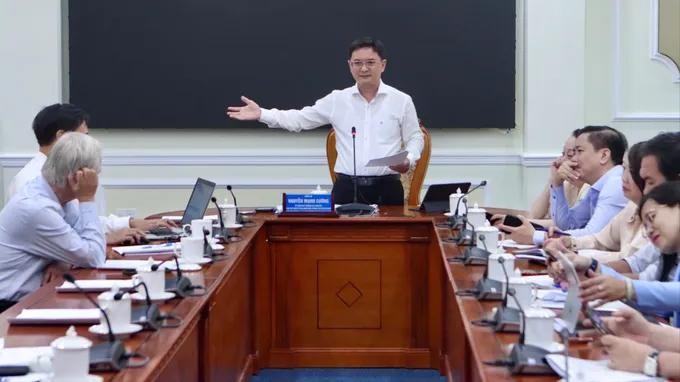
Delivering the concluding remarks, Vice Chairman of the HCMC People's Committee Nguyen Manh Cuong highly appreciated the coordination among departments and sectors in implementing numerous solutions to ensure food safety for the city's residents.
For the final three months of 2026, he requested departments, sectors, and localities to continue focusing on implementing and executing Directive 33/CT-TTg of the Prime Minister and Directive 15-CT/TU of the Party Committee Standing Committee.
Efforts should be stepped up to promote and disseminate food safety laws to production and business establishments, with an emphasis on street food forms; continue implementing schemes, models, and projects to ensure food safety; monitor hazards and enhance the capacity of the food safety management system to prevent acute food poisoning.
Post-inspections must be strengthened, focusing on inspecting food items with high consumption during the holiday and Tet season; ensuring both strict control of food safety and favorable conditions for business and production enterprises to promote consumption toward year-end.
Food business activities on digital environments, social networks, and imported food must be strictly controlled; the completion of technical standards, regulations, and food traceability projects should be accelerated.
He assigned the Department of Food Safety as the focal point to receive information from departments, sectors, and localities in order to promptly provide accurate and transparent information to press agencies whenever food safety incidents occur in the area.
In line with the Prime Minister’s Directive No. 33/CT-TTg on strengthening food safety in educational institutions, the Ho Chi Minh City Food Safety Department has rolled out a series of measures aimed at improving food safety standards in schools. The food watchdog agency has issued guidance on the selection of food and meal service providers, while also providing procedures for the prevention, response, and handling of food safety incidents at schools operating boarding meal services and canteens.
To enhance oversight and ensure timely intervention, the department continues to operate a dedicated hotline for receiving reports and information related to food safety issues in schools.
As of the end of September 2026, Ho Chi Minh City recorded 3,021 schools with collective kitchens, 762 schools contracting external meal suppliers, and 503 schools operating canteens. The city also had 170 facilities providing ready-made meals for educational institutions.


)