Under the draft regulation, in certain cases, individuals and businesses may have to pay higher land use fees, land rent or receive higher compensation when the State reclaims land.
Agricultural land prices to rise significantly
Under the draft regulation, land prices will be determined by multiplying the land prices specified in the Land Price List by the K coefficient. Depending on the land category, land user, and land-use purpose, as well as the location and area of the land parcel, different K coefficients will be applied to ensure that land valuations more accurately reflect market conditions.
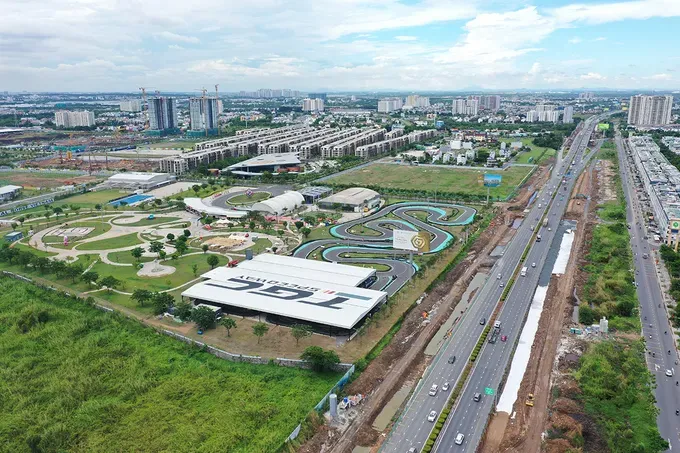
Notably, the K coefficient for residential land on many roads across Ho Chi Minh City is proposed to increase by between 1 and 2.59 times. On three central streets with the city’s highest residential land prices, including Le Loi, Nguyen Hue, and Dong Khoi, the proposed K coefficient is 1.39. Accordingly, the land-use fee for residential land on these streets would be calculated based on the land price listed in the land price list of VND687.2 million (US$26,091) per square meter, multiplied by 1.39.
Meanwhile, the proposed K coefficients for agricultural land show much greater variation, ranging from 1 to 10.56 times. For example, agricultural land along Nguyen Thi Tu and Tran Van Giau streets in Tan Vinh Loc Commune is subject to a K coefficient of up to 10.12, while in Ho Tram Commune, the coefficient for certain locations reaches as high as 10.56. Most of the agricultural land areas proposed for higher K coefficients are located along roads in localities experiencing rapid urbanization.
According to Mr. Dao Quang Duong, Head of the Land Economics Division under the Ho Chi Minh City Department of Agriculture and Environment, the department engaged independent consulting firms to conduct market price surveys when formulating the K coefficient. The coefficient was developed based on factors affecting land values, including socio-economic conditions, urban planning, and other relevant considerations, to ensure that the K coefficient balances the interests of different land users.
The agency responsible for drafting the Land Price Adjustment Coefficient Regulation has focused primarily on groups directly affected by land-related financial obligations and compensation policies. These include households and individuals seeking to change land-use purposes; households and individuals eligible for compensation and resettlement under development projects; and individuals and businesses required to pay land rental fees for commercial, service, and industrial land use. Once promulgated, the K coefficient is expected to have a significant impact on these groups.
Residents are concerned about rising land-use fees
According to Vice Chairman of the People's Committee of Hiep Binh Ward, Pham Van Hung, the proposed increase in the land price adjustment coefficient by more than one time will help bring compensation rates for residential land closer to market values. Specifically, compensation for residential land acquired under the National Highway 13 upgrading and expansion project is expected to exceed VND100 million per square meter.
Similarly, Vice Chairman of the People's Committee of Tan Vinh Loc Ward, Truong Ngoc Thanh Nhan, noted that the proposed K coefficient for the locality would help prevent bottlenecks in the implementation of compensation, support, and resettlement programs.
However, for residents seeking to convert land-use purposes, the K coefficient remains a financial burden. Ms. N.H.L., a resident of Thoi An Ward, has yet to convert more than 100 square meters of agricultural land into residential land because she cannot afford the required land-use fee. In 2024, she submitted an application to change the land-use purpose of the plot to residential land.
However, after receiving a notice requiring her to pay more than VND1 billion in land-use fees, an amount beyond her financial means, she was forced to abandon her plan to convert the land to residential use.
"Under the draft regulation, the K coefficient applicable to my land is around 1.2. This means that the land-use fee for converting the plot to residential land would increase even further. Such a high land-use fee is simply beyond what my family can afford," she said.
In addition to those affected by the numerous infrastructure projects currently underway, a large number of households are seeking to convert their land-use purposes. A higher K coefficient would result in significantly higher land-use fees for these residents.
The K coefficient must be designed in a way that safeguards the interests of both households and individuals seeking to convert land-use purposes, as well as those whose land is being acquired by the State. This is a highly complex issue; it has been carefully considered in all aspects to ensure a balance among the interests of citizens, the State, and businesses, said Mr. Dao Quang Duong.
From an expert perspective, Dr. Pham Viet Thuan, Director of the Ho Chi Minh City Institute of Natural Resources and Environmental Economics, said that the K coefficient should be adjusted based on clear principles to help stabilize the national real estate market and prevent speculation and artificial price inflation.
For Ho Chi Minh City, the country’s economic powerhouse and a hub for major economic and service sectors, the proposal to raise the K coefficient by nearly 300 percent compared with the initial land price benchmark warrants careful consideration to avoid the risk of constraining economic growth. Setting the coefficient at 1 or below 1 could help stimulate investment demand and attract major investors, particularly those in high-tech industries.