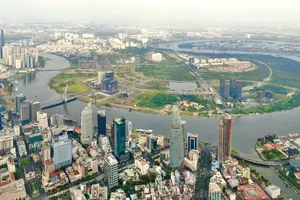
For years, Ho Chi Minh City, Vietnam’s largest economic locomotive, has been chugging forward with one brake firmly pressed. Despite contributing over 23 percent of the nation’s GDP and roughly 30 percent of its budget revenue, Ho Chi Minh City has long found itself restricted by a rigid institutional framework.
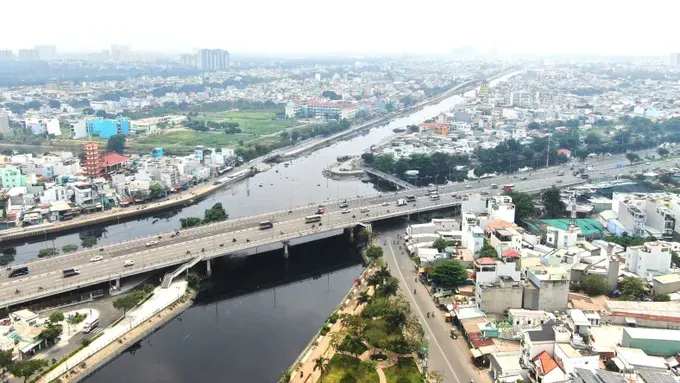
Now, a major policy shift aims to change that. The Politburo’s Resolution No. 09-NQ/TW has granted the southern megacity unprecedented autonomy and resources. Observers call it a game-changing move to dismantle legal barriers, unlock stagnant capital, and inject fresh momentum into the nation's premier metropolis.
Resolution No. 09 targets “law-entangled illness” to unlock stalled projects
The primary roadblock to the city’s growth has not been a lack of vision or capital, but rather a phenomenon local experts call the "law-entangled illness." Overlapping regulations, multi-layered bureaucratic procedures, and a lack of local authority to resolve real-world conflicts have left vital development resources frozen in place.
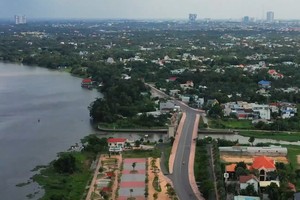
The Area III - Nam Ly Chieu Hoang project in Binh Phu Ward serves as a striking example of this gridlock. More than two decades after the land was handed over for a residential and high-rise apartment complex, the site remains stagnant because shifting legal frameworks trapped the project in an endless loop of procedural reviews.
This is just one symptom of a systemic disease. Data from the Ho Chi Minh City Department of Finance paints a staggering picture, revealing a historic backlog of 838 stalled projects and land plots, which froze over VND206 trillion (US$7.83 billion) in investment capital across 17,000 hectares of land.
While the city has recently mapped out solutions for these specific cases, officials warn that without structural reform, the cycle will repeat. To permanently cure this gridlock, Resolution No. 09-NQ/TW directs the formulation of a dedicated Law on Special Cities. This landmark institutional framework grants Ho Chi Minh City the power to pass its own regulations to execute National Assembly resolutions, even when they diverge from existing ministry rules, while allowing leaders to pioneer solutions for real-world issues that current regulations don't yet cover.
Resolution No. 09 unlocks financial flexibility for Ho Chi Minh City
Beyond cutting red tape, the new resolution reshapes how the city manages its wealth. By prioritizing state budget allocations and permitting outstanding financial mechanisms, the Government is giving Ho Chi Minh City the flexibility to balance its own development investment and regular expenditures. Instead of waiting for multi-tiered approvals from Hanoi, city leaders can now proactively bankroll critical projects as soon as practical needs arise.
This financial agility is vital as the city enters a high-stakes infrastructure push. Tran Hoang Ngan, National Assembly member and Chairman of the Advisory Council for Development Breakthroughs at Saigon University, notes that the public investment demand through 2030 for the central area alone requires an estimated VND1.1 trillion. This sits alongside a massive US$-40-billion metro system, intra-regional highways, and critical logistics networks.
To bridge this massive funding gap, the city is now empowered to build specific mechanisms that maximize its financial reserve funds and development investment funds, establishing a sustainable pipeline for urban renovation.
As Chau Vu, Deputy Chief of Office of the HCMC National Assembly Delegation and People's Council, analyzes, the city’s governance model has historically failed to match its economic weight. By replacing rigid central oversight with a flexible, high-level autonomy, Resolution No. 09-NQ/TW effectively grants Ho Chi Minh City the expansive development space it needs to secure its own future.
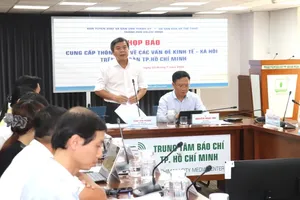
According to Chairman Nguyen Van Duoc of the Ho Chi Minh City People's Committee, the city is focusing on implementing Resolution No. 09-NQ/TW by developing a special urban governance model that promotes stronger decentralization and delegation of authority. The approach is intended to give the city greater autonomy in areas such as investment, finance, land management, urban planning, and regulatory sandbox mechanisms, thereby creating a more favorable environment for innovation and entrepreneurship.
Chairman Nguyen Van Duoc said the guiding principle is to ensure that institutions do not become obstacles to development, administrative procedures do not cause missed investment opportunities, and outdated thinking does not hinder the growth of new economic models.
The Chairman said that the city is also accelerating the development of transport infrastructure in preparation for a major growth phase, with key projects including new railway lines, ring roads, National Highway 13, the Ho Chi Minh City–Moc Bai Expressway, and the extension of Vo Van Kiet Boulevard. These projects are expected to strengthen connectivity and support the coordinated development of Ho Chi Minh City and the broader Southeast region.
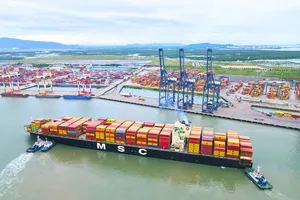
At the same time, the city is advancing plans for a free trade zone linked to the Bau Bang–Cai Mep container railway and the Moc Bai Border Gate Economic Zone. Officials expect the rail corridor to shift a significant share of freight transport from roads to rail, helping ease traffic congestion, reduce logistics costs, and enhance the competitiveness of the city's economy.