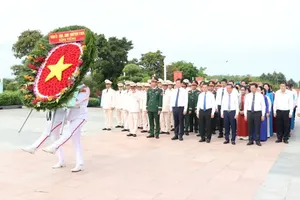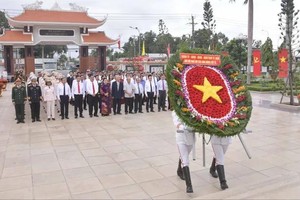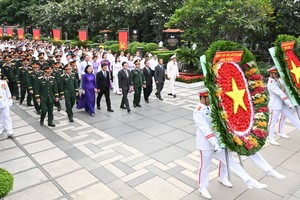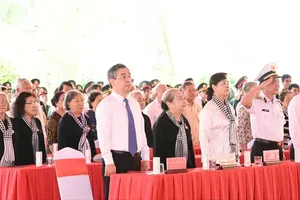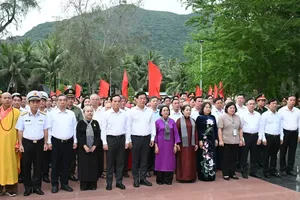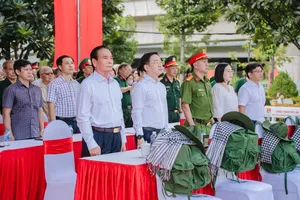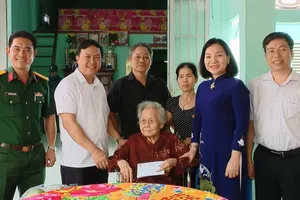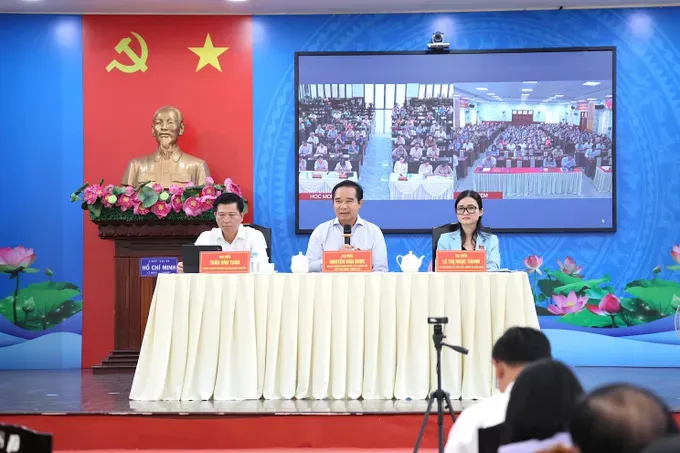
On June 10, the delegation of the 11th-term People's Council of Ho Chi Minh City (2026–2031), Constituency No. 36, comprising Chairman of the Ho Chi Minh City People’s Committee Nguyen Van Duoc, Head of the Ho Chi Minh City Party Committee’s Internal Affairs Commission Tran Van Tuan, Secretary of the Party Committee and Chairwoman of the People’s Council of Hoc Mon Commune Le Thi Ngoc Thanh, held a voter outreach meeting with constituents in Hoc Mon, Xuan Thoi Son, and Ba Diem communes.
At the meeting, many voters expressed their agreement with the city’s major policy orientations, while also proposing solutions to address remaining difficulties in agricultural production, investment in flood-control infrastructure, and food safety assurance. In particular, numerous voters called on the city to accelerate investment in transport infrastructure to ease traffic pressure in the area.
On behalf of the delegation, Chairman of the Ho Chi Minh City People’s Committee Nguyen Van Duoc acknowledged the voters’ opinions and recommendations and exchanged views on several issues related to the development orientation of infrastructure in the northwestern area of Ho Chi Minh City.
Chairman Nguyen Van Duoc stated that the communes of Hoc Mon, Xuan Thoi Son, and Ba Diem are home to several key transport projects currently being implemented, including the upgrading of National Highway 22, the Ho Chi Minh City–Moc Bai Expressway, and the Phan Van Hon parallel road.
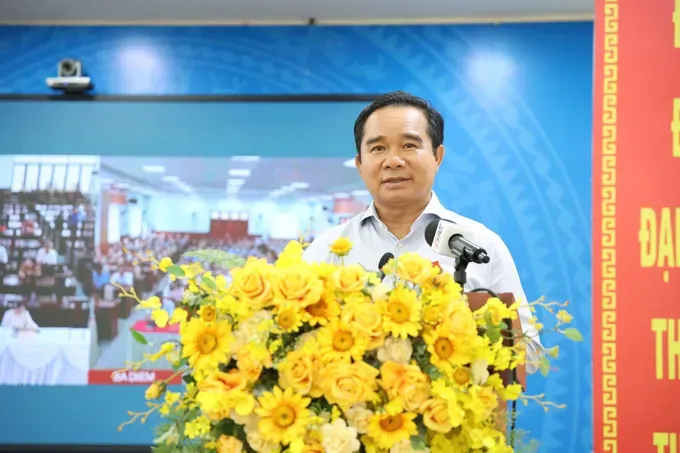
In particular, an investor has recently registered to develop an urban railway line from the Tan Son Nhat Airport area to the former Cu Chi area, with completion planned for the 2026–2030 period. Once completed, the metro line is expected to significantly improve travel conditions for residents in the city’s northwestern area and create new development space through urban areas combining services, commerce, and modern amenities along the route.
Mr. Nguyen Van Duoc assessed that the three communes, including Hoc Mon, Xuan Thoi Son, and Ba Diem, basically meet the criteria to be upgraded to wards. When the railway line and transit-oriented development (TOD) land funds are implemented, the area is expected to take on the characteristics of a modern urban center.
At the meeting, Chairman of the Ho Chi Minh City People’s Committee Nguyen Van Duoc also informed that the Ho Chi Minh City People’s Council delegation, Electoral Unit No. 36, will present residents in the communes of Hoc Mon, Ba Diem, Dong Thanh, and Xuan Thoi Son with a project to restore the Dinh Quan (the District's Old Palace) national relic site in the former Hoc Mon District. The project has a total investment of approximately VND50 billion (US$1.9 million), mobilized by delegates of Constituency No. 36 from social funding sources, and is expected to be inaugurated on the occasion of the 86th anniversary of the Southern Uprising (November 23).
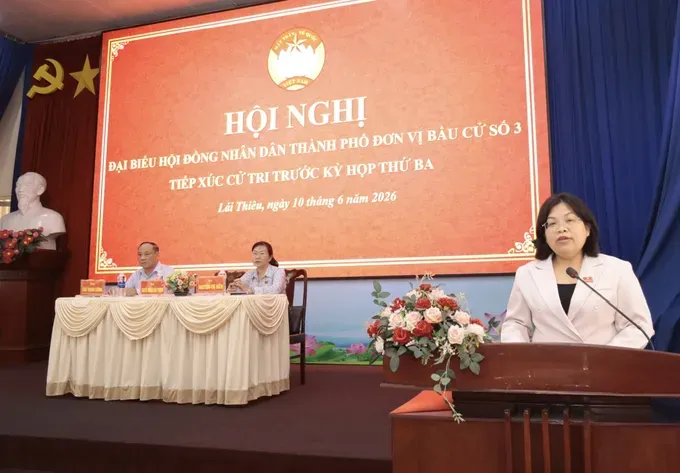
On the same day, the delegation of the 11th-term People's Council of Ho Chi Minh City (2026–2031), Constituency No. 3, held a meeting with voters in Lai Thieu Ward. The meeting was attended by Vice Chairwoman of the Ho Chi Minh City People’s Council Nguyen Truong Nhat Phuong, along with other city council delegates.
Voters raised concerns over vehicles avoiding the Phu Long Bridge toll station by using residential roads, placing pressure on local transport infrastructure, posing potential traffic safety risks, and affecting residents’ daily lives.
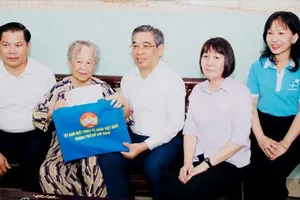
Vice Chairwoman of the Ho Chi Minh City People’s Council Nguyen Truong Nhat Phuong also provided additional information on the implementation of policies and benefits for people with meritorious service in accordance with Ho Chi Minh City regulations and addressed several issues within her authority. For remaining petitions, the Ho Chi Minh City People’s Council delegation will compile and forward them to relevant authorities for review and resolution and report back to voters in due course.
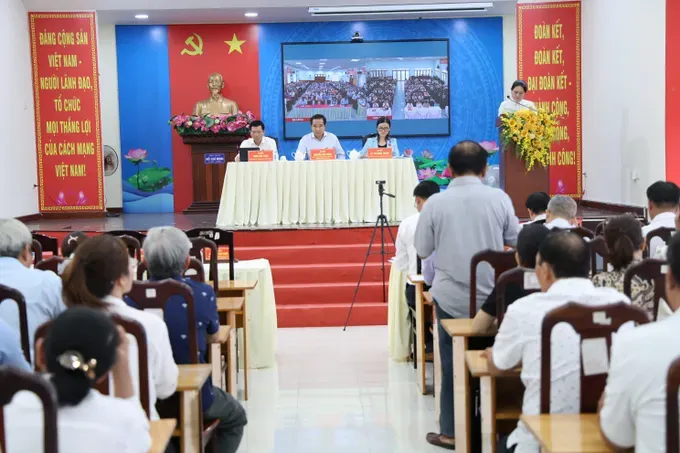
On the afternoon of June 10, the Ho Chi Minh City People’s Council delegation of the 11th tenure, Electoral Unit No. 1, comprising Vice Chairwoman of the Culture and Social Affairs Committee of the Ho Chi Minh City People’s Council Nguyen Khoa Dieu An and Party Secretary and Chairwoman of the People’s Council of Thu Dau Mot Ward Nguyen Thu Cuc, held a meeting with voters in Thu Dau Mot Ward.
At the meeting, voters raised concerns over indiscriminate dumping of waste in vacant land areas, shortcomings in household waste collection, and canal and drainage waste management. They also called on local authorities to strengthen the management and effective use of public houses and land in order to avoid wastefulness.
A representative of Thu Dau Mot Ward People’s Committee said that local authorities have recently sanctioned 13 cases of illegal waste disposal in violation of regulations. For land areas under the management of the city or ministries and central agencies, the ward will continue to review, consolidate, and submit recommendations to competent authorities for consideration and resolution.
Deputy Director of the Ho Chi Minh City Department of Agriculture and Environment, Nguyen Hong Nguyen, urged Thu Dau Mot Ward to strengthen inspections and handling of environmental issues raised by voters; coordinate closely in managing public land and vacant lots to prevent illegal dumping; and accelerate the installation of surveillance cameras to penalize violations of environmental sanitation regulations.
On June 10, the Ho Chi Minh City People’s Council delegation of the 11th tenure, Electoral Unit No. 13, comprising Secretary of the Party Committee of Con Dao Special Zone Le Hoang Hai, Vice Chairman of the Culture and Social Affairs Committee of the Ho Chi Minh City People’s Council, Nguyen Van Tuan, held a meeting with voters in Phuoc Hai Commune.
At the meeting, voters raised a range of local concerns, including environmental sanitation, the progress of utility pole relocation, and responsibilities for site restoration after power infrastructure construction projects. Many opinions focused on the reorganization and merger of hamlets.
Voters requested that authorities promptly address policies and entitlements for former Party cell secretaries, hamlet executive heads, and Fatherland Front heads who are no longer in service following the restructuring. They also suggested organizing activities to honor residential group leaders and deputy leaders who have made significant contributions to local development.
In addition, voters pointed out difficulties arising after the merger, as some grassroots positions are not eligible for specific allowances or policies. They proposed that competent authorities study appropriate support measures and maintain certain essential positions to meet administrative and operational requirements in newly expanded hamlets with larger populations and areas.