Eo Chim Pass sits along Provincial Road 622 at an elevation of more than 1,000 meters above sea level. Its cool climate and year-round cloud cover create favorable conditions for wild Burmese grape trees to thrive, yielding fragrant fruit with a mild sour flavor.
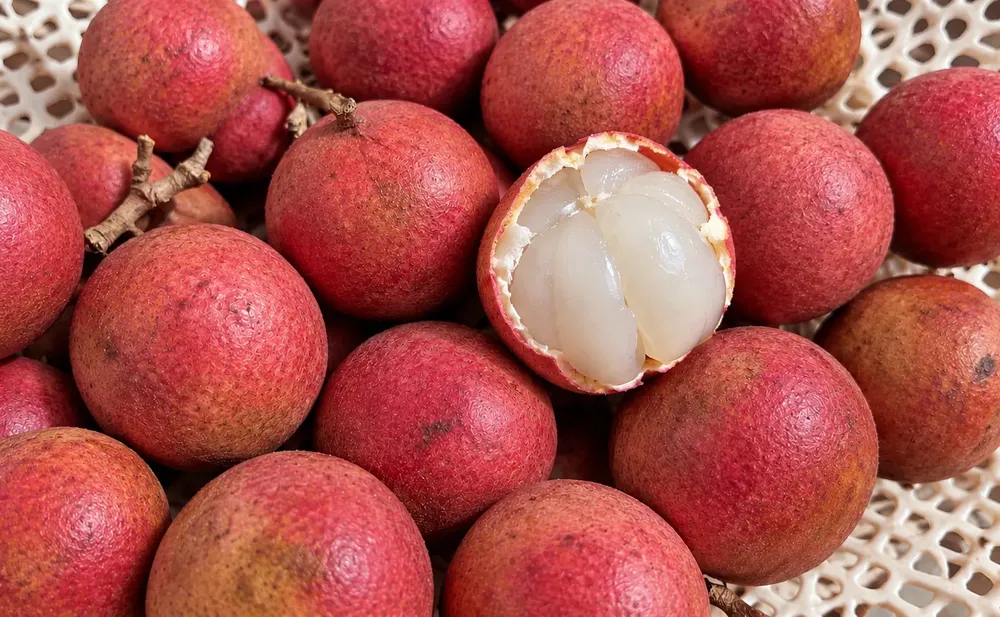
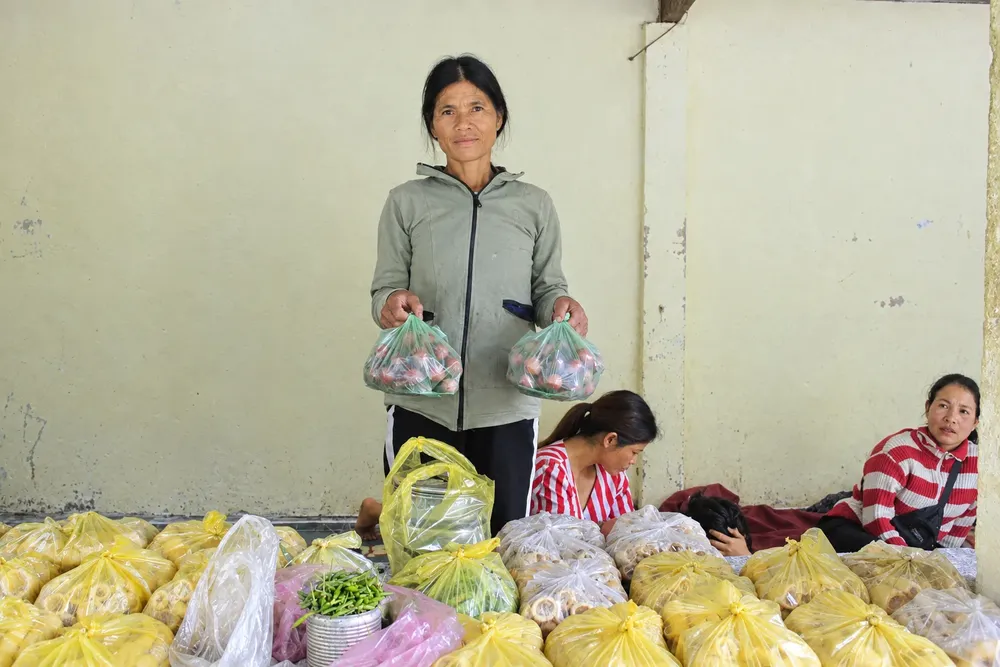
Wild Burmese grape ripen abundantly in vivid red clusters from September to November. Every harvest season, Cor ethnic people gather the fruit to sell to lowland residents and passing travelers, generating extra income. For them, wild Burmese grape represent not only a familiar forest product but also a link to memories, livelihoods, and the preservation of a characteristic mountain crop.
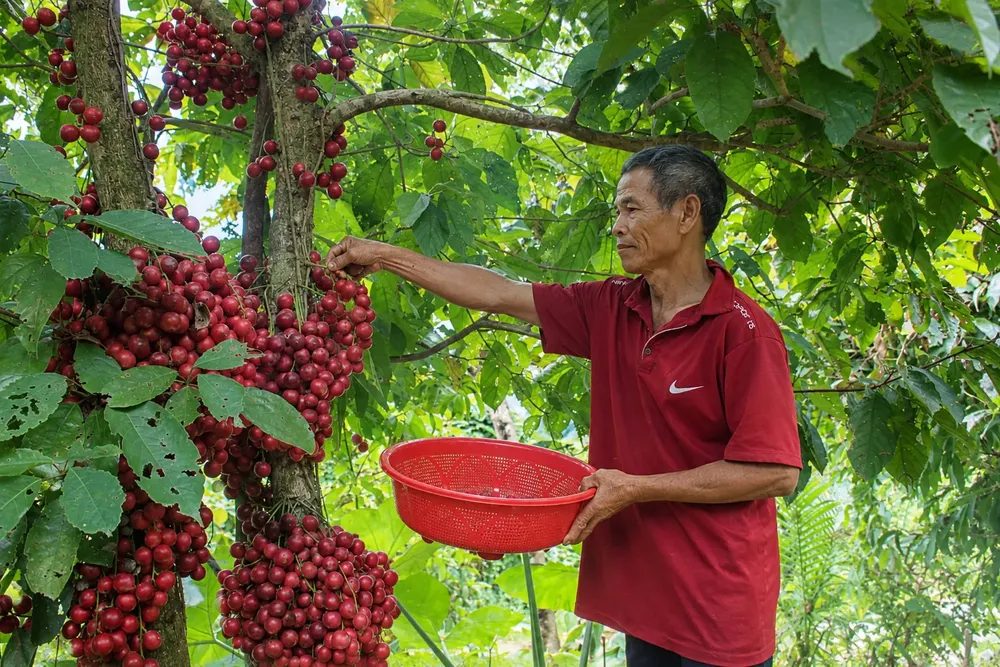
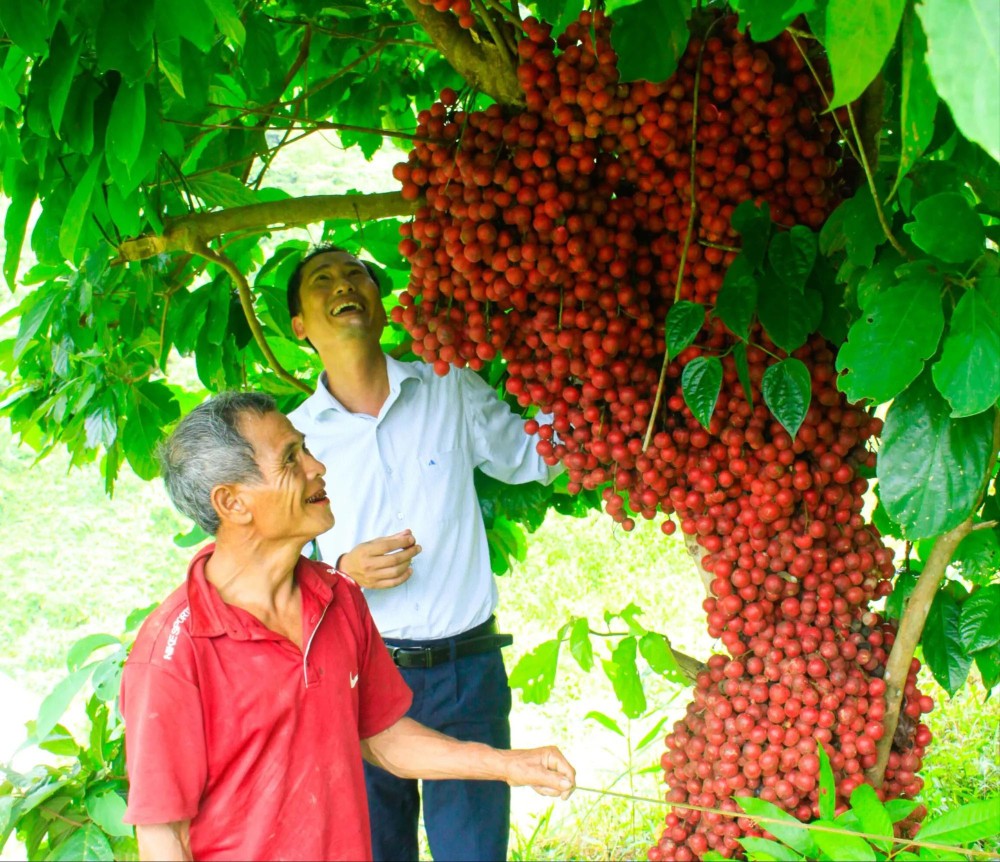
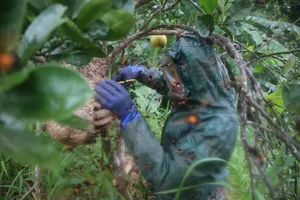
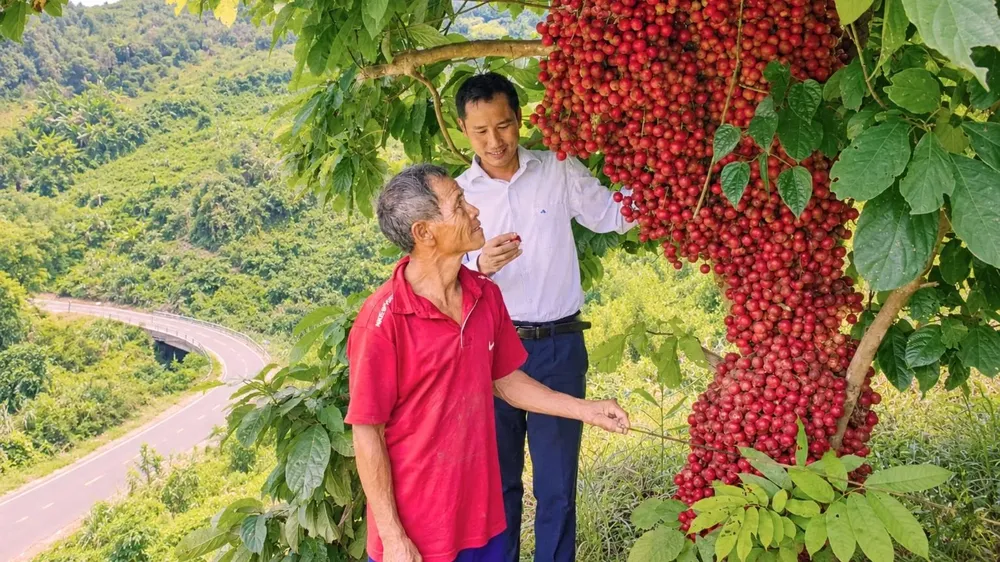
At the home of local resident Ho Van Ut in Tra Lanh hamlet, Tay Tra Bong Commune, Burmese grape trees passed down by his grandparents remain standing. Among them, three trees have been preserved by the local man over many years, with the oldest being around 15 years old. From these parent trees, he propagated and planted approximately 30 new trees, which are now three years old.
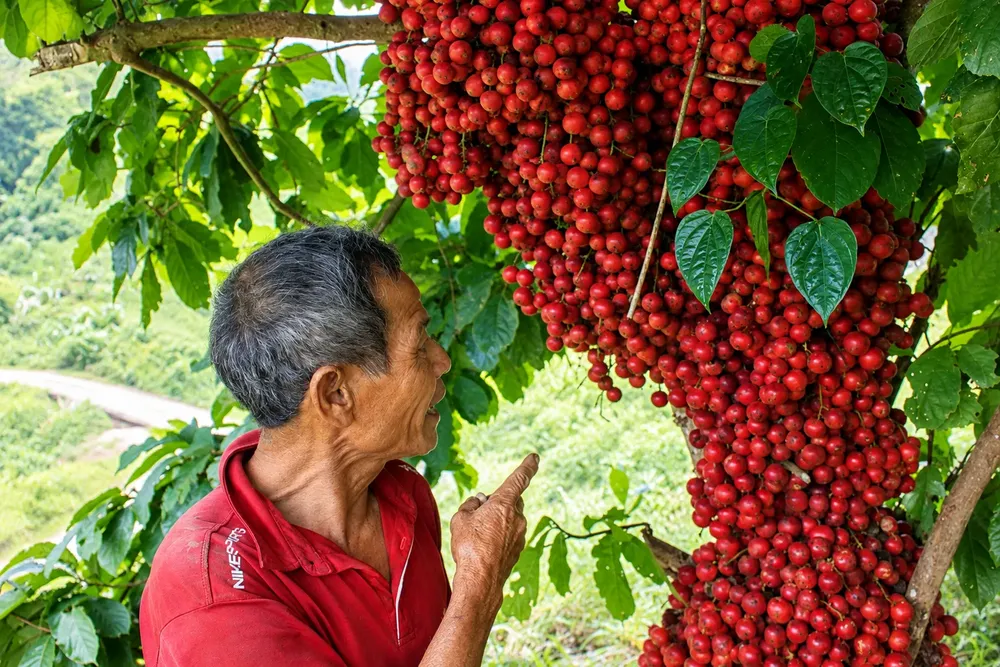
Lush red Burmese grape clusters grow densely from trunk to treetop, completely covering the branches. Some trees are heavily laden with fruit, their bold red hues standing out against the green foliage to mark the arrival of the harvest season.
Resident Ho Van Ut shared: "The original trees came from our ancestors, so I keep them and propagate them for future generations. As these trees grow, our children will know that this plant is a specialty of our mountain region."
Tran Van Bang, Vice Head of the Economic Office of Tay Tra Bong Commune, stated that wild Burmese grape is a naturally occurring species that local residents brought home to cultivate and propagate for economic development. It is also a signature plant of the Tay Tra Bong region, well-suited to the cold climate and rarely found elsewhere.
Although it is a forest tree, local people have brought it into domestic cultivation and propagated it to generate additional household income. Each kilogram of wild Burmese grape fetches around VND30,000 (US$1.15). Resident Ho Van Ut's cultivation techniques could open up a new development direction for local residents", the Vice Head of the Economic Office of Tay Tra Bong Commune noted.