Each season, the dangerous work yields a lucrative product sold to traders and restaurants, but a single misstep amid hundreds of hornets could prove fatal. Hundreds of hornets swarm around the harvesters; a single slip-up could trigger an attack, posing a threat to their lives.
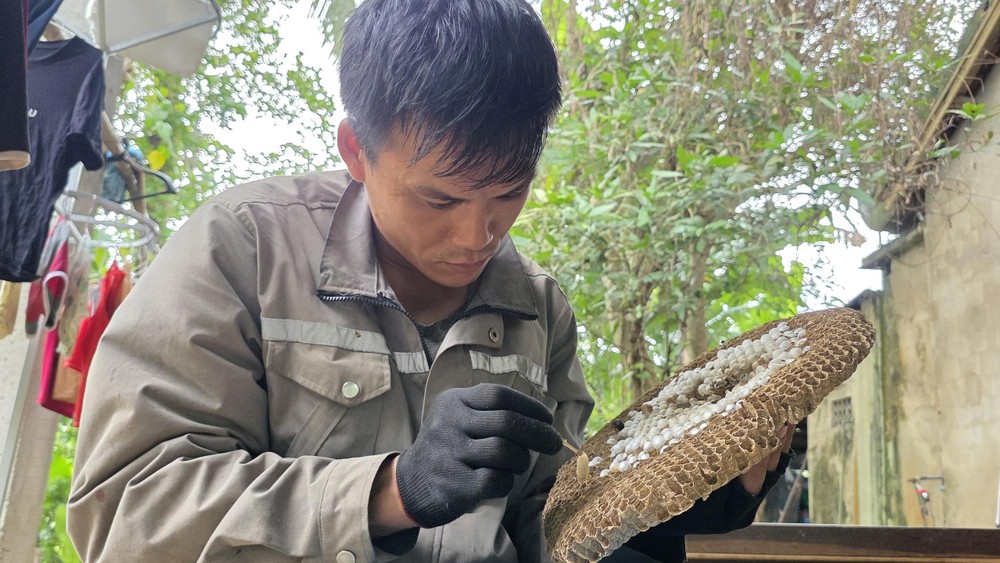
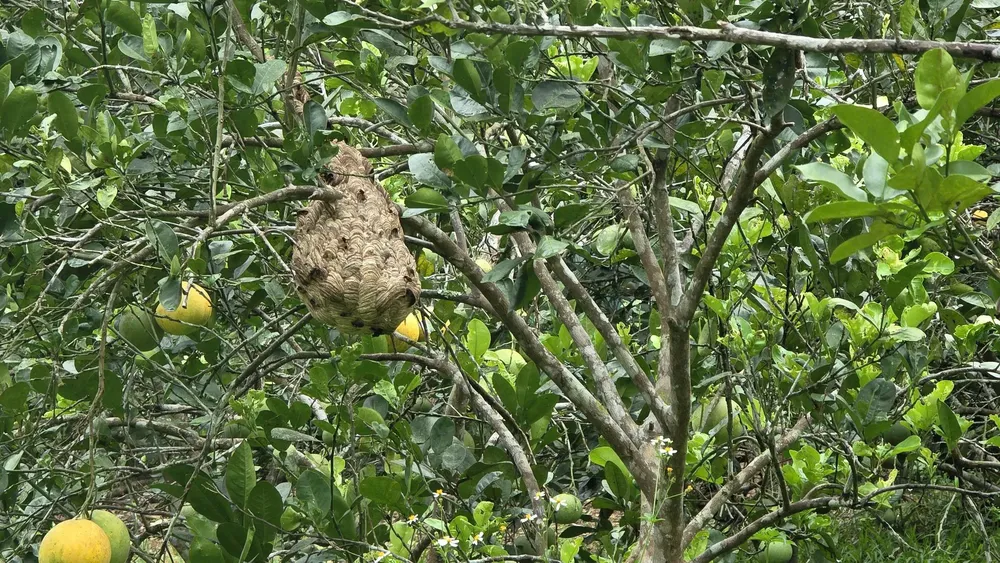
In a one-hectare garden, the family of Mr. Dinh Lang (57, residing in Tien Hoa Village, Minh Hoa Commune, Quang Tri Province) raises hornets that were originally brought from the wild. The nests are secured to the trunks of fruit trees throughout the garden at a height of about one meter.
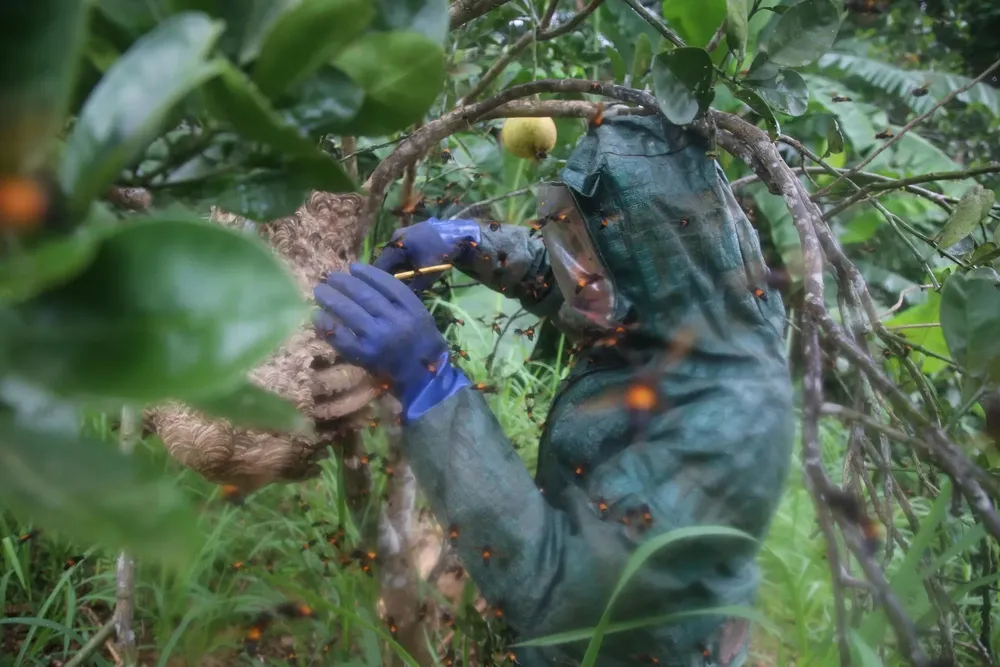
At this time of year, the family begins slicing open the nests to harvest the larvae and pupae for sale to traders and restaurants. To harvest them, Mr. Lang and his son, Dinh Thanh Luong who is 32 years old, must wear full-body protective gear.
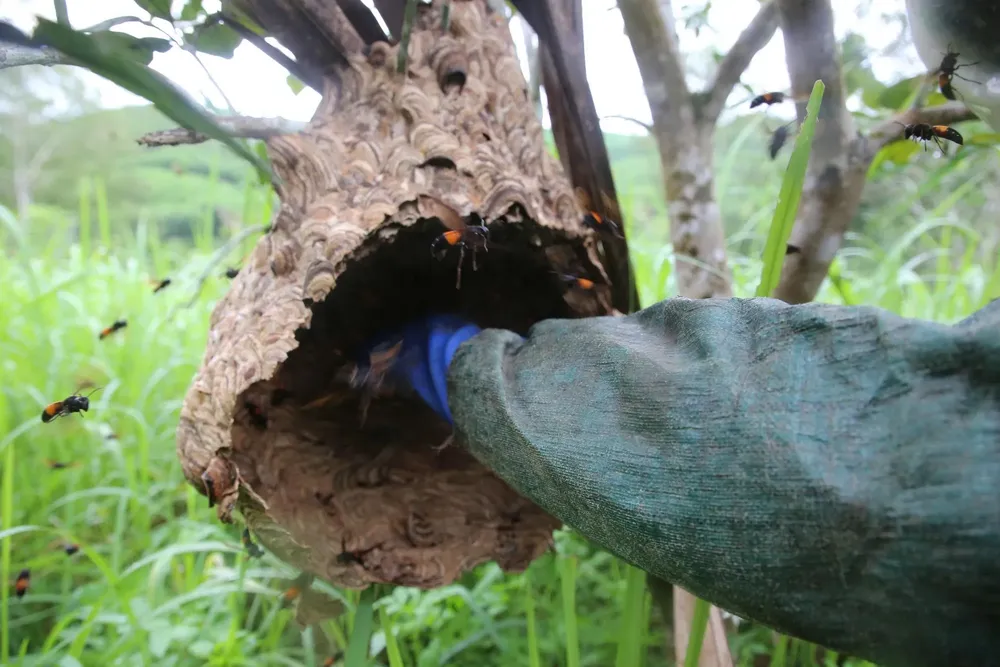
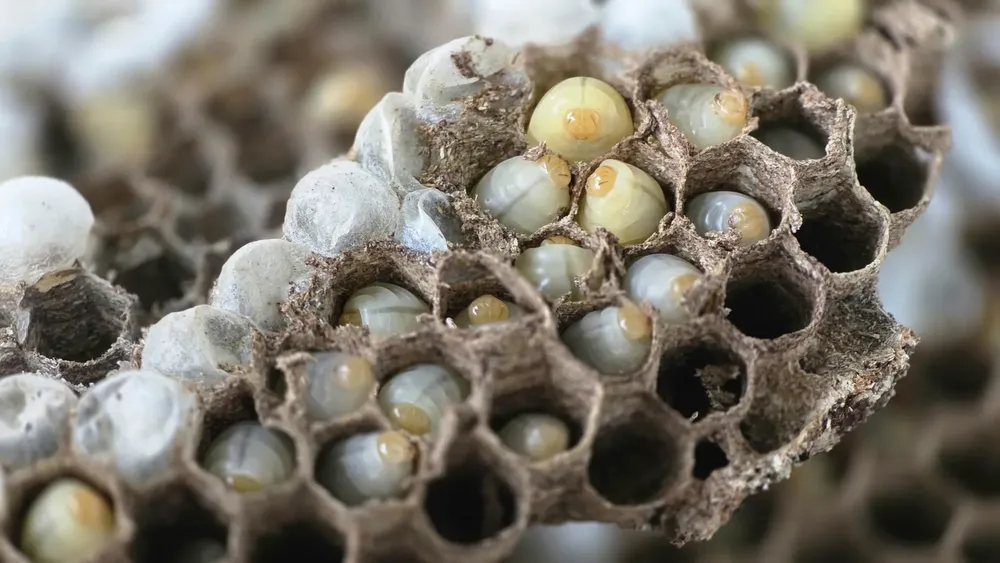
Upon approaching a nest, the father and son use a sharp knife to cut through the outer "shell" to access the internal combs containing the larvae and pupae. After removing the combs, they carefully locate the queen bee, clip her wings, and return her to the nest to prevent the colony from flying away. Throughout this process, the two men are surrounded by hundreds of hornets, making the task highly dangerous.
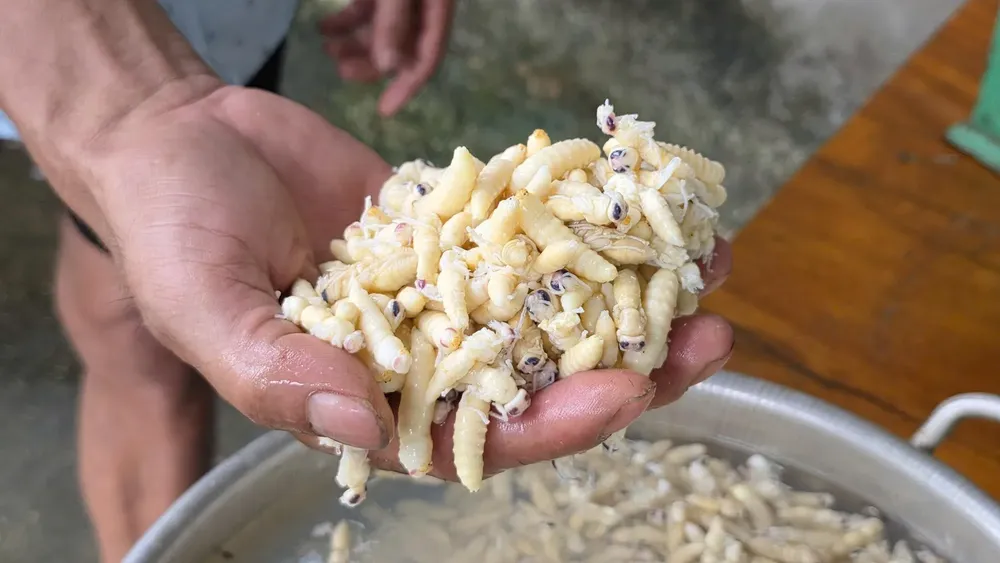
Mr. Dinh Lang explains that the hornet harvest season begins in the fifth lunar month and lasts for over three months. Each nest yields three harvests, with each round producing 0.5 kg to 1 kg of larvae and pupae; traders purchase the product for VND500,000 (US$19.13) per kilogram. After the harvest, the combs are returned to their original position. Just three days later, the hornets seal the cut in the outer shell.
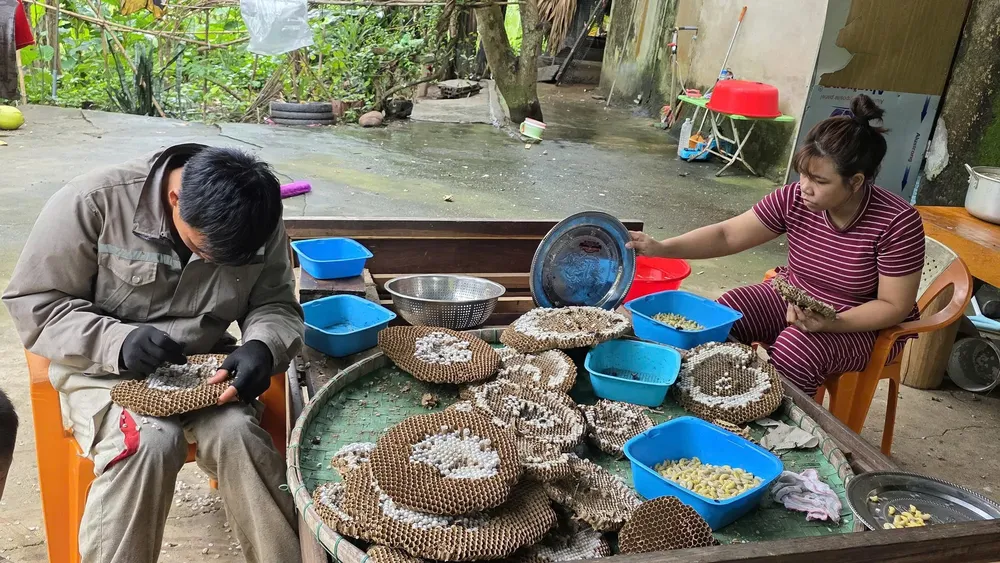
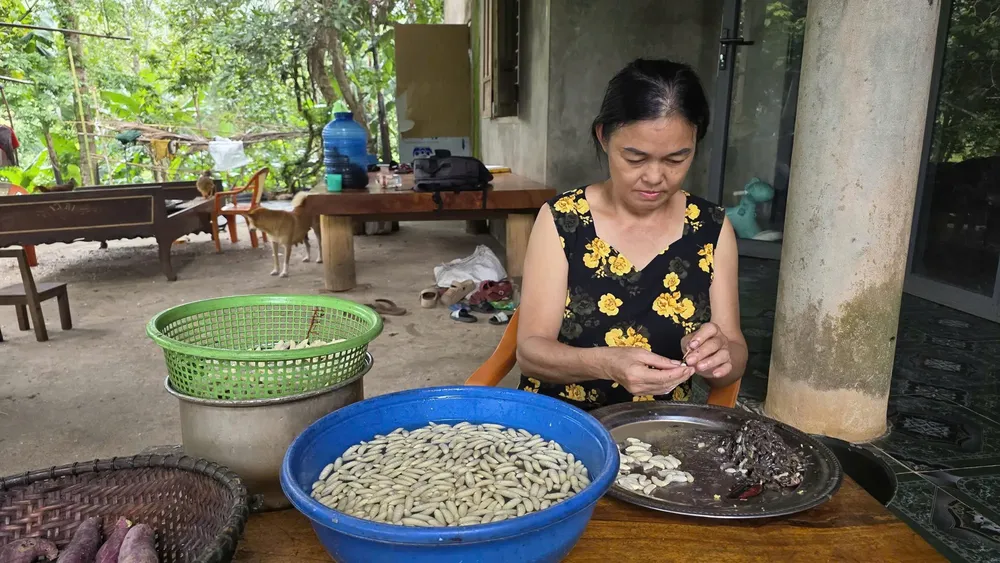
The harvested larvae and pupae are sorted and then blanched in boiling water for about two minutes to firm them up. Older pupae require gut cleaning before sale.
Mr. Lang notes that, typically, the hornets abandon their nests en masse and depart by the end of the tenth lunar month. He continues to hunt for wild colonies and bring the nests back to his garden for domestication. Raising these hornets and harvesting their pupae requires great caution; one cannot afford to be careless, as the species is notoriously aggressive, and a sting can be life-threatening.