In recent years, Vietnamese businesses have been shifting from a reactive, adaptive stance to an active, proactive approach transforming from “participants” into “leaders” capable of steering their industries and driving ecosystem-wide growth.
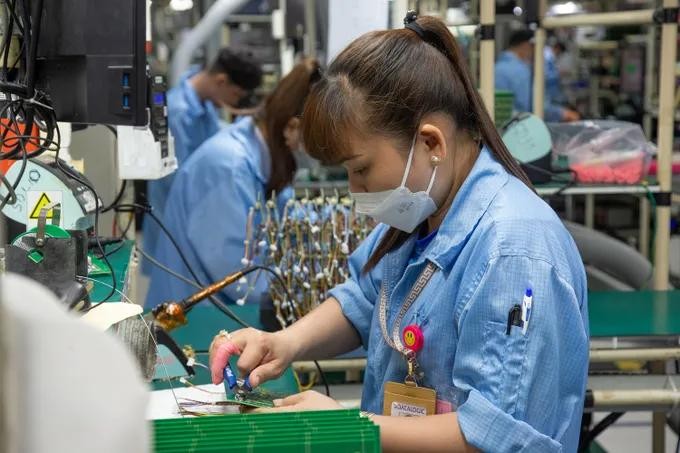
Previously, most enterprises focused on processing, assembly, or supplying low-value components. Today, a growing number are investing in design, research and development (R&D), branding, and sales. This evolution signals the increasing maturity of Vietnamese enterprises in production organization, supply chain management, and technological capability.
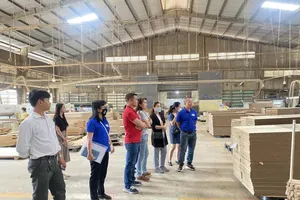
The transformation is particularly visible in the wood and furniture industry, one of Vietnam’s key export sectors. With annual exports exceeding US$15 billion, more than 6,000 processing businesses, and hundreds of thousands of workers, Vietnam ranks among the world’s leading exporters of wood and wood products.
According to Nguyen Quoc Khanh, Chairman of AA Corporation and Vice President of Vietnam Timber and Forest Product Association (VIFORES), the real breakthrough lies in mastering the value chain. “When Vietnamese businesses move from mere processing to participating directly in design, creation, and distribution, they increase added value and establish Vietnam’s position on the global supply chain map,” he emphasized.
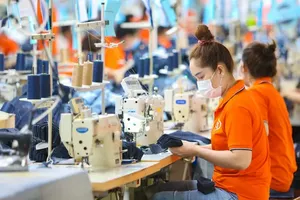
A similar shift is taking place across the processing and manufacturing sectors. Tran Thi Thu Trang, Chairwoman of Hanel PT and President of the Bac Ninh Provincial Industrial Production Association, noted that Vietnam is no longer limited to component manufacturing or contract processing. According to her, Vietnamese firms are now mastering core technologies and investing systematically in R&D, design, and branding. She added; “In a world where true value comes from intellect and creativity, forming production alliances, sharing infrastructure, and standardizing processes will help raise localization rates and strengthen overall industry competitiveness.”
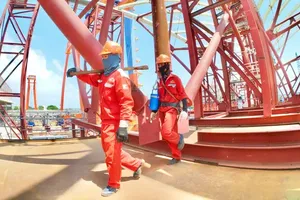
From the infrastructure and foundational industries perspective, Trinh Tien Dung, General Director of Dai Dung Group, believes Vietnam holds immense potential in mechanical engineering, transport infrastructure, renewable energy, shipbuilding, and large-scale engineering, procurement, and construction (EPC) projects. The rise of major domestic firms capable of acting as leading forces organizing domestic supply chains and linking small and medium enterprises to major projects will mark a turning point in the maturity of the country’s industrial ecosystem.
This vision is becoming reality through examples such as Truong Hai Group (THACO), which recently began work as general contractor for Ho Chi Minh City Metro Line 2 (Ben Thanh – Tham Luong. This is the first time a Vietnamese enterprise has led a project of such complexity and technological sophistication.
Tran Ba Duong, Chairman of THACO, stated that domestic firms taking on the general contractor role not only demonstrate their project management and organizational capacity but also open the door to mastering technology across the entire value chain. “When Vietnamese enterprises fully participate in these chains, it lays the foundation for moving into higher value-added segments in urban rail and transport infrastructure,” he said.
This transformation is inseparable from the State’s enabling role and the synchronized operation of the broader ecosystem. The Government plays a vital part in creating institutional frameworks, investing in infrastructure, setting standards, and fostering innovation. Major national resolutions on private-sector development, science and technology, digital transformation, and international integration have built a comprehensive policy foundation for businesses to “think big, act bold, and go far.”
Entrepreneurs stress the need for clear development mandates. When the State commissions solutions for major infrastructure projects, strategic industries, or green transformation challenges, businesses gain strong incentives to invest in long-term technology upgrades and reorganize their production ecosystems. This reflects the core philosophy of public-private partnership (PPP) where the State provides the environment, while businesses contribute ambition, resources, and execution to achieve shared goals.
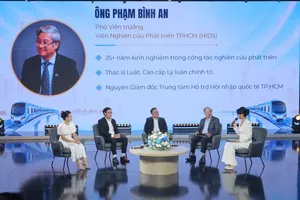
Conversely, businesses must become true centers of innovation and value creation. As Pham Binh An, Deputy Director of the Ho Chi Minh City Institute for Development Research, emphasized, this requires not only scaling up operations but also upgrading governance to international standards linking production with ESG, green transformation, and digital transformation principles.
At the same time, a collaborative ecosystem is essential to connect dispersed resources and generate collective strength. Effective linkages between enterprises, research institutes, universities, R&D centers, financial systems, logistics providers, and human resource training institutions are becoming critical conditions for sustainable development and competitiveness.
Industries that are closely connected often weather ups and downs better and keep a lasting edge. Strong regional and sectoral linkages cut costs, open new markets, and build the scale Vietnamese businesses need to step confidently onto the global stage,” said Dr. Can Van Luc, a member of the Prime Minister’s Policy Advisory Council.