According to Deputy Director Nguyen Cam Trang of the Ministry of Industry and Trade’s Import-Export Department, the tightening of US tariffs on imported goods has created a ripple effect, injecting a new level of uncertainty into global trade. For Vietnamese businesses, which are heavily reliant on exports, shifts in the American market alone are enough to throw their production and business plans into disarray.
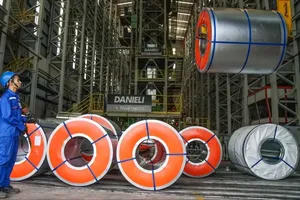
Sharing this sentiment, Do Ngoc Hung, Vietnam’s Commercial Counselor in the US, analyzed that the textile, wood, steel, and food sectors are feeling the most pronounced effects.
“If businesses only cling to a low-cost advantage, the risk of losing market share is immense”, he warned. “But if they view this as a chance to elevate their quality, labor, and environmental standards, Vietnamese goods can absolutely penetrate deeper into the premium segments of the US market.”
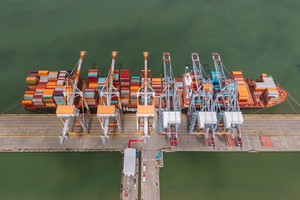
A resurgence of protectionism in major economies is also giving rise to a host of non-tariff barriers. Compounding the issue, geopolitical tensions and regional conflicts have disrupted global raw material flows, causing logistics costs to skyrocket and transit times to lengthen.
Furthermore, key markets like the US and the EU are increasingly intertwining trade with stringent green standards, from the EU’s Carbon Border Adjustment Mechanism (CBAM) to demands for net-zero emissions. These factors are converging to create a global trade landscape that is more unpredictable than ever before.
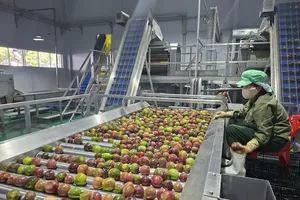
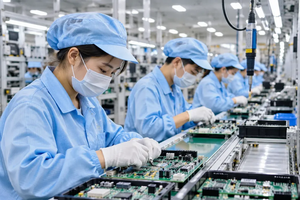
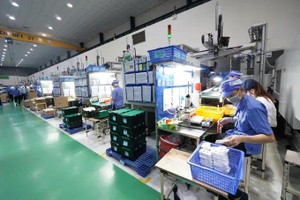
Under the weight of these new pressures, many Vietnamese companies are actively recalibrating their strategies. Chief Operation Officer Nguyen Xuan Linh of the B’Lao-Scavi Group reports that his company has invested in a closed-loop supply chain, from raw materials to final production. The goal is to reduce import dependency while meeting rigorous green manufacturing standards. “Only by achieving resource autonomy”, he asserts, “can a business stand resilient against external shocks.”
Representing the H&M Group, Sarah Negro noted that global supply chains are rapidly transitioning towards circular models and net-zero emissions. If Vietnam can swiftly embrace this trend, it has the potential to move beyond its role as a processing hub and establish itself as a center for sustainable manufacturing in Asia.
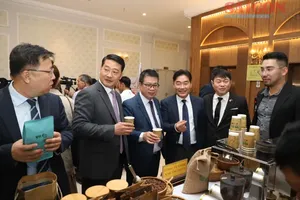
For CEO Nguyen Trung Dung of DH Foods, the strategy lies in differentiation. The company focuses on developing spice products that embody Vietnamese cultural identity, coupled with a firm commitment to being free of additives, preservatives, and impurities. This unique positioning helps them navigate technical barriers while carving out a competitive edge in international markets.
From a European viewpoint, Chief Executive Officer Victor Dulait of BeLuxCham assesses that Vietnam remains an attractive destination due to its stable growth. However, he cautioned, “To secure a long-term position in the supply chain, businesses must guarantee transparency and strict adherence to ESG (Environmental, Social, and Governance) standards.”
Complementing these corporate efforts, government bodies are intensifying their support. Deputy Minister Phan Thi Thang of Industry and Trade stated that the ministry has established an early warning system for trade defense measures.
It is also coordinating with industry associations to guide businesses on perfecting certificates of origin, enhancing product quality, and maximizing the benefits of free trade agreements. A national logistics development strategy is also being fast-tracked to tackle one of the sector’s biggest bottlenecks, namely high transportation costs.
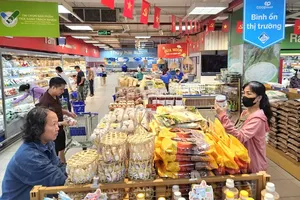
Another effective strategy involves partnering with major distribution conglomerates, which provides an indirect pathway to the global market. By leveraging the established networks and exacting standards of these distributors, Vietnamese businesses not only gain international exposure but are also compelled to upgrade their quality, packaging, and traceability systems, bringing them closer to global benchmarks.
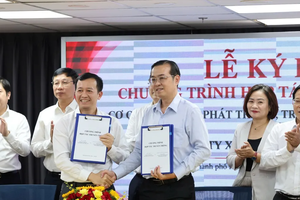
“In Vietnam, Central Retail already showcases products from 14 local enterprises across four main sectors”, highlighted Vice Chairman Paul Le of Central Retail Vietnam. “We’ve also launched our own private labels, GO! and Viet Gems, featuring export-quality One Commune, One Product (OCOP) specialties. This clearly demonstrates how a ‘handshake’ with a major distributor can leverage brand power, logistics, and an international network to integrate Vietnamese goods into the global supply chain.”
Overall, this is a pivotal moment for Vietnamese enterprises to restructure their operations, invest in green technology, secure raw material sources, and enhance transparency. By doing so, they will not only navigate the immediate headwinds but also seize the opportunity to level up and cement a new, more resilient position in the global supply chain.
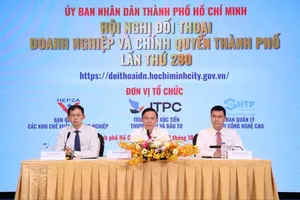
According to Director Tran Phu Lu of the HCMC Investment and Trade Promotion Center, the city is actively rolling out programs to connect businesses with international buyers, support digital transformation, reform administrative procedures, and encourage investment in green manufacturing.
With expanded capacity, HCMC is now better positioned to build inter-regional supply chains, which will help reduce logistics costs and create a competitive advantage for its exports.