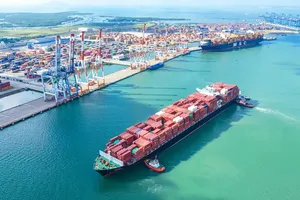
Shipping routes disrupted, freight rates triple
Following the outbreak of conflict, many major shipping lines have simultaneously adjusted their operations.
Specifically, Mediterranean Shipping Company (MSC) has temporarily suspended cargo bookings to several Middle Eastern markets. Similarly, French shipping giant CMA CGM announced that it would pause receiving containers for specific types of goods moving to and from several ports in the Gulf area.
Maersk, a Denmark-based global shipping line, has adjusted Middle East routes such as MECL and ME11 and temporarily halted acceptance of some cargo types. Meanwhile, Hapag-Lloyd (Germany) has limited or suspended shipments to the Upper Gulf and related routes, while imposing surcharges on corridors connecting Europe, the Mediterranean and North Africa.
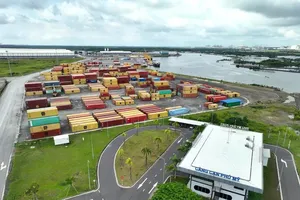
According to Chairman of the Vietnam Logistics Business Association (VLA) Dao Trong Khoa, with many shipping lines altering routes and limiting cargo bookings, vessel capacity has tightened in some corridors, causing freight rates to climb steeply. Rates for a 40-foot container, previously around US$1,000–US$1,500, are now typically in the range of US$3,000–US$4,000 per container.
Air freight rates have also risen from roughly US$7 per kilogram to US$11 per kilogram. The increase stems not only from longer transit times but also from higher risk insurance premiums, particularly war risk insurance, which in some cases have surged by up to 70 percent.
Many shipping lines have temporarily suspended or limited cargo acceptance through unstable areas, significantly reducing available vessel capacity. In some cases, businesses are willing to pay higher rates but still have to wait because they cannot secure space, said Mr. Tran Nhu Xo, Chairman of the Ho Chi Minh City Import-Export Association (HIEA).
Vietnam’s imports are heavily weighted toward petroleum derivatives, plastic resins, chemicals, and other petrochemical inputs. Meanwhile, export staples such as garments, footwear, furniture and seafood are largely transported by sea via Gulf shipping lanes and the Suez Canal. Disruptions at these vital transit points can swiftly inflate logistics costs and prolong delivery times.
According to economic experts, in the current context, businesses should review their contracts, renegotiate risk-sharing clauses, diversify shipping routes, and work closely with logistics providers to mitigate the impact. This is not merely a short-term response to rising freight rates, but a broader imperative to strengthen risk management capacity in an increasingly unpredictable global trade environment.
Tour operators adjust plans
On the afternoon of March 3, Saigontourist Travel Service said it is continuously monitoring developments in the Middle East to provide timely updates to customers and proactively implement safety measures. The company is reviewing to cancel three tour groups to Dubai scheduled for late March to ensure absolute safety for travelers.
At the same time, many travel firms in Ho Chi Minh City are reviewing their plans for tours to the region. Some groups set to depart in March are being considered for postponement or cancellation, depending on the situation. For now, tour groups visiting Dubai and Egypt remain on schedule, and no incidents concerning Vietnamese tourists have been reported.
LPG supply disrupted
In the energy sector, on March 2, PVGas Trading Company, a subsidiary of PV GAS, announced a force majeure situation that could affect LPG supply in the Southern region. The disruption occurred after an international supplier declared force majeure due to the collapse of a jetty at the NGL Juaymah facility run by Saudi Aramco on February 23, which interrupted propane and butane shipments.
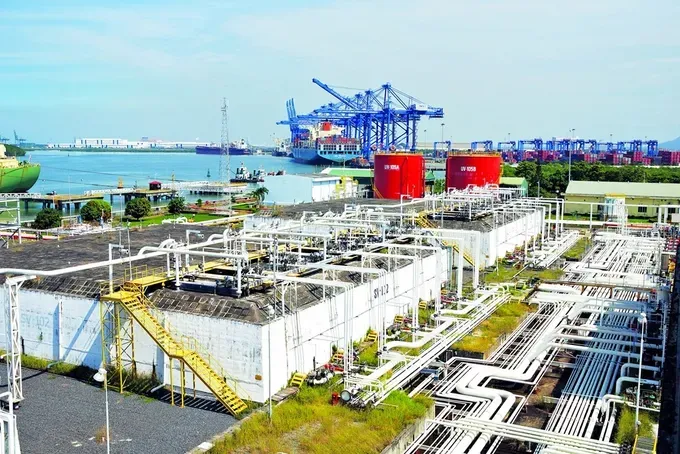
LPG cargoes scheduled to arrive at Thi Vai and Diem Dien terminals from March 10 have been temporarily suspended. Ongoing tensions in the Middle East continue to cast uncertainty over energy shipments passing through the Strait of Hormuz. Liquefied gas carriers expected to deliver cargoes from late March to the end of April have yet to receive firm schedules. As a result, the company has had to slow import deliveries through March 10 and seek alternative sources amid tight supply in East Asia.
On the afternoon of March 3, PV GAS said that the company had proactively developed import and stockpiling plans to cope with geopolitical volatility. Available inventory stands at around 15,000 tons, sufficient to ensure power generation supply through the end of April 2026. Approximately 70 percent of Vietnam’s LPG imports come from the Middle East.
PV GAS has also diversified its sourcing markets, increased domestic output by about five percent from the Dinh Co and Ca Mau gas processing plants, and expanded solutions to switch to pipeline gas, CNG, or LNG. The company affirmed that LPG supply will remain secured in March and in the coming period.