Reviewing 2025, experts assessed the year as one of robust growth amid a volatile global economic environment. According to Mr. Nguyen Xuan Thanh, Senior Lecturer at Fulbright School of Public Policy and Management, growth in 2025 was driven by three primary engines: exports, public investment, and tourism.
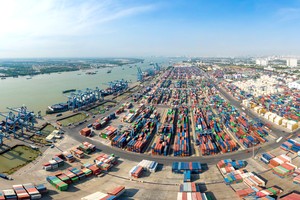
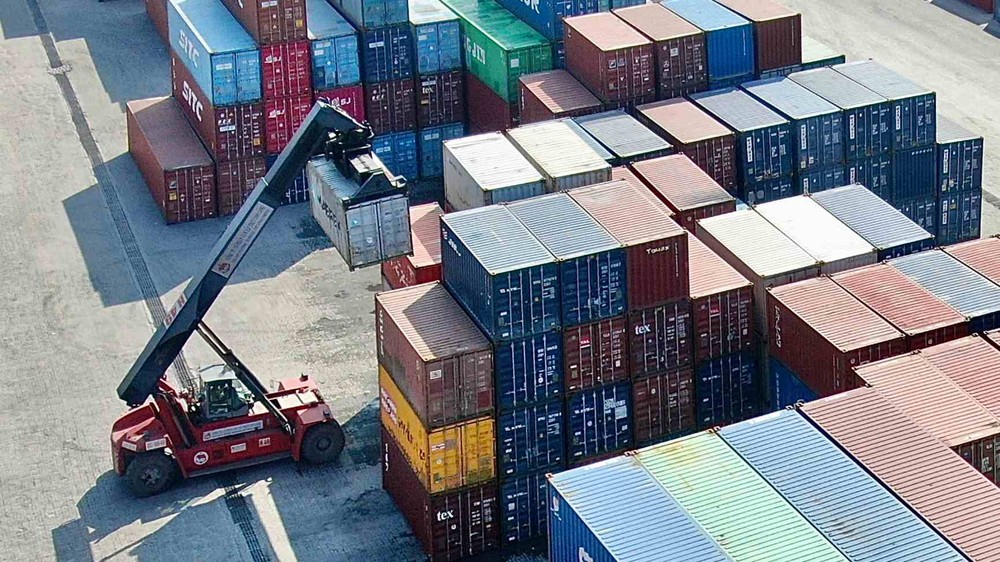
Exports continued to surge thanks to a commodity structure dominated by electronics and export-oriented industries. Public investment recorded a high disbursement rate, with fixed asset formation—particularly infrastructure—expanding markedly from the previous year. Tourism staged a strong recovery, with international arrivals surpassing pre-pandemic levels, generating positive spillovers across various sectors, including services, construction, and materials.
Building on that foundation, speakers argued that 2026 will usher in abundant opportunities while requiring businesses to take a more proactive and agile approach. Mr. Tran Dinh Thien, former Director of the Vietnam Institute of Economics, observed that 2026 marks the continuation of a new development mindset centered on perfecting market institutions, removing barriers for the private sector, and enhancing governance efficiency. In his view, the swift promulgation and simultaneous rollout of key resolutions and policies reflect a determination to deliver tangible improvements in the business environment, thereby strengthening corporate confidence.
From the business community’s perspective, Mr. Dinh Hong Ky, Chairman of the HCMC Green Business Association and Vice Chairman of the HCMC Union of Business Associations, said 2026 still presents substantial upside potential. Vietnam remains a stable destination for foreign direct investment, while emerging trends—green growth, the circular economy, and digital transformation—are becoming more pronounced, opening new growth avenues for domestic enterprises. Additionally, public investment is expected to remain a key stimulant, providing a “launchpad” for multiple sectors, especially construction, infrastructure, and supporting industries.
Drawing from these assessments, experts urged businesses to enter 2026 with a readiness to adapt—by strengthening governance capacity, capitalizing on opportunities arising from public investment, FDI, and green–digital trends, while preparing flexible scenarios for shifting policies and market dynamics. In a global environment still fraught with uncertainty, the ability to interpret context accurately and recalibrate strategy in time is seen as decisive for businesses to stay resilient and advance in the new cycle.