In this environment, the imperative is not merely to adapt flexibly to external shocks, but to recalibrate the growth model — shifting from heavy reliance on exports and foreign direct investment (FDI) toward strengthening domestic demand and building a more autonomous, sustainable economic foundation.
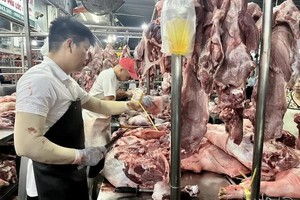
Experience shows that whenever the global economy falters, the domestic market becomes a vital bulwark. The Covid-19 pandemic offered a severe stress test. As global supply chains fractured and cross-border trade stalled, it was domestic consumption and local distribution networks that sustained production, preserved jobs and safeguarded social welfare.
That lesson is even more pertinent today, as trade protectionism gains ground, international tax and trade policies evolve unpredictably, and conflict flares anew in the Middle East. With a population exceeding 100 million, a youthful demographic structure, and a rapidly expanding middle class, Vietnam possesses a consumer market of considerable scale and dynamism. Domestic demand is widely projected to serve as the primary growth engine in the coming years, offsetting export headwinds triggered by global turbulence.
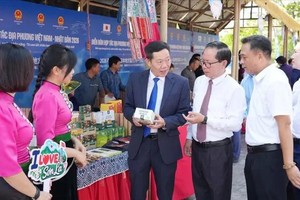
Such expectations are well-founded. The middle class is forecast to double between 2023 and 2026, while personal consumption growth in 2025 is expected to reach around 9 percent, equivalent to roughly US$270 billion in value. For Vietnamese enterprises, the home market offers distinct advantages: deep familiarity with local culture, tastes, and consumer behavior, and lower market-entry costs compared to overseas expansion. The “Vietnamese people prioritize Vietnamese goods” campaign has further reinforced domestic consumption trends. Amid widening conflict in the Middle East and intensifying trade barriers elsewhere, effectively tapping the domestic market can help firms weather immediate challenges while laying the groundwork for durable brand development.
Yet for domestic demand to become a genuine growth lever, coherent and long-term policy action is essential. First and foremost is raising disposable incomes and bolstering consumer confidence. Expanding social safety nets, including health insurance, pensions, and unemployment benefits, can reduce precautionary savings and encourage spending. Progressive tax reform, coupled with greater support for low- and middle-income households, would stimulate real purchasing power.
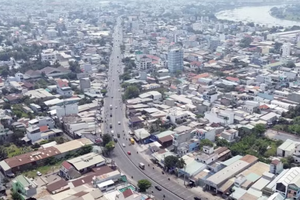
In parallel, sustainable urbanization and investment in regional connectivity infrastructure can enlarge market space, enhance productivity, and lift incomes. Reforming capital and land markets to facilitate efficient resource allocation, fostering private sector development, and strengthening the capacity of domestic enterprises are equally critical. FDI policy should be steered toward deeper integration with domestic market demand and technology transfer, thereby increasing local value-added and reinforcing national supply chains.
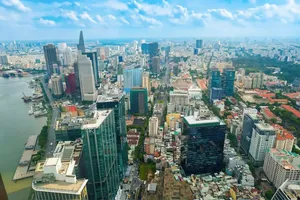
Human capital development will also be pivotal. Upgrading workforce skills, formalizing the informal labor sector, and generating stable employment will underpin purchasing power and expand the middle class. As the country’s leading economic hub, Ho Chi Minh City is well positioned to spearhead domestic market activation through its “three regions – one special zone – three corridors – five pillars” development model, leveraging the digital economy, high-quality services, and innovation-driven growth.
Crucially, a strong domestic market does not stand in opposition to export-led growth. On the contrary, a resilient “home base” provides the springboard for enterprises to venture abroad with greater confidence and competitiveness. More effectively harnessing the potential of a 100-million-strong consumer market is therefore not merely a short-term buffer against global volatility, but a long-term strategy to fortify national economic resilience.
When internal strengths are fully mobilized, when businesses take deeper root in the domestic marketplace, and when purchasing power is nurtured through consistent policies and reinforced trust, the economy gains a sturdier pillar of support. Developing the domestic market is thus synonymous with enhancing self-reliance — a strategic pathway toward building a more robust and prosperous nation in a rapidly shifting global landscape.