Vietnam pushes early rollout of E10 biofuel
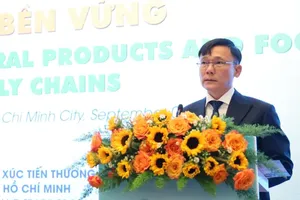
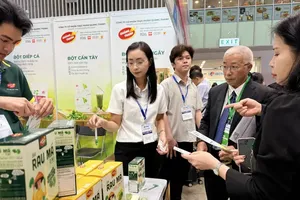
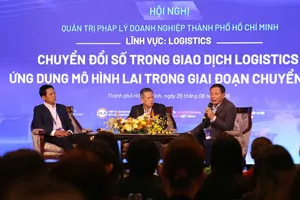
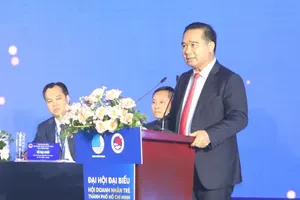
Yesterday, in Ho Chi Minh City, the Ministry of Industry and Trade held a conference to disseminate Circular 50/2025 on the roadmap for blending bioethanol fuel with traditional gasoline.
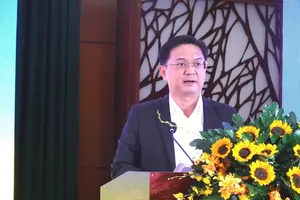
At the conference, Dao Duy Anh, Deputy Director of the Agency for Innovation, Green Transition and Industry Promotion under the Ministry of Industry and Trade, stated that some key businesses plan to widely implement E10 fuel from the end of March or the beginning of April, instead of waiting until June 1.
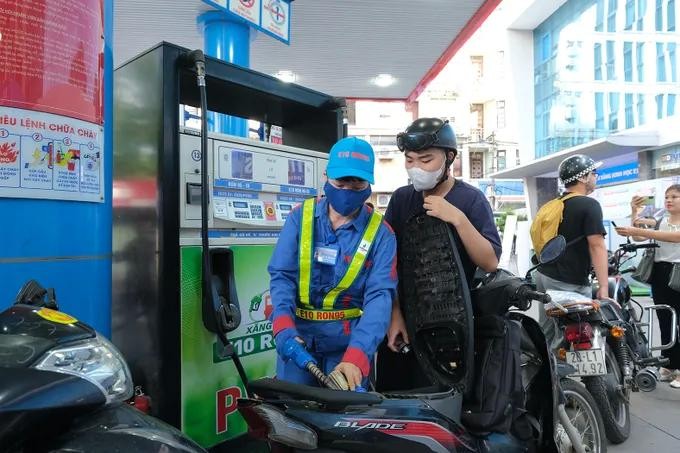
The Ministry of Industry and Trade urges businesses that possess adequate technical capabilities to initiate the implementation from May 1, thereby establishing a transitional phase for the market. Regulatory agency inspection teams are evaluating the readiness of businesses to guarantee that the transition occurs in a synchronized manner and adheres to technical standards.
Along with expanding the retail network, key fuel distributors have also prepared blending infrastructure. Currently, 12 out of 26 major fuel distributors have built biofuel blending facilities, of which 3 have been licensed to blend E10 gasoline, and 9 are in the process of completing the procedures. Regarding raw materials, ethanol, which is used for blending biofuels, is currently quite abundant on the international market, with 60 percent of the global ethanol supply coming from the US and Brazil.
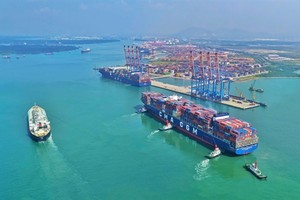
Do Van Tuan, Chairman of the Vietnam Biofuel Association, said that the shipping route from the US to Vietnam does not pass through the Middle East, so it is less affected by geopolitical conflicts. Notably, the price fluctuations of ethanol are much lower than those of gasoline.
Meanwhile, Mr. Dao Duy Anh reported that Vietnam's total gasoline demand is currently about 28 million cubic meters per year. Of that, about 11 million cubic meters are consumed by vehicles participating in the biofuel program. If E10 gasoline is widely implemented, Vietnam will need approximately 1 million cubic meters of ethanol per year. Increasing the blending ratio of biofuels is expected to reduce dependence on fossil fuels.
Experts warn of supply challenges in E10 rollout
Specialists caution that Vietnam’s nationwide adoption of E10 gasoline must be backed by robust supply chain planning, from ethanol reserves to blending infrastructure, to avoid market disruptions.
Despite the promising outlook, many experts believe that the nationwide rollout of E10 gasoline requires careful preparation to avoid supply chain disruptions.
According to Associate Professor Ngo Tri Long, effective E10 gasoline implementation requires a complete supply chain approach, from production and blending to distribution and storage. He analyzed that with E10, 10 liters of finished gasoline require 1 liter of ethanol. If demand increases rapidly and the ethanol supply is not prepared in advance, the market could be disrupted at the blending stage.
Some assessments indicate that domestic ethanol production capacity is currently insufficient to meet the entire demand when implemented on a large scale. Therefore, in the initial phase, the approach should be to restore the capacity of domestic biofuel plants while simultaneously proactively importing ethanol to compensate for the shortfall.
Besides raw materials, the reserve mechanism is also considered a crucial factor. Establishing minimum inventory levels for base gasoline and ethanol will help reduce the risk of supply shortages when demand surges. Blending infrastructure and distribution networks also need to be expanded synchronously. If the sales network is not evenly distributed or logistics are not smooth, it will create difficulties for consumers. Therefore, it is necessary to plan blending facilities by region, linked to a stable distribution network across the market.
Another factor determining market acceptance is the pricing mechanism. Biofuels can only become widespread when consumers find them easy to purchase, feel secure using them, and benefit from cost advantages. Therefore, the price of E10 gasoline needs to be designed to be significantly lower than conventional gasoline to create an incentive for conversion.
Therefore, the initial phase requires a suitable roadmap to allow the market and consumers to gradually adapt. Policies need to be stable and transparent in the long term to incentivize ethanol producers, distributors, and retailers to invest. When supply, infrastructure, and operating mechanisms are designed in a coordinated manner, biofuels will contribute to increasing the self-reliance of the national energy system.
According to calculations, the widespread use of E10 gasoline could lead to a reduction of approximately 10 percent in fossil fuel consumption; if E20 gasoline is adopted, this reduction could reach around 20 percent. Currently, biofuels such as E10, E15, and E20 are commonly utilized in various countries including the United States, Brazil, several European nations, China, and Thailand.
In Vietnam, E10 gasoline has been piloted in numerous localities since August 2025. Vietnam National Petroleum Group (Petrolimex) is currently conducting a trial sale of E10 RON95-III at about 40 outlets in Ho Chi Minh City and Quang Ngai. Vietnam Oil and Gas Group (PVOIL) has also begun selling E10 gasoline at over 50 locations within its network in Hanoi, Hai Phong, Ninh Binh, Thanh Hoa, Da Nang, Quang Ngai, and Ho Chi Minh City. In many areas, the consumption of E10 gasoline has increased by approximately 12 percent -18 percent compared to the initial pilot phase.