Sharing with SGGP Newspaper on the afternoon of March 7, Mr. Nguyen Lam Hai, Deputy Director of the Eastern Bus Station Management Board, said that there have been no fare increase submissions from transport operators at the station. Any adjustment must follow procedures requiring businesses to declare costs and submit documents to the station for review by authorities.
Operating passenger routes between Ho Chi Minh City and Da Nang, Nguyen Hung Mai, Director of Hung Mai Company, said fuel costs currently account for about 35 percent–40 percent of the company’s total operating expenses. This means that for every VND1 million (US$38.13) in revenue, the company must spend VND350,000–VND400,000 (US$13.34-US$15.25) on fuel, excluding other operating costs such as staff salaries, vehicle maintenance and station fees.
Despite rising fuel costs, the company has not yet adjusted ticket prices and is instead trying to cut other expenses to balance operations.
Meanwhile, numerous passenger and freight transport companies in the Central and Central Highlands regions have begun seeking solutions to cope with rising costs. According to transport businesses, adjusting fares cannot be done immediately because it requires multiple procedures.
Companies must develop a new pricing plan based on their cost structure, then declare the proposed rates to relevant authorities for review and approval. After approval, businesses must print new tickets, update price listings and complete vehicle inspection procedures.
The Ho Chi Minh City Cargo Transport Association has recommended that its member companies consider raising freight rates to offset rising fuel costs, which account for around 45 percent–50 percent of total transport costs. However, increasing prices also faces challenges as many companies need to renegotiate contracts with partners.
In Ho Chi Minh City, several noodle shops, bread stalls and coffee shops on Nguyen Thuong Hien Street in Ban Co Ward and Nguyen Thi Dang Street in Tan Thoi Hiep Ward have raised prices by VND3,000–VND5,000 per serving, depending on the item.
Many shop owners said that the adjustments were due to rising input costs such as fuel prices and labor wages. For example, the price of a loaf of bread increased from VND20,000 (US$0.76) to VND23,000 (US$0.87), bun rieu (Vietnamese crab noodle soup) rose from VND25,000 (US$0.95) to VND30,000 (US$1.14) per bowl, and coffee increased from VND25,000 (US$0.95) to VND30,000 (US$1.14) per cup.

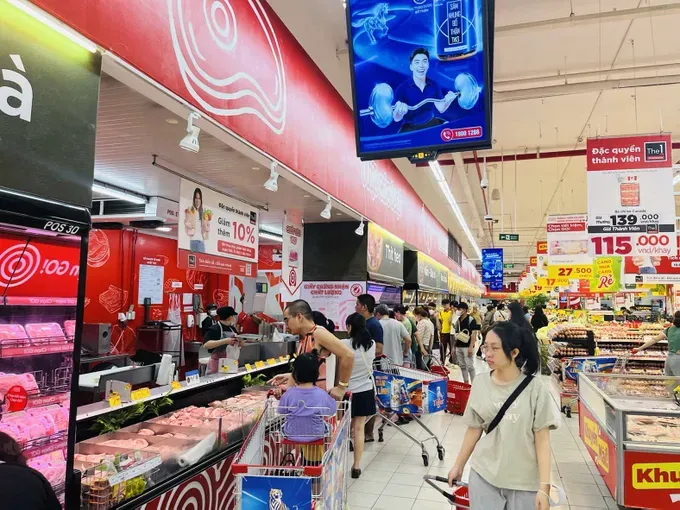
Representatives of supermarket chains in Ho Chi Minh City, such as Saigon Co.op, SATRA, MM Mega Market and GO! said that prices of goods remain stable. At the same time, they are implementing various promotional and discount programs to support consumers.
These retailers are also closely monitoring market developments and maintaining appropriate pricing policies to help stabilize the market.
On the afternoon of March 7, Mr. Nguyen Quang Huy, Deputy Head of the Ho Chi Minh City Market Surveillance Sub-Department, said that authorities will continue monitoring, inspecting and closely supervising fuel trading activities across the city to promptly detect and handle violations.
The strengthened monitoring aims to ensure the fuel market operates smoothly. Residents who notice unusual activities can contact the hotline of the Ho Chi Minh City Market Surveillance Sub-Department at (028) 39321014.
Fertilizer prices rise by VND3,000 to VND5,000 per kilogram
On March 7, fertilizer dealers in Dong Thap Province said the price of Ca Mau urea fertilizer ranged from VND800,000 (US$30.5)–VND820,000 (US$31.27) per 50-kilogram bag, while Phu My urea fertilizer ranged from VND740,000 (US$28.22)–VND760,000 (US$28.98) per 50-kilogram bag.
These prices have increased by about VND3,000–5,000 per kilogram compared with previous days.
According to Nguyen Van Ung, Director of Nong Thuan Phat Trading Company Limited, the rising cost of fertilizers, including urea, DAP and potassium, is creating major challenges for farmers.
Nguyen Van Doi, Director of Binh Thanh Agricultural Cooperative, said that rice cultivation requires large amounts of fertilizer, especially for the summer–autumn crop. If fertilizer prices continue to increase, production costs will rise further.
On the same day, representatives of the Vinh Long Province Department of Industry and Trade said that several agricultural products and production inputs have recently recorded price increases, including vegetables, animal feed, fertilizers and agricultural materials.
The main reasons include rising production costs, impacts of weather conditions, saltwater intrusion, and fluctuations in domestic and international markets.
Authorities said they will strengthen monitoring of prices and supply of essential goods, coordinate with relevant agencies and localities when necessary, and work with distributors and producers to prevent speculation and hoarding that could disrupt market prices.
Shipping and air freight costs rise
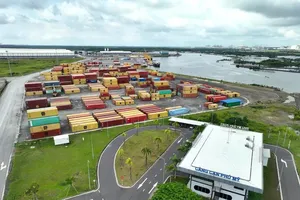
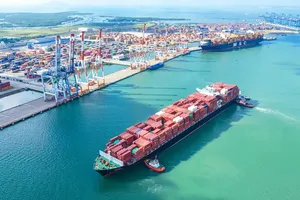
In the logistics sector, Dao Trong Khoa, Chairman of the Vietnam Logistics Business Association, said that current developments have extended shipping times by several weeks, leading to sharp increases in fuel costs, vessel expenses and insurance.
Previously, transporting a 40-foot container cost around US$1,000–US$1,500 per container, but it now commonly ranges between US$3,000–US$4,000 per container.
Air freight costs have also risen significantly as several countries in the region have restricted or closed their airspace, forcing flights to adjust routes. As a result, air cargo rates have increased from about US$7 per kilogram to around US$11 per kilogram in a short period.