Container freight rates rise 387 percent
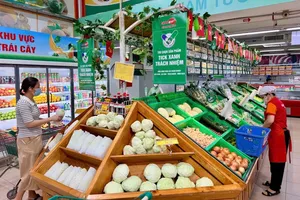
Lam Dong Province is currently a major supplier of agricultural products, especially vegetables, to the Southern localities. As fuel prices increase, freight rates for transporting agricultural products from Lam Dong to other provinces and cities have also begun to rise by about VND3 million (US$114.6) to VND3.5 million (US$133.6) per truck trip.
 "Agricultural products from Lam Dong Province face higher transport costs when delivered to consumer markets. (Photo: SGGP/ Doan Kien)")
Sharing with SGGP reporters, Ms. Cam My, owner of a vegetable purchasing facility in Lam Vien-Da Lat Ward, Lam Dong Province, said that freight for a 35–40 kilogram box of vegetables from Da Lat to Ho Chi Minh City has risen from VND40,000 (US$1.52) to VND50,000 (US$1.9) per box in recent days, increasing total transport costs by VND9 million (US$343) to VND10 million (US$381) for three truckloads.
According to the Ho Chi Minh City Department of Construction, the agency has so far received notices of fare adjustments from eight transport companies, which are applicable to approximately 50 interprovincial routes departing from Ho Chi Minh City. The increases range from 5 percent to 36 percent, depending on transport distance and vehicle type.
Several companies have raised fares significantly, including Toan Thang Company Limited which adjusted fares on 19 routes with increases of 17 percent to 36 percent; Tien Oanh Tourism and Transport Company Limited, which raised fares by 13 percent to 18 percent on ten routes; and Kumho Samco Buslines Transport Company Limited, which adjusted fares on 12 routes with increases of 12 percent to 19 percent. Meanwhile, some other operators, such as Dong Hung and the Dong Bac Transport and Tourism Cooperative, increased fares by about 5 percent on routes between Phan Rang, Phan Ri and Ho Chi Minh City.
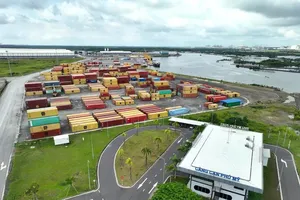
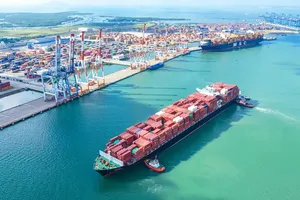
A representative of Vina Logistics Company in Tan Phuoc Ward, Ho Chi Minh City said that according to the latest report from the Vietnam Container Freight Index (VCFI), updated in the 10th week of the 2026 (March 6), the market’s focus is on the route between Ho Chi Minh City (Vietnam) and the Middle East and Africa (MEA) region. In just the past seven days, freight rates on this route have surged by as much as 387 percent, meaning businesses must pay an additional US$5,957 for each 40-foot container (FEU). Freight rates have now reached a 52-week peak of US$7,496/FEU, putting significant pressure on the profit margins of companies exporting goods to this region.
Representatives of the Ho Chi Minh City Public Security Department warned about the situation in which some residents purchase gasoline in plastic containers, metal drums or bottles to store at home. That poses a very high risk of fire and explosion. People are recommended to purchase only the amount of fuel they need and avoid storing it in residential areas.
The Ho Chi Minh City-South America (SAM) route also recorded a 60.1 percent increase, equivalent to an additional US$1,041/FEU, bringing the rate to US$2,773/FEU. Routes to Africa, such as Ho Chi Minh City–EWA (East and West Africa) and Ho Chi Minh City–ZAF (South Africa), also rose simultaneously by 18.9 percent and 10.4 percent, respectively.
For routes to the U.S. West Coast (HCMC–UWC) and the Mediterranean (HCMC–MED), freight rates increased by US$201 and US$248 per container, respectively. Meanwhile, short-haul routes to Northeast Asia brought positive news for exporters as freight rates continued to hit new lows. Specifically, the route to South Korea (HCMC–KOR) fell by another 10.6 percent to just US$203/FEU, the lowest level recorded in the past year.
HCMC requires daily reporting on fuel supply
The Ho Chi Minh City Department of Industry and Trade held a meeting with petroleum businesses to review the local energy supply situation on March 10.
Regarding petroleum products, Mr. Trinh Quoc Viet, Deputy Director of Petrolimex Saigon, said that demand for gasoline and oil has surged in recent days. Total sales across the company’s system rose 131 percent compared to the same period, while sales in Ho Chi Minh City increased by 165 percent, with suburban areas recording a rise of more than 200 percent. The company has extended loading hours at its depots until 4:30 a.m., instead of midnight as usual, to ensure adequate supply.
For gas products, amid supply difficulties, some gas companies have proposed temporarily reducing refilling volumes, such as filling 12 kilogram gas cylinders with only 6 kilograms or 45 kilograms cylinders with 22 kilograms. In response, the Ho Chi Minh City Department of Industry and Trade has required companies to publicly disclose this information to authorities and consumers to ensure compliance with regulations. The department has also introduced a daily reporting mechanism on supply and is supporting businesses in transporting petroleum products, as some roads restrict fuel tanker trucks from entering the inner city during peak hours.
Regarding management efforts, Mr. Nguyen Tien Dat, Deputy Head of the Ho Chi Minh City Market Surveillance Division, said that authorities have recorded several petrol stations temporarily running out of gasoline or diesel as suppliers have not yet confirmed delivery times. Market surveillance forces will intensify inspections of businesses and retail outlets, and strictly deal with hoarding, selling above listed prices, or trading petroleum products of unclear origin.