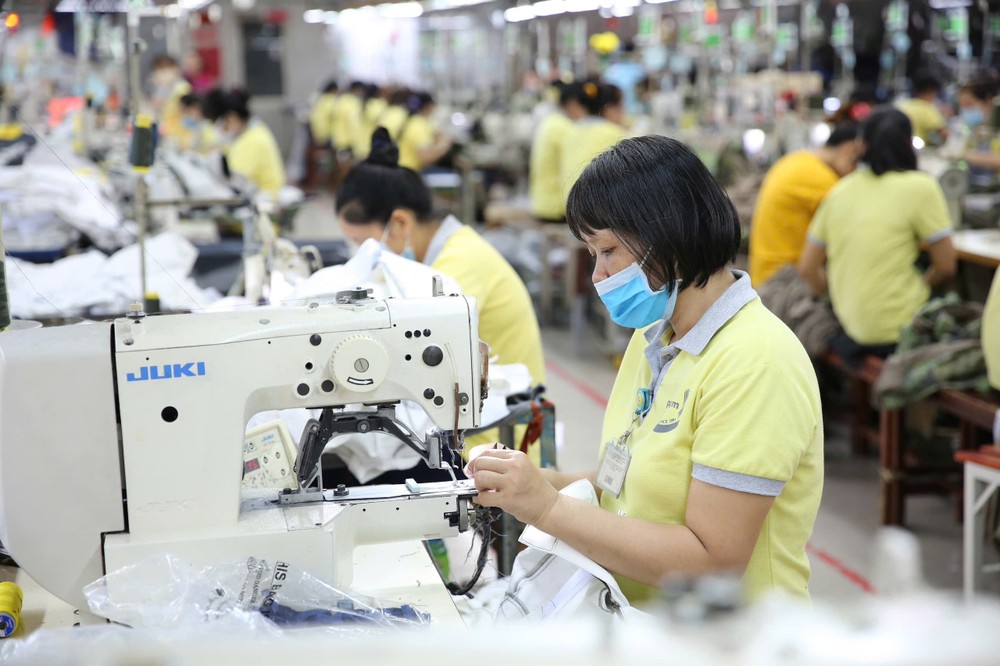
Mr. Truong Van Cam, Vice Chairman and General Secretary of VITAS, said textile and garment exports reached about US$46.2 billion in 2025, up nearly 6 percent from the previous year. In 2026, the industry targets export turnover of roughly US$49 billion, equivalent to growth of about 6 percent.
Given that global demand for textile and apparel products is expected to grow by only 2–3 percent annually while competition continues to intensify, the projected growth rate is considered realistic, the association said.
However, maintaining momentum will require the sector to shift its focus from expanding production volume to improving product quality and increasing value added. A key solution is to strengthen domestic production of raw materials and accessories to reduce reliance on imports, comply with rules of origin, and take fuller advantage of free trade agreements.
The association also proposed boosting investment in weaving, dyeing, and finishing through the development of specialized industrial parks, thereby helping complete the domestic supply chain. Attracting capable investors in fabric and raw material production is seen as critical to enhancing the industry’s competitiveness.
Rising production costs, particularly energy and transportation expenses, are also putting pressure on businesses. The association has called on authorities to implement measures to stabilize fuel supplies in order to help lower input costs for enterprises.
At the same time, Vietnam’s trade offices abroad are expected to strengthen the provision of market intelligence, particularly in regions affected by geopolitical tensions, enabling companies to proactively adjust production and logistics plans.
Regarding the US market, the association said recent changes related to import tariff policies are having a notable impact on exporters. Businesses, therefore, hope to receive timely updates and detailed guidance from relevant authorities to adapt to new regulations.
In addition, the textile and garment sector continues to diversify markets, customers, and product lines. In 2026, the industry will implement four national trade promotion programs aimed at expanding export markets. Initiatives such as developing a national brand logo and building digital platforms to support overseas market development are expected to help enterprises improve access to international markets.
Vietnamese textile and garment products are currently exported to more than 130 countries and territories. Major markets, including the United States, the European Union, Japan, South Korea, China, and ASEAN, account for about 90 percent of total export turnover. The industry maintains a trade surplus of more than US$20 billion, continuing to make a significant contribution to the country’s trade balance, though improving sustainability and strengthening supply chain autonomy are becoming increasingly urgent priorities.