Demand for tens of thousands of skilled workers
The country will need tens of thousands of workers to support its atomic energy and nuclear power ambitions by 2035, as the country moves forward with plans to revive the Ninh Thuan nuclear power project and expand the peaceful use of nuclear technology.
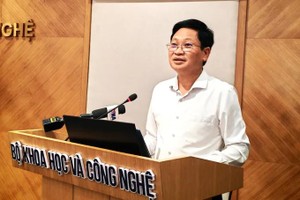
Speaking at a recent workshop on human resource development for the 2026–2035 period, organized by the Vietnam Agency for Radiation and Nuclear Safety (VARANS) under the Ministry of Science and Technology, VARANS Director General Nguyen Hoang Linh said that the demand for qualified personnel has become increasingly urgent following a series of policies issued by the Party, the National Assembly and the Government to restart the Ninh Thuan nuclear power project.
Under the country's Strategy for the Development and Application of Atomic Energy for Peaceful Purposes to 2035, with a vision to 2050, nuclear power is expected to account for 6–8 percent of the country's total electricity output. The plan includes four large-scale reactor units and 10–15 small modular reactors (SMRs).
The Government has also approved a national program to train and develop human resources for nuclear power through 2035, alongside initiatives to strengthen personnel for state management, research, technical support and the regulatory capacity of VARANS.
According to the VARANS Director General, the Ninh Thuan 1 and Ninh Thuan 2 nuclear power plants alone will require about 3,900 operational staff by 2030, including 670 university graduates trained overseas.
Beyond plant operations, demand will extend to a wide range of fields, including nuclear regulation, safety and security, research and development, technical support, education and training, nuclear medicine, radiation technology, radioactive waste management, emergency response, environmental monitoring, industrial applications and agriculture.
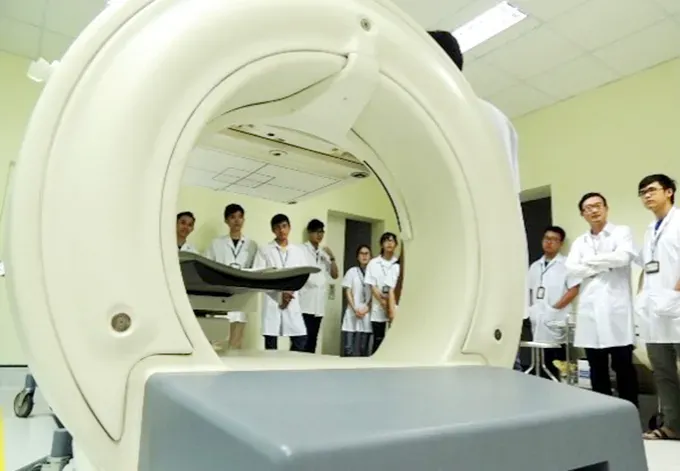
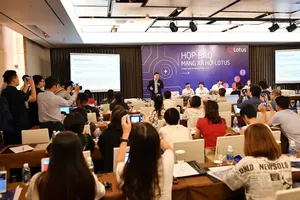
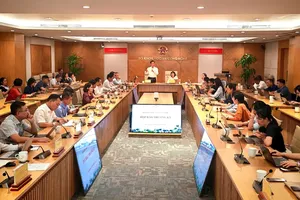
Addressing the seventh National Nuclear Regulatory Conference in Quang Ninh Province on July 30, Minister of Science and Technology Vu Hai Quan described the nuclear power program as a long-term strategic mission linked to Vietnam's energy security and scientific and technological development.
He said that the successful implementation of the program would require a long-term vision, a comprehensive legal framework, a strong regulatory system, highly qualified experts and a deeply rooted nuclear safety culture across all relevant institutions. The conference brought together more than 400 representatives from government agencies, local authorities, research institutes, universities, businesses, nuclear and radiation facilities, as well as experts from the International Atomic Energy Agency (IAEA) and other international organizations.
Expanding training capacity
Vietnam already has several established institutions offering nuclear-related education, including Hanoi University of Science and Technology, Electric Power University, Da Lat University, the University of Science under Vietnam National University, Hanoi, the University of Science under Vietnam National University Ho Chi Minh City, and the Vietnam Atomic Energy Institute (VINATOM).
However, experts warn that Vietnam's current training capacity is insufficient. Universities admitted only 320 students to nuclear-related undergraduate programs in 2025, compared with an estimated demand for about 3,900 workers at the Ninh Thuan 1 and Ninh Thuan 2 nuclear power plants by 2030.
Tran Thi Nhan from Electric Power University said that the university has strong foundations in engineering, energy and technology education, providing a solid basis for training future nuclear professionals. She added that further investment in curricula, laboratory facilities and partnerships with government agencies, research institutes and industry will be essential.
Nguyen Quoc Sy from the National Research University Moscow Power Engineering Institute in Russia proposed a dual-track approach that combines overseas education with domestic training supported by international partners.
He said overseas programs should focus on developing core experts and leading specialists, while domestic institutions should train the large workforce needed for plant operations and technical support. He also stressed the importance of diversifying international partnerships to avoid dependence on a single foreign partner and to strengthen Vietnam's long-term self-reliance in nuclear education.
Sai Gon Giai Phong (SGGP) Newspaper’s reporter interviewed Associate Professor Tran Thien Thanh, Deputy Head of the Faculty of Physics and Engineering Physics at the University of Science, Vietnam National University Ho Chi Minh City on Vietnam's efforts to train a workforce for the nuclear power sector.
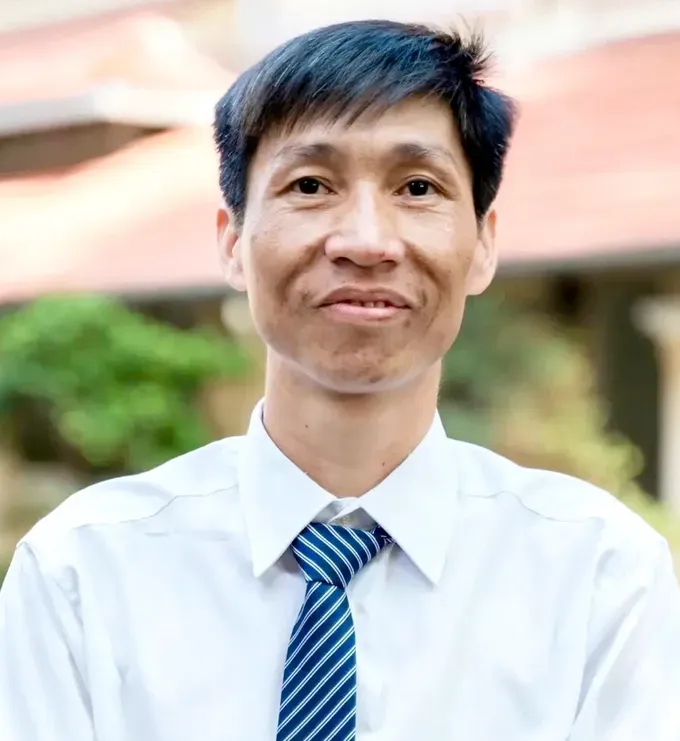
Associate Professor Tran Thien Thanh, Deputy Head of the Faculty of Physics and Engineering Physics at the University of Science, Vietnam National University Ho Chi Minh City, said that the university has maintained a stable and effective nuclear engineering program for many years, placing it in a strong position as Vietnam revives its nuclear power plans.
He said that the university is expected to supply not only personnel for the Ninh Thuan nuclear power plants but also for the planned Nuclear Science and Technology Center in Dong Nai City.
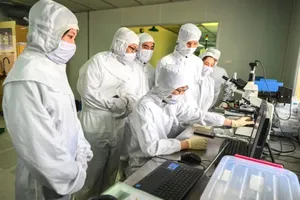
The university currently operates specialized laboratories at both its Nguyen Van Cu campus and Thu Duc campus. Under Prime Minister's Decision No. 245/QD-TTg, it has been designated as a priority institution for investment in laboratory equipment for nuclear engineering and medical physics education and research.
Plans include building advanced laboratories for thermal-hydraulics, reactor simulation and nuclear safety analysis.
Mr. Tran Thien Thanh said the university is upgrading its curriculum to meet international standards, with its Nuclear Engineering and Medical Physics programs currently undergoing accreditation by Germany's ASIIN, with results expected in October.
Under a memorandum of understanding with the Vietnam Atomic Energy Institute (VINATOM), students will undertake practical training at the institute's specialized facilities and receive priority access to one of the beam ports at the new research reactor in Dong Nai.
Internationally, the university has established partnerships with the Korea Nuclear Association and actively participates in IAEA projects involving student and researcher exchanges.
To ensure Vietnam has sufficient qualified personnel by 2030, Mr. Tran Thien Thanh called for government-sponsored training programs tied to scholarships and guaranteed employment after graduation. He also urged faster investment in educational infrastructure and stronger incentives to attract leading domestic and international experts to teach and conduct research.