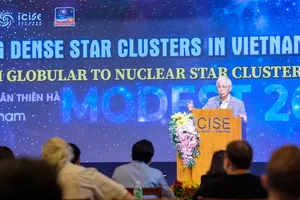
The recommendation was made on the sidelines of the International Conference on Quantum and Semiconductors for the Public, held in Gia Lai Province on July 27, where experts highlighted quantum technology's transformative potential for Vietnam's future innovation ecosystem.
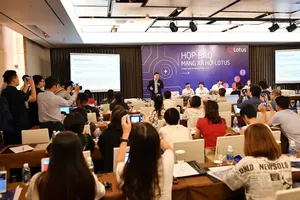
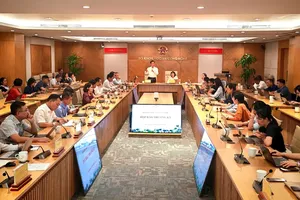
The National Innovation Center (NIC), the Vietnam Quantum Innovation and Technology Experts Network (VNQuantum) and the Gia Lai Provincial People's Committee co-hosted the international conference.
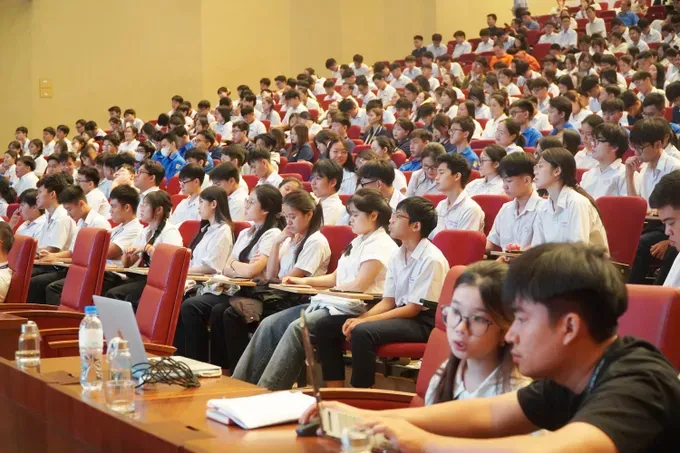
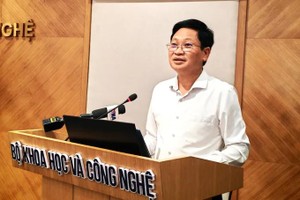
Speaking at the event, Phan Ho Giang, Deputy Director of the Gia Lai Provincial Department of Science and Technology, said that the conference is an important part of a broader initiative to promote quantum science and develop the country's quantum technology ecosystem.
Through public lectures, the event introduced quantum science and semiconductor technology to students and the wider community, contributing to the development of a highly skilled workforce while promoting Gia Lai as a destination for science and innovation.
The conference is part of a nationwide outreach program designed to introduce quantum computing to students studying mathematics, physics, chemistry, engineering, and information technology.
The program is being held in various localities and is based on educational materials developed by the Vietnam Institute for Advanced Study in Mathematics (VIASM), the Institute for Quantum Technology under Vietnam National University, Hanoi and IAS QUANTUM.
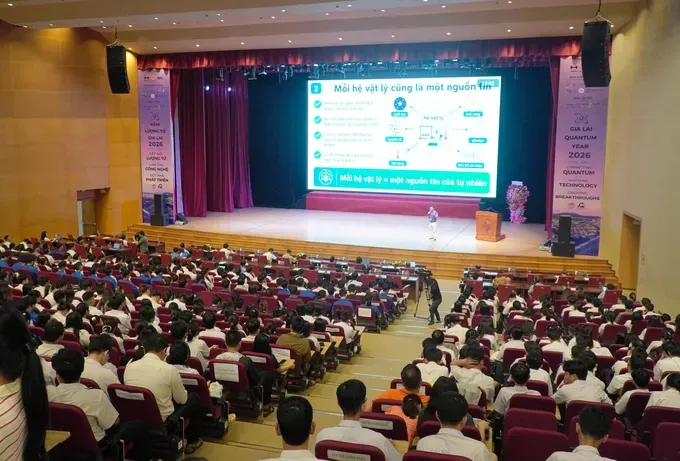
Experts from universities in Vietnam and abroad delivered presentations covering topics including the differences between quantum and classical information, atomic structure and quantum tunneling, quantum mechanics from theory to practical applications, classical and quantum computing, probability theory and the quantum nature of light.
Vo Xuan Hoai, Deputy Director of the NIC, said that the Party and the State have identified science and technology, innovation, and digital transformation as key drivers of national development, with quantum technology, semiconductors, artificial intelligence, and cybersecurity designated as strategic sectors.
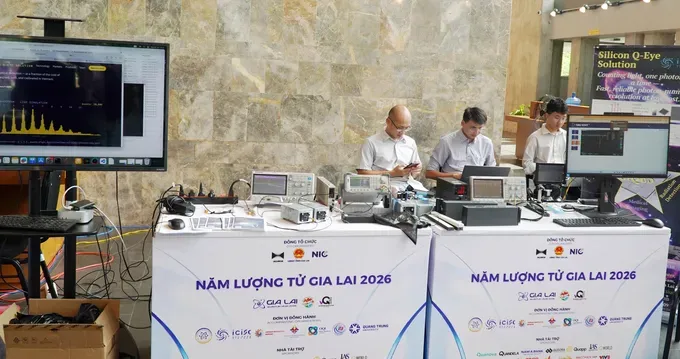
Quantum technology will bring about an even greater transformation than the internet and artificial intelligence because of its extraordinary computing power. Calculations that would take today's supercomputers years to complete could be performed by quantum computers in just hours or even minutes.
He said quantum technology therefore holds strategic significance for economies worldwide, including Vietnam.
To build a competitive quantum sector, Vietnam should make sustained investments in human resource development through universities and research institutes while expanding international training and cooperation, Hoai said. He also called for strong policy mechanisms to support research from fundamental science to practical applications.
Rather than expecting results within three to five years, Vietnam should pursue a steady development roadmap with a long-term vision of at least 10 to 20 years, he added.
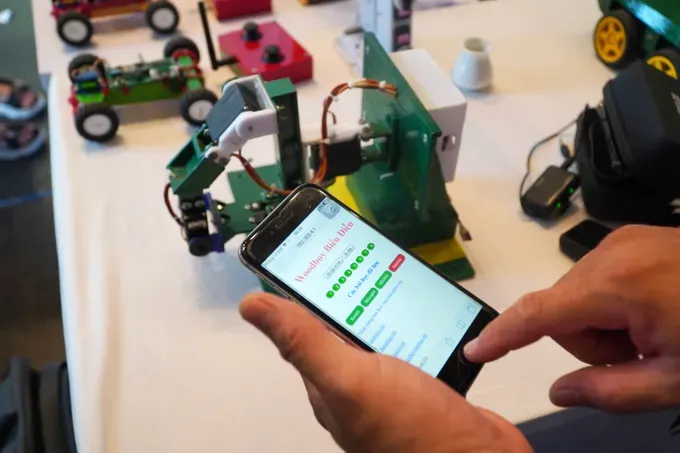
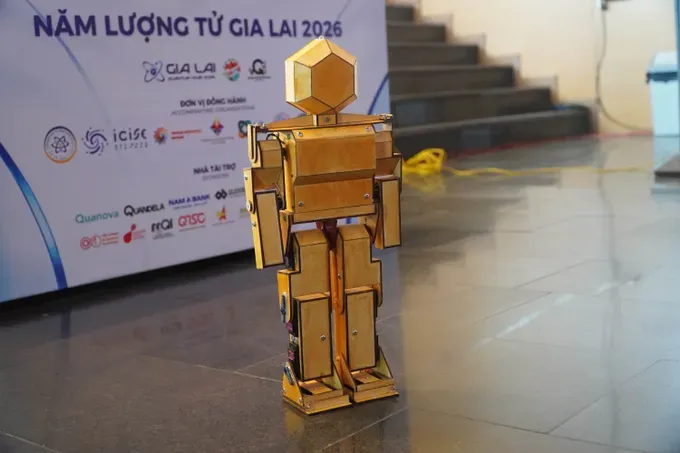
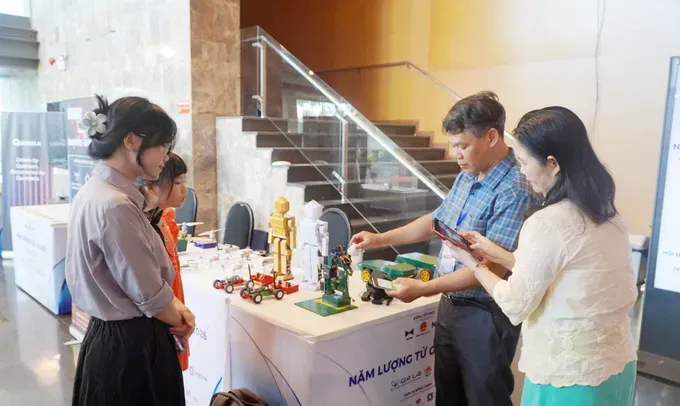
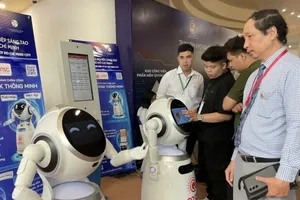
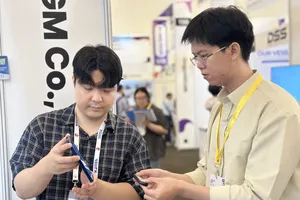
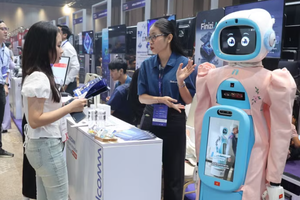
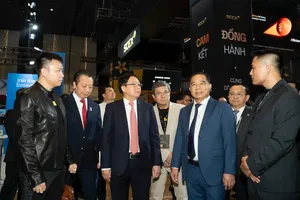
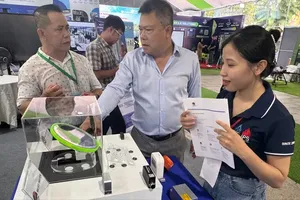
On the sidelines of the conference, the Gia Lai Provincial People's Committee and its partners opened an exhibition on quantum, semiconductor and superconducting technologies, featuring displays of advanced technologies, materials and innovative products.
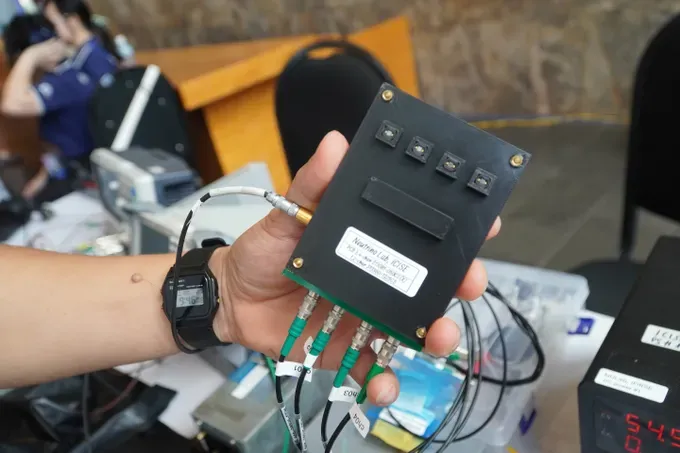
Among the highlights were two experimental models presented by the Interdisciplinary Institute for Research in Science and Education (IFIRSE), part of the International Center for Interdisciplinary Science and Education (ICISE). The exhibits demonstrated silicon sensors operating on the principles of light quanta and the photoelectric effect first proposed by physicist Albert Einstein in 1905.
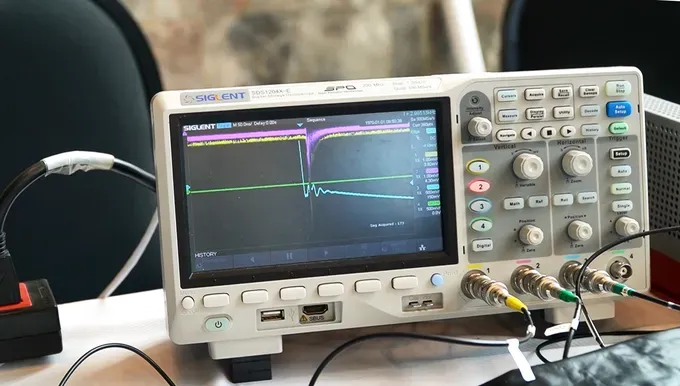
According to Dr. Cao Van Son, head of IFIRSE's Neutrino Physics Group, one of the showcased devices is capable of detecting and counting individual photons, a technology that could contribute to advances in quantum communications and quantum technologies. The second exhibit applies nuclear techniques.
Dr. Cao Van Son said that these technologies already have a wide range of practical applications, including silicon sensors for medical imaging in cancer diagnosis and treatment, as well as light-based distance measurement technologies used in automation and radar systems.