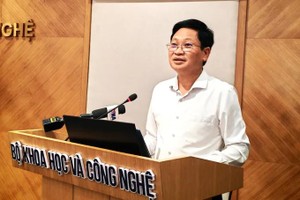
Representatives of the drafting committee outlined the handbook's development process and presented its key principles for governing AI use in journalism.
The handbook is designed to establish principles, scope, responsibilities and oversight mechanisms for the research, development, integration and application of AI in newsrooms.
It also seeks to ensure that AI supports journalism's mission, public service role and social responsibility without compromising accuracy, truthfulness, objectivity, human values or the public interest, while helping improve journalists' professional capabilities.
The draft emphasizes that humans must retain editorial control, exercise professional judgment and bear ultimate responsibility for all journalistic products, processes and decisions involving AI.
It also provides guidance on preventing, detecting and addressing risks associated with AI use, serving as a framework for news organizations to develop internal regulations, editorial workflows, training programs, approved AI tool lists, monitoring systems and compliance mechanisms tailored to their operations.
The handbook is intended as a general framework issued by the Vietnam Journalists Association, while each news organization will be responsible for adopting its own internal AI policies based on its editorial model, size, technical infrastructure and operational needs.
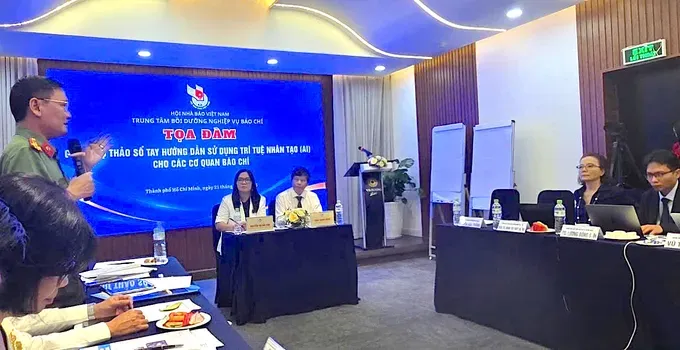
During the seminar, technology experts, cybersecurity specialists and media representatives discussed safe AI use, risk management, data protection, measures to prevent deepfakes and AI-generated misinformation, as well as oversight mechanisms for AI deployment in newsrooms.
Concluding the event, Tran Trong Dung, Vice Chairman of the Vietnam Journalists Association, described the handbook as an essential step amid the rapid digital transformation of the press.
He said the guidelines would help news organizations harness AI effectively while ensuring compliance with the law, professional ethics and journalists' responsibility to the public.
Mr. Tran Trong Dung also urged the drafting committee to incorporate feedback from experts, media organizations and technology companies before finalizing the handbook for official issuance.
Earlier, the Vietnam Journalists Association released ten principles for AI use in journalism, including that AI should serve only as a support tool rather than replace journalists, must not be treated as a news source, and AI-generated content should not be published without editorial review.
The principles also prohibit the creation or dissemination of false information or deepfakes, require protection of sources and personal data, respect for copyright, transparency in AI use, rigorous verification of sensitive content and compliance with relevant laws and regulations.