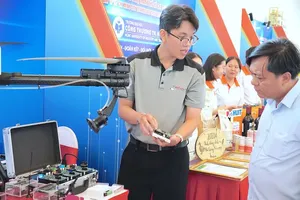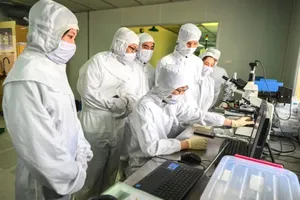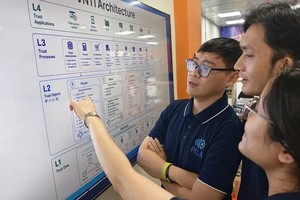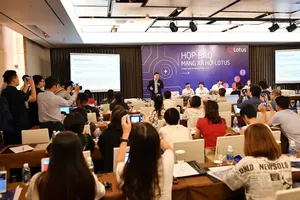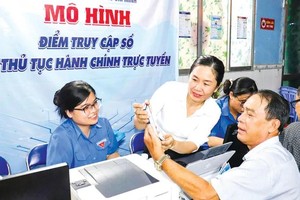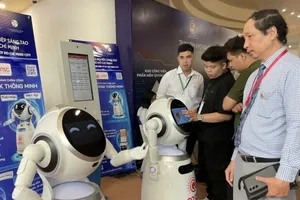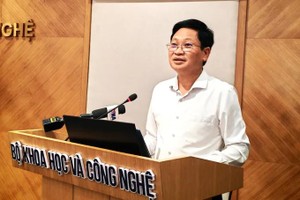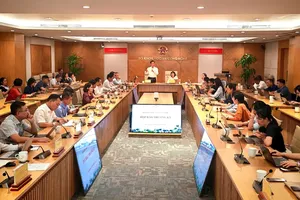
HCMC is synchronously deploying complex tasks to implement the Politburo’s Resolution No.57-NQ/TW regarding breakthroughs in national science and technology (S&T), innovation, and digital transformation.
As of early July, it’s reported that the city had flawlessly completed 183 out of 290 tasks explicitly assigned by the Government; eight tasks are actively being executed within their strict deadlines, 99 tasks represent regular duties, and there are no overdue tasks.
Running parallel with perfecting major mechanisms and policies, the city is also proactively preparing optimal conditions to develop a sprawling S&T urban area, a robust data economy, the commercialization of research results, intellectual property development, and the hearty attraction of high-quality human resources.
According to the HCMC Department of Science and Technology, alongside the achieved results, there remain exactly seven groups of lingering issues that desperately need resolving:
- Many novel technological fields such as artificial intelligence (AI), blockchain technology, data, digital assets, or emerging business models are developing much faster than the capacity to perfect legislation.
- The commercialization of research results from public institutions still faces numerous legal barriers.
- The mechanisms for mobilizing venture capital, public-private partnerships, and investing in AI and data infrastructure aren’t truly open and airy just yet.
- High-quality human resources haven’t adequately met the rigorous demands for rapid development, especially in cutting-edge technological sectors.
- The sprawling innovation ecosystem still sorely lacks massive leading enterprises to properly guide the way.
- The financial mechanism for S&T and innovation isn’t suitably tailored for their highly specific, high-risk nature.
- The testing and application environment for new technologies still lacks a highly favorable legal corridor, while administrative procedures in certain areas remain overly complex, reducing the ability to seize golden opportunities from brand-new technological trends.
For Deputy Director Vo Minh Thanh of the HCMC Department of Science and Technology, strategic collaboration is key. He noted that the department is actively coordinating with relevant agencies to determinedly propose 18 breakthrough mechanisms and policies strictly within the S&T sector.
The primary focus is heavily placed on:
- mobilizing highly diverse social resources;
- comprehensively deploying a controlled testing mechanism (sandbox);
- fiercely promoting the commercialization of research results;
- attracting top-tier experts and scientists;
- developing S&T infrastructure, shared databases, alongside AI applications directly in urban governance.
Experts in the field voiced that specific mechanisms and policies can only truly exert their effectiveness when they go hand-in-hand with strong research capabilities, high-quality human resources, and a thriving technology market.
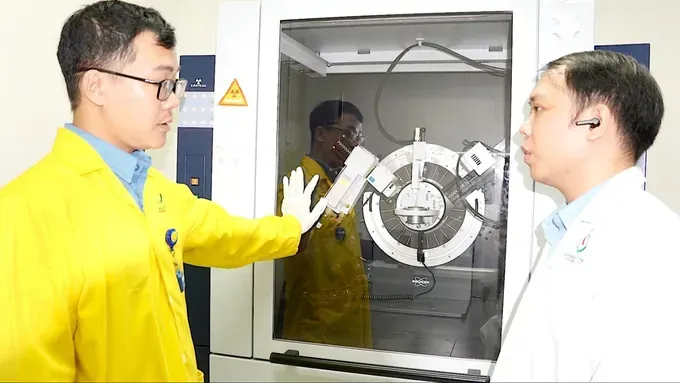
Dr Trinh Xuan Thang, Director of the Research and Development Center at Saigon Hi-Tech Park (SHTP Labs), argued that S&T organizations desperately need to rapidly transition from a traditional research model to a far more dynamic one that simultaneously masters technology, creates tangible products, and smoothly commercializes those hard-earned research results.
Within this framework, digital transformation and green transition are two deeply interconnected orientations, fundamentally creating a rock-solid foundation for a modernized and highly sustainable development process.
Digital transformation vigorously promotes the healthy application of big data, AI, the Internet of Things, cutting-edge automation, and smart governance. Meanwhile, the green transition lays down strict requirements for developing novel materials, clean energy, resource-saving technologies, massive emission reductions, and a robust circular economy.
Ultimately, the seamless combination of these two processes creates a highly potent “dual transformation,” opening up a massive demand for researching, developing, and fully mastering strategic technologies.
“As for SHTP Labs, the unit will heavily focus on developing the fields of semiconductors, Micro-Electro-Mechanical Systems (MEMS), smart sensors, Artificial Intelligence of Things (AIoT), nanomaterials, biotechnology, new energy, and precision mechanics combined with automation. These are all highly specialized sectors intricately tied to digital transformation, the green transition, and the city’s strategic technology development.”
Dr Trinh Xuan Thang
Providing a fresh perspective, Dr. Tran Minh Ngoc from the People’s Public Security Political Academy suggested that for S&T to genuinely become HCMC’s primary driving force, officials must untie existing knots utilizing mechanisms that boldly transcend traditional frameworks.
This comprehensive approach includes absolute autonomy, highly efficient budget allocation, and a profound willingness to accept inherent risks in complex research, thereby significantly helping to forge practical products and valuable intellectual property.
Sharing a strikingly similar perspective, Director Nguyen Hai An of the HCMC Biotechnology Center (HCMBiotech) noted that alongside heavily investing in research infrastructure, the city truly needs specific mechanisms regarding taxes, credit, administrative procedures, and a regulatory sandbox. This will promote the rapid commercialization of state-funded research results, broaden international cooperation, train high-quality human resources, and actively attract leading experts to elevate research capabilities.
To proactively anticipate the city’s 18 breakthrough S&T mechanisms and policies, Director Chung Thi Van Anh of the Student Experience and Corporate Relations Center at Ba Ria – Vung Tau University offered a crucial note. She stressed that HCMC must urgently resolve the glaring misalignment within the intricate relationship between people, technology, and institutions, which are the three core elements embedded in digital transformation.
Human resource development solutions need to be firmly placed within the city’s major digital human resource development strategy, aiming to form a highly capable workforce that can fully master technology, adapt rapidly to a modern digital environment, and effectively participate in the sprawling innovation ecosystem.
In the end, this also serves as an important condition for HCMC to actualize its ambitious goal of becoming the region’s leading technology and innovation hub.