AI: Friend or foe?
Just a few years ago, artificial intelligence (AI) was viewed as a technology of the future. Today, it has entered offices, factories, banks, newsrooms, and many other workplaces, becoming a "colleague" to millions of workers.
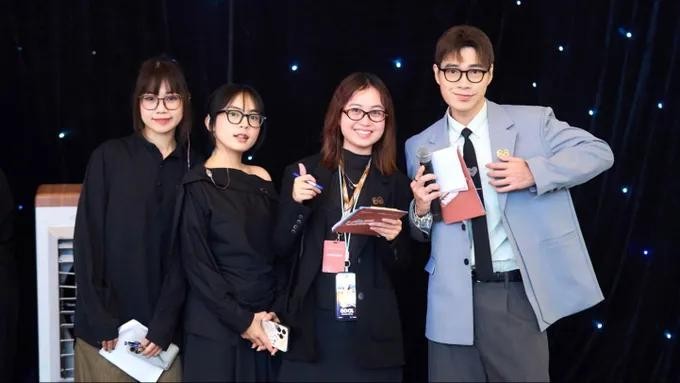
Nguyen Ngoc Duy, born in 2000 and from Vinh Long Province in the Mekong Delta, works in customer service in the finance and banking sector. He was once accustomed to answering hundreds of customer calls each day through a call center.
Over the past one to two years, as his company has expanded its use of AI, Duy has not only used the technology but has also been assigned to work with the research and development team to build chatbots, automated response systems, and optimize customer service processes.
At first, he was concerned that he was helping develop technology that could eventually threaten his own job. He was afraid that one day AI would answer every customer question, leaving no role for customer service staff.
Instead, according to the young man, the outcome has been quite different. After the chatbot was deployed, about 70 percent of routine customer inquiries were handled almost instantly by AI. As a result, customer service staff no longer spend most of their time responding to repetitive requests such as information lookups, procedural guidance, and basic questions. Instead, they now focus on more complex cases, handling complaints, advising customers with special circumstances, and providing the flexibility, empathy, and decision-making that AI cannot replace.
Do Hoang Thien An, born in 1996 and living in Ho Chi Minh City, supervises branding and communications for a human resources company. She has experienced a different kind of pressure brought about by AI.
According to young female Do Hoang Thien An, AI has significantly changed the way communications teams operate. Tasks such as brainstorming ideas, writing content, optimizing search engine optimization (SEO), creating captions, and designing basic graphics can now be assisted by AI, reducing processing time and increasing productivity. Work that previously took several hours can now be completed in just a few dozen minutes when AI is used effectively.
As an early adopter of AI in her daily work, An admitted she has considered quitting her job several times because work pressure has increased. Once AI became available, companies also raised expectations for each employee. One person can now handle a workload that previously required two or three employees.
Like Duy, she believes AI is only a support tool and not the factor that determines an employee's value. What matters is how companies apply AI in workforce management, allocate workloads reasonably, and invest in training employees to adapt to new technologies. When used properly, AI can become an assistant that helps employees work more efficiently while freeing up time for tasks requiring critical thinking and creativity.
Employers redefine hiring priorities
Director Pham Thai Son of the Admissions and Communications Center at Ho Chi Minh City University of Industry and Trade, said demand for workers in AI, data science, and related fields is growing rapidly. However, companies are seeking more than technical knowledge, they also require practical skills, problem-solving abilities, and the capacity to adapt to new technologies.
In the AI era, workers' competitive advantage no longer lies in memorizing knowledge or simply holding academic degrees, but in their ability to learn, innovate, collaborate, and solve real-world problems. These are also the capabilities that are difficult for AI to replace and will determine future career opportunities, Director Son said.
According to Associate Professor Nguyen Vu Quynh, Vice Principal of Lac Hong University in Dong Nai Province, AI is significantly reshaping the labor market, particularly for repetitive jobs. Even so, AI is unlikely to replace workers who possess analytical thinking, creativity, problem-solving skills, and the ability to master technology. Corporate hiring demand is also shifting.
Rather than hiring employees solely for technical expertise, companies increasingly prioritize candidates who can work effectively with AI, collaborate in teams, communicate well, and adapt quickly to new technologies.
Meanwhile, Luu Hue Tien, chief executive officer of SunEdu International Education Company in Xuan Hoa Ward, Ho Chi Minh City, said AI is changing both recruitment standards and workforce management. While companies once placed greater emphasis on professional knowledge, adaptability, self-learning, and the ability to work with AI have become increasingly important.
According to chief executive officer Luu Hue Tien, AI cannot replace people's willingness to learn or their capacity for innovation. As a result, lifelong learning is no longer optional but has become essential for workers.
Vice Chairman Tran Anh Tuan of the Ho Chi Minh City Vocational Education Association, said AI will continue to reshape the labor market as it becomes more deeply integrated across industries. He recommended that workers continuously update their knowledge, improve foreign language proficiency, strengthen creative thinking and technology application skills, and develop lifelong learning habits to remain competitive.
Dozens of Industries and Occupations Affected Recently, Microsoft Research published the report "Working with AI: Assessing the Occupational Impact of AI Generation," based on over 200,000 interactions with Microsoft Copilot and 100,000 user responses.
The report identifies 40 industries and occupations significantly impacted by AI generation, including journalists, programmers, customer service representatives, entry-level accountants who handle basic financial tasks like bookkeeping, bank reconciliations, and data entry, data entry clerks, and more.
Not only impacting individual industries and occupations, AI is changing how businesses operate, recruit, and employ workers, while also creating new demands on the skills and adaptability of employees.