Innovation has become an inevitable trend and a strategic choice for Vietnam. On December 22, 2024, Party General Secretary To Lam signed Resolution No. 57-NQ/TW of the Politburo on breakthroughs in developing science and technology, innovation, and national digital transformation.
The resolution serves as a guiding framework for the country’s development in the new era, establishing comprehensive reforms in institutions and policies to accelerate progress in these areas.
Ho Chi Minh City – The most dynamic innovation hub
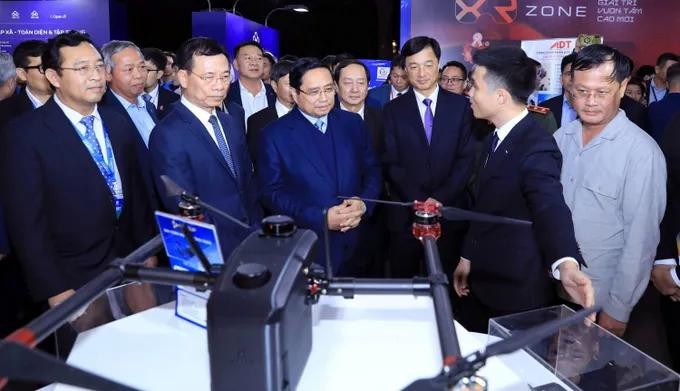
In Ho Chi Minh City, innovation has been clearly demonstrated through the city’s transition from a “managerial role” to that of a “major client”, proactively commissioning 22 major challenges in science and technology, innovation, and digital transformation including the use of unmanned aerial vehicles (UAVs) for environmental monitoring and urban traffic management.
The city’s digital infrastructure continues to expand, with 5G coverage now reaching nearly 70 percent of the area, alongside 13 data centers and nine digital technology zones.
According to Le Thanh Minh, Deputy Director of the Ho Chi Minh City Department of Science and Technology, the percentage of enterprises in key industries engaged in innovation activities rose from 39.9 percent in 2021 to 44.8 percent in 2023, and is expected to reach about 45 percent by 2025.
Ho Chi Minh City currently possesses one of the most comprehensive and large-scale science-technology and innovation ecosystems in Vietnam, featuring a high-tech park, a high-tech agricultural zone, 10 major data centers, and 18 start-up support centers. The city is home to nearly 50 percent of Vietnam’s start-ups, including major tech unicorns such as VNG and MoMo.
For the 2026–2030 period, the city aims to become a regional innovation hub, an international financial center based on digital technology, and an ASEAN center of intelligence capable of attracting global experts, start-ups, and investors.
Da Nang was honored with the “Vietnam Smart City Award 2025”, along with three special awards for smart governance and administration, green environment and sustainable development, and innovation-driven entrepreneurship. It was also voted the “Most Livable City in Vietnam” by citizens.
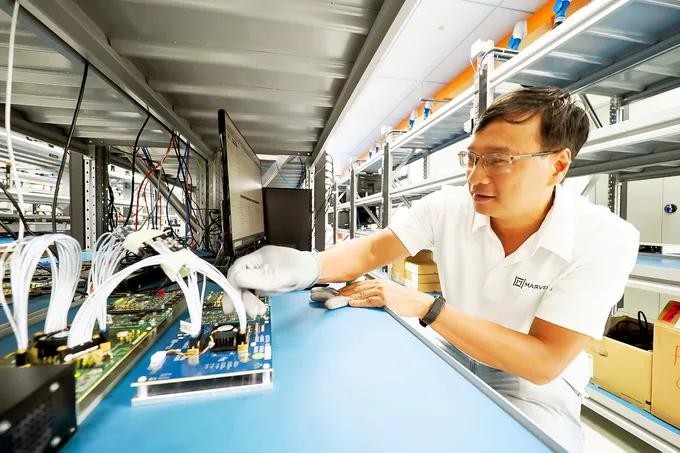
According to Nguyen Thanh Hong, Director of the Da Nang Department of Science and Technology, the city has achieved significant breakthroughs in high-tech industry, semiconductor technology, and digital infrastructure, highlighted by key initiatives such as the launch of the Da Nang Software Park No. 2 and the Advanced Packaging Technology Laboratory (Fab-Lab) project.
Together with Ho Chi Minh City and Da Nang, Hanoi stands as one of Vietnam’s three major innovation centers. The city’s innovation ecosystem is structured across multiple levels, with the National Innovation Center in Hoa Lac Hi-Tech Park and the Hanoi Innovation Center serving as the core coordinators and connectors.
According to Truong Viet Dung, Vice Chairman of the Hanoi People’s Committee, the city’s 2026–2030 development model will focus on three strategic pillars: science and technology, innovation, and the digital economy.
In 2025, Hanoi issued six thematic resolutions covering innovation, startups, policy sandboxes, venture investment, technology exchanges, and innovation centers by establishing a unified and transparent legal framework that comprehensively supports the local innovation ecosystem.
This strategic approach has yielded positive results; Hanoi continues to rank first nationwide in the Local Innovation Index, leading in 18 out of 52 component indicators.
According to the Ministry of Science and Technology, Vietnam is currently home to nearly 4,000 innovative startups and two tech unicorns. In the 2025 Global Innovation Index (GII), Vietnam ranked 44th out of 139 countries, while its startup ecosystem index placed 55th out of 100. Several major Vietnamese cities secured spots within the global top 1,000 startup hubs, with Ho Chi Minh City ranking 110th, Hanoi 148th, and Da Nang 766th. These advancements have propelled Vietnam into the top three fastest-growing startup ecosystems globally and secured its position as the 5th strongest in the ASEAN region.
Innovation – A national imperative
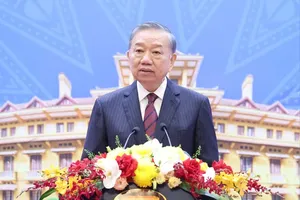
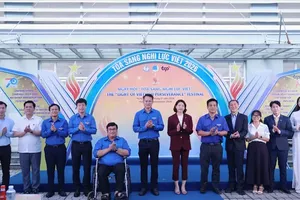
Speaking at the National Innovation Festival 2025, Party General Secretary To Lam affirmed that Vietnam has no alternative but to view science, technology, innovation, and digital transformation as top breakthroughs and the key drivers for renewing the growth model and achieving the two centennial goals becoming an upper-middle-income country by 2030 and a high-income developed nation by 2045.
At the National Startup Innovation Festival (TECHFEST Vietnam 2025), Prime Minister Pham Minh Chinh emphasized that the Party and the Government have introduced numerous policies to foster innovation and entrepreneurship. He highlighted the shift from a “management mindset” to a “development-enabling mindset”, promoting green energy, human resource development, and recognizing the private sector as a vital engine of the economy.
According to Deputy Minister of Science and Technology Hoang Minh, following the Politburo’s conclusion and in line with Resolution No. 57-NQ/TW, the Ministry is developing the National Strategy for Innovative Startups by 2030, setting ambitious goals:
- Some five million business entities, including 1 million “one-person enterprises”;
- 10,000 innovative startups;
- At least 300 innovation centers and clusters nationwide;
- Vietnam’s Global Innovation Index (GII) ranking among the top 40 countries;
- At least five startups valued at over US$1 billion;
- A venture capital market worth US$3 billion.