The move marks a strategic effort to enhance professional capacity and accelerate the full standardisation of the city’s public workforce, ensuring it is well-equipped to meet the requirements of modern urban governance and deliver higher-quality public services in the next phase of development.
Under the plan, 100 percent of civil servants are required to complete at least one week of training (equivalent to 40 periods) during the year.
The city also aims to develop and promulgate 100 percent of training programmes based on job position requirements.
In 2026, the total number of training and retraining slots is expected to reach 27,180 participants, in addition to 2,900 slots carried over from 2025.
Training activities will be conducted both domestically and overseas.
For domestic programs, the city will focus on state management knowledge, specialised professional skills and, notably, digital capacity.
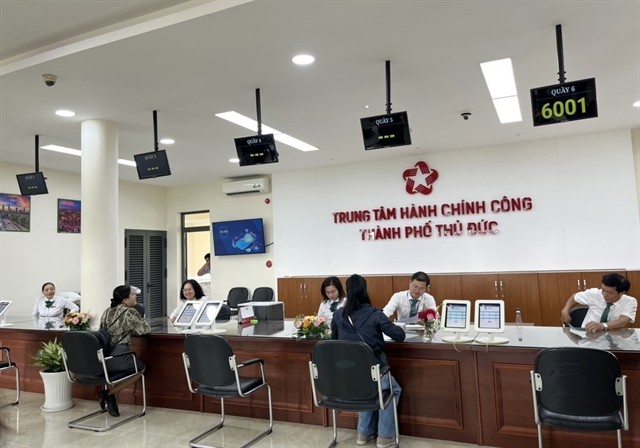
Basic and advanced artificial intelligence (AI) courses are expected to train 1,500 learners, while 2,000 officials will receive advanced training in digital transformation.
The move underscores the city’s determination to equip its workforce with modern technological skills and promote the application of AI in governance and public services.
Specialised training will also cover inspection, home affairs, justice, culture, agriculture and urban management.
Courses for inspectors, state management of urban infrastructure, urban railway systems and financial models for railway development are included in the plan.
In parallel, eight overseas training programmes are scheduled, focusing on key themes such as organisational governance, sustainable development, green growth, international financial centres and data-driven performance management.
Each program is expected to enroll around 20 participants to provide exposure to advanced models and international best practices.
To implement the plan, the city’s Department of Home Affairs has been assigned to take the lead in coordination with relevant departments and local authorities, and to advise on consolidating the city’s steering committee for training and retraining.
The city’s Department of Finance will be responsible for budget allocation and guidance on financial management and settlement in accordance with regulations.
A notable feature of the 2026 plan is its emphasis on discipline and post-training evaluation.
Heads of agencies and units are required to regularly review personnel standards and planning, and create favourable conditions for staff to attend training.
Units must monitor and take responsibility for the learning outcomes of nominated staff. In cases where participants fail to meet requirements, measures such as reminders, disciplinary action or reimbursement of training costs in line with the law may be applied.
The plan also integrates training results into the national database on cadres, civil servants and public employees, ensuring synchronisation and enhancing the effectiveness of the city’s human resource development strategy.