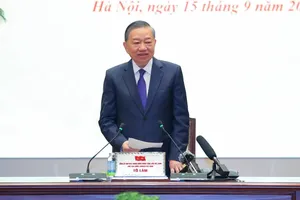
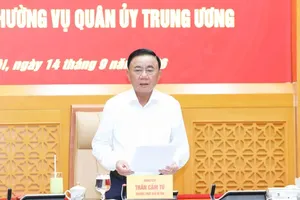
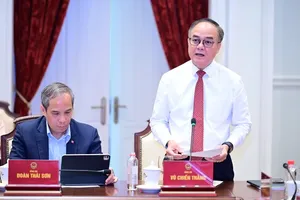
Party General Secretary To Lam on Thursday outlined policy priorities spanning diplomacy, education reform, science and technology, and environmental protection, as he and other candidates for the next National Assembly met voters in Hanoi ahead of the parliamentary elections.
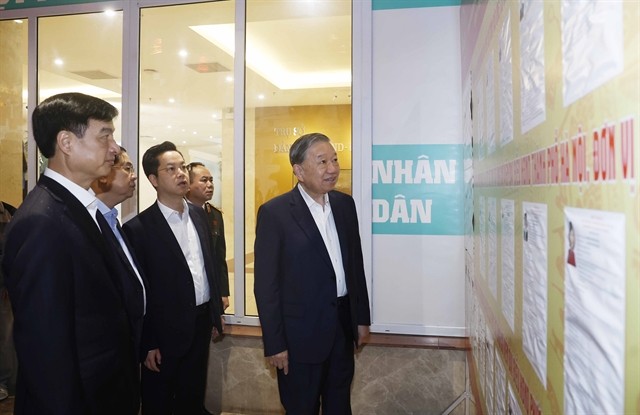
The meeting, held in Hoan Kiem Ward and livestreamed to several neighbouring wards, formed part of the legally required voter outreach process for candidates seeking seats in the 16th National Assembly for the 2026–31 term.
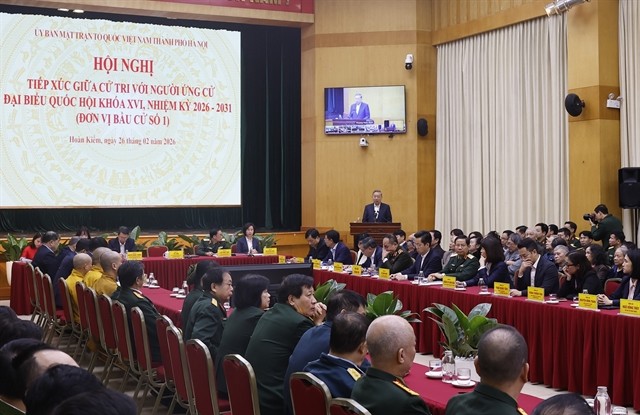
General Secretary To Lam is standing as a candidate in Hanoi’s Electoral Unit 1 alongside four others. The candidates presented their proposed action programmes and responded to voters’ questions on a wide range of domestic and international issues.
In their remarks, the candidates described their programs as a framework for fulfilling the role of National Assembly deputies, pledging to maintain regular contact with constituents, submit themselves to voter supervision and convey public opinions and recommendations to the legislature and the authorities.
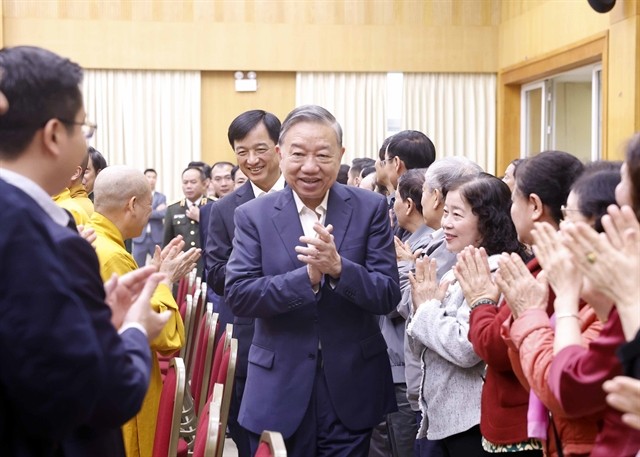
The candidates said they would engage with voters not only through formal meetings but also through workplace visits, thematic consultations and constituency-level outreach, a practice intended to strengthen links between deputies and the electorate.
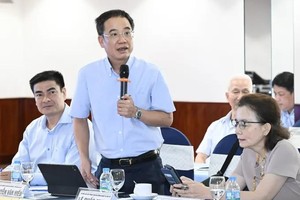
Voters attending the meeting broadly welcomed the programmes and raised questions on economic development, governance, education, environmental protection and the implementation of recent Party resolutions.
Addressing foreign affairs, General Secretary To Lam said Vietnam would continue to regard diplomacy and international integration as central tasks, echoing language adopted at the Communist Party’s 14th National Congress.
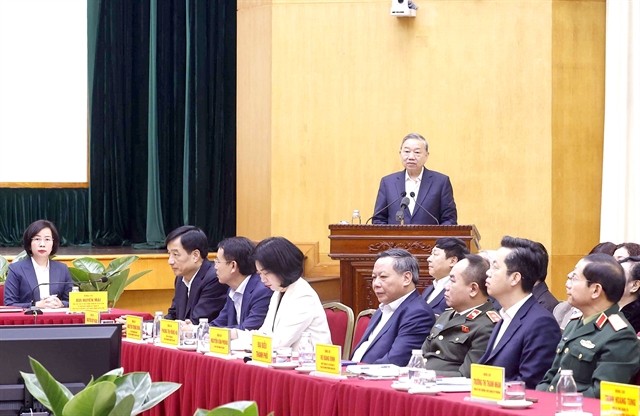
He said the approach prioritises maintaining peace as the foundation for stability, stability as the condition for development and development as a means of strengthening the country’s overall capacity.
As an example of what he described as a more proactive diplomatic stance, he cited Vietnam’s recent participation in an international peace conference on Gaza in Washington, where the country took part as a founding member.
“Vietnam’s foreign activities will be expanded in scope and intensity in the coming years,” he said, reiterating official goals of peace, independence and prosperity.
Education and training featured prominently in exchanges with voters. The Party chief said the sector remains a top national priority and a key determinant of Vietnam’s long-term development prospects.
He stressed that education reform should be carried out in a stable and coordinated manner, warning against frequent policy shifts that place excessive pressure on teachers, students and parents.
He said the focus should be on substantive improvements in teaching and learning outcomes rather than procedural changes, with particular attention paid to equity in access to education.
The Party's top leader called for greater investment in disadvantaged regions and areas with large ethnic minority populations, arguing that narrowing educational gaps is essential to long-term development.
“The goal is real quality,” he said, adding that education policy should help create a workforce with not only technical skills but also ethical grounding and adaptability.
Responding to voters’ questions on innovation and productivity, the Party chief described science, technology and digital transformation as decisive factors in Vietnam’s future growth.
Without breakthroughs in these areas, he said, the country would struggle to move beyond its current development model and realise its stated ambition of becoming a high-income economy by the middle of the century.
He highlighted the need for institutional reform to support innovation, alongside investment in digital and data infrastructure. Developing domestic technology firms capable of mastering strategic technologies was also identified as a priority.
Comprehensive digital transformation, he said, should aim to deliver tangible productivity gains and be accompanied by the development of high-quality human resources.
Turning to younger voters, the top leader urged the next generation to take a leading role in research, entrepreneurship and technological experimentation, describing youth as the most adaptable and creative segment of society.
Environmental protection emerged as another area of voters' strong interest. The Party chief said the issue reflects growing public awareness and aligns closely with priorities set out in recent Party documents.
He described environmental protection as both an urgent and long-term requirement, directly linked to quality of life and sustainable development.
Economic growth, he said, should not be pursued at the cost of environmental degradation, framing this principle as a binding condition rather than a rhetorical commitment.
“Protecting the environment today is protecting the future,” he said, characterising the issue as a political commitment to voters as well as a policy obligation.
Voters also called for the next National Assembly to strengthen its oversight role, particularly in relation to major public programs and investment projects.
Several expressed hope that the legislature would adopt stronger policy measures to support economic growth while improving living standards.
In response, the candidates said they would work to enhance the effectiveness of parliamentary supervision over government agencies and local authorities to improve governance outcomes.
The vote for the 16th National Assembly is expected in mid-March.