It aims to accelerate their completion by approximately one year compared with the standard procedure.
According to the Department of Construction, travel between central Ho Chi Minh City and Can Gio area currently relies on the Binh Khanh ferry, which frequently experiences congestion, affecting residents’ daily life, local tourism, and socio-economic development.
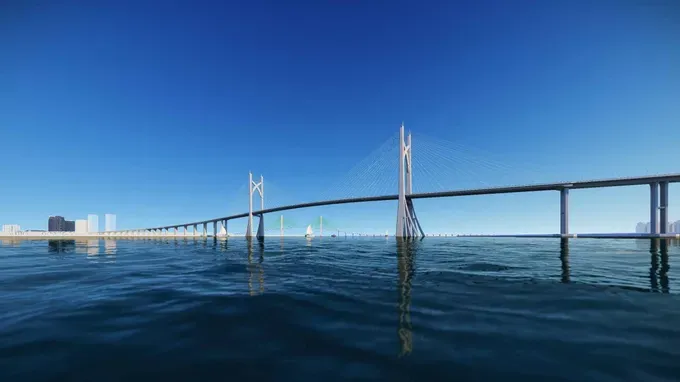
Can Gio Bridge is planned to span over 3 kilometers, connecting Nguyen Luong Bang–15B Road in Nha Be Commune to the Ben Luc–Long Thanh Expressway interchange and Rung Sac Road, with a preliminary investment of approximately VND13,714 billion (US$520 million).
Phu My 2 Bridge 2, located on a key transport axis linking Ho Chi Minh City with Long Thanh International Airport and the southeastern provinces via Lien Cang–Nguyen Ai Quoc Road in Dong Nai Province, will also connect to Ring Roads 2, 3, and 4 through the North-South corridor expressway. The project’s preliminary investment is estimated at more than VND25,101 billion (US$952 million). Masterise Group JSC has completed the project proposal dossier and submitted it for appraisal.
According to the Ho Chi Minh City Department of Construction, applying the urgent mechanism under Decree 257/2025 to these two build-transfer (BT) projects could shorten the implementation timeline by approximately one year.
For Can Gio Bridge, the plan is to select an investor in December 2025, begin construction in April 2026, and complete the project by December 2028. Similarly, for Phu My 2 Bridge, an investor could be chosen in December 2025, with construction starting in April 2026 and completion expected by December 2028.