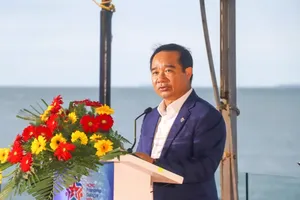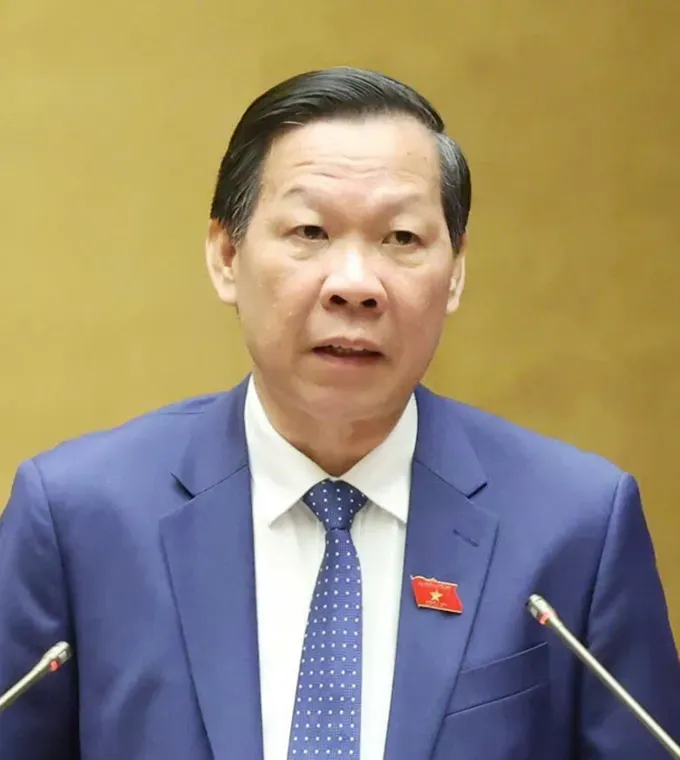
Chairman Phan Van Mai first assessed the urgency and necessity of amending and supplementing certain articles of Resolution 98.
HCMC has already expanded its development space, with an increasingly significant position and role. The city is expected to continue acting as the locomotive, leading growth for the Southeast region and the entire country. This reality creates a demand for new mechanisms that are sufficiently strong and flexible, enabling the city to achieve high growth targets while simultaneously resolving bottlenecks in infrastructure, attracting strategic investment, and developing both digital and green economies.
In this context, the Government’s submission of the amendments to Resolution 98 via a shortened procedure is both necessary and appropriate. The content of these amendments is grounded in a summary of practical realities, possesses a full legal basis, and has been meticulously prepared by HCMC with thorough feedback and appraisal from relevant ministries and agencies.
This demonstrates that amending Resolution 98 isn’t merely a technical adjustment; it aims to construct a more perfect and comprehensive institutional framework. This will help HCMC become more proactive and flexible in managing socio-economic development.
The Chairman then mentioned the cooperation of central agencies in the implementations of new mechanisms such as the Free Trade Zone (FTZ) and mechanisms to attract strategic investors.
The draft Resolution significantly expands HCMC’s development scope, with the FTZ serving as a pivotal breakthrough for global competitiveness. However, implementing such complex, interdisciplinary mechanisms as spanning tax, customs, and land planning requires robust support.
HCMC cannot navigate this alone amidst potential regulatory lags. Consequently, it is necessary to introduce a decisive interdisciplinary coordination mechanism to issue synchronous regulations, while simultaneously empowering HCMC to enact temporary measures pending official guidance.
Furthermore, an independent monitoring system is indispensable. Deploying novel models like the FTZ demands rigorous evaluation criteria and periodic reporting to the Government. Central agencies must move beyond mere policy issuance to actively accompany the city throughout the implementation phase, ensuring timely adjustments to emerging challenges.
Chairman Phan Van Mai also highly appreciate both HCMC and the drafting agency in proactively and receptively preparing amendments for Resolution 98.
HCMC has meticulously analyzed current bottlenecks to propose mechanisms enhancing autonomy and strategic investment, reflecting its critical role as the national economic locomotive.
Coordinating closely, the Government and relevant ministries have finalized major policy groups, notably the FTZ and investor incentives as well as decentralization in planning and finance, ensuring not only legal synchronization but also feasibility and risk control.
However, effective implementation demands rigorous preparation. Regarding the FTZ, the city must establish robust organizational and monitoring systems. Similarly, executing incentive mechanisms requires elevated capacities in negotiation, screening, and project appraisal.
While HCMC demonstrates a commendable spirit of innovation, increased decentralization entails greater responsibility. Consequently, establishing strict risk control processes, maintaining transparency, and intensifying staff training are indispensable prerequisites for success.
Chairman Phan Van Mai then further explained his expectations regarding growth, investment attraction, and HCMC's economic locomotive role in the coming period if the draft Resolution amending and supplementing Resolution 98 is passed.
His greatest anticipation is that HCMC will transform its potential into development momentum to realize the major goals the city has set. When the new mechanisms are deployed synchronously, HCMC will unlock even more potential and advantages.
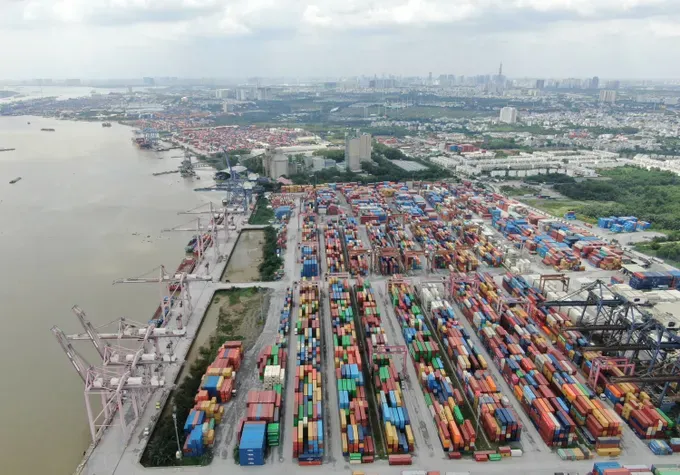
With the FTZ, the expectation is to form a new growth pole of regional stature, attracting international investors and contributing to making HCMC a high-class logistics, trade, and service center for Southeast Asia.
Additionally, the strategic investor incentive mechanism will help HCMC attract large corporations with strong spillover effects, thereby accelerating the economic structural shift toward innovation, the digital economy, and the green economy.
When mechanisms regarding planning, land recovery, site preparation, and finance-budget are untied, the speed of deploying strategic projects will increase, reducing lag and creating distinct spillover effects for the economy.
It is, therefore, hoped that this amended resolution will create a new “institutional framework” that is sufficiently strong and flexible, allowing HCMC to confidently step into a new development phase, worthy of its role as an economic locomotive, financial center, and growth engine, contributing even more to the country’s development.
"It can be said that if the coordination mechanism between HCMC and central agencies is designed tightly, transparently, and effectively, these superior policies will soon come to life, fully exerting their value and creating new development impulses for the city. This is a critical condition for HCMC not only to resolve immediate bottlenecks but also to pioneer the testing of new growth models for the entire country."
Chairman of the National Assembly’s Committee for Economic and Financial Affairs Phan Van Mai