According to the HCMC Department of Agriculture and Environment, the 2026 land price list will address the limitations of the current list (Decision 79/2024). Accordingly, residential land prices on several central routes in the draft remain almost unchanged compared to the old list and stand at only 60 percent of actual transfer prices.
However, under the draft Resolution on resolving difficulties and obstacles in implementing the 2024 Land Law, currently under consideration by the National Assembly, land prices are determined by multiplying the price list by an adjustment coefficient (K-coefficient) applicable to all cases. Notably, the K-coefficient increases from 1.5 to 2 times for non-agricultural land and skyrockets from 1.5 to 10 times for agricultural land.
This new draft land price list has caused worry among residents and businesses that they cannot afford the financial obligations for land use purpose conversion or land rental fees.
N.K. from Phu Hoa Dong Commune applied to convert 960m² of agricultural land, hoping for manageable fees. Instead, he was hit with a staggering bill of over VND4.3 billion (US$169,000) under Decision 79. Unable to pay, his family was forced to abandon their plans.
Current fears suggest the proposed 2026 draft list could double this already prohibitive cost, rendering land conversion impossible for ordinary citizens. “How can anyone afford such an exorbitant amount?” N.K. lamented, exemplifying the anxiety gripping local residents facing skyrocketing financial obligations.
From a corporate perspective, Chairman Tran Van Chau of the Board of Directors of Cho Lon Real Estate JSC analyzed that the draft 2026 land price list is quite high for most areas, excluding the city center. For businesses, if land costs rise excessively, it will limit many aspects, and critically, investors may abandon the market.
Therefore, aiming for transparent and fair market prices requires a solid land database and supervision by independent units, openly incorporating feedback from residents, businesses, and specialized agencies.
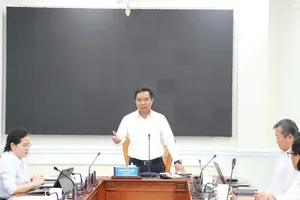
Acting Head Dao Quang Duong of the Land Economics Division (HCMC Department of Agriculture and Environment) acknowledged that the draft Resolution’s K-coefficient application would inevitably hike land use fees by 1.5 to 2 times across all categories, including residential conversions. To mitigate immediate shocks, he proposed that if the National Assembly approves the draft, localities should be granted a grace period until December 31, 2026 to finalize their K-coefficients.
Additionally, he argued that the Government should regulate specific scenarios, such as land allocation and one-off rental payments, while employing specific valuation methods for development projects to prevent inflationary real estate pricing.
Concurring with this cautious approach, HoREA Chairman Le Hoang Chau recommended fixing the K-coefficient at 1 for 2026. This measure would maintain stability and prevent administrative confusion during the transition, deferring market-based adjustments until 2027.
Meanwhile, Director Pham Viet Thuan of the HCMC Institute of Natural Resources and Environmental Economics suggested that the city needs an orientation to build the land price list based on the list applied before the 2024 Land Law took effect, multiplied by a K-coefficient with an adjustment margin of 0.2 to 3 times when applying for the new 2026 residential land price list.
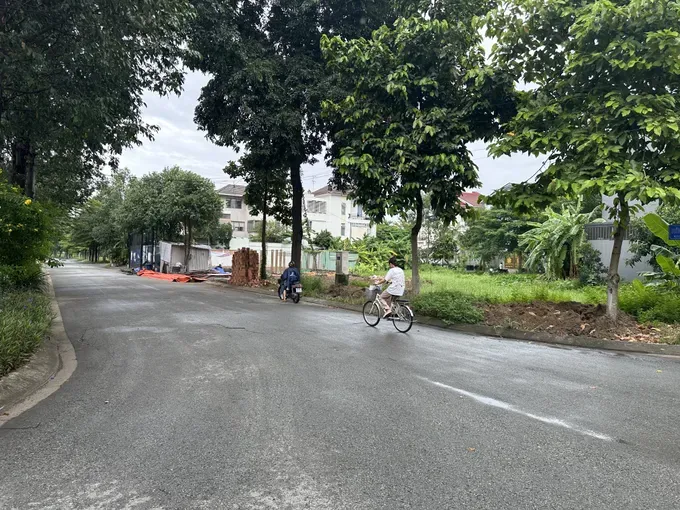
Mr. Dao Quang Duong commented that applying the land price list under Decision 79 is basically consistent with reality, especially for production, business, commercial, and service land types. However, there are opinions from residents in former suburban areas like Binh Chanh, Cu Chi, Hoc Mon, Nha Be, and Can Gio reflecting that land use purpose conversion fees from agricultural to residential land are quite high compared to before.
To resolve this, the municipal Agriculture and Environment Department previously advised the HCMC People’s Committee to report to the Prime Minister to issue regulations guiding the implementation of Clause 2, Article 157 of the 2024 Land Law regarding exemption and reduction of land use fees for other cases. Currently, these recommendations have been submitted by the Government to the National Assembly for approval in the resolution to remove difficulties in implementing the 2024 Land Law.
If the resolution is passed as proposed, households and individuals converting agricultural land to residential land will pay a reasonable land use purpose conversion fee, suitable to the economic conditions and income of the people.
Regarding the former Binh Duong area, adjustments were made but only for 34 resettlement projects; the rest remain unchanged. These 34 resettlement areas were appraised close to market prices. Similarly, the former Vung Tau area was adjusted by taking the 2019 land price list multiplied by the 2023 land price adjustment coefficient. Accordingly, residential land prices in this area increased, but not significantly.