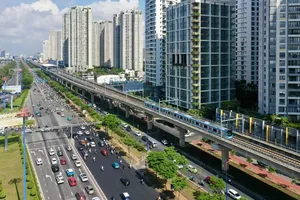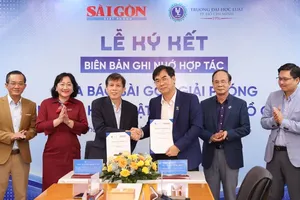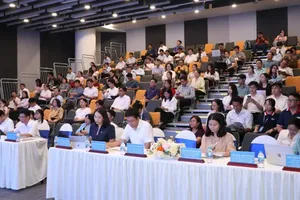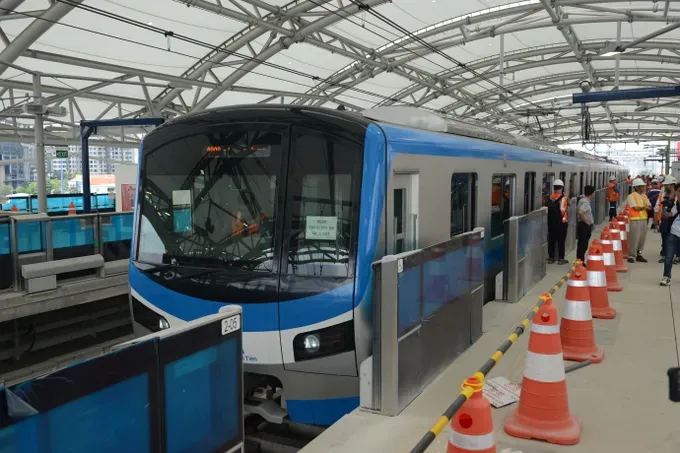
Vice Chairman of the Ho Chi Minh City People’s Committee, Nguyen Manh Cuong, has signed Decision No. 2962/QD-UBND to implement the project on training officials, civil servants, and public employees to support the development of Ho Chi Minh City’s urban rail network for the 2025–2030 period, with a vision toward 2050.
Under the project, the city aims to develop a workforce of managers, engineers, and specialists with high-level expertise capable of mastering urban railway technology in accordance with the International Association of Public Transport (UITP), International Union of Railways (UIC), and Institution of Railway Signal Engineers (IRSE) standards.
The training program will focus on core areas including infrastructure and construction engineering, signaling and control, power supply and electrification, operations and management, project management, urban planning and TOD (Transit-Oriented Development), as well as safety and environmental management.
The city also emphasizes the need to strengthen policy-making and public administration capacity, alongside the application of advanced technologies such as Building Information Modeling (BIM), Geographic Information System (GIS), Artificial Intelligence (AI), and automation in both training and the practical operation of the metro system.
Ho Chi Minh City aims to gradually reduce its reliance on foreign experts, progressively building a team of engineers and specialists capable of independently mastering metro technology, engineering, and operations.
The training program covers metro development strategy, legal framework, finance and investment, TOD (Transit-Oriented Development) planning, civil engineering, signaling and control technology, train operations, safety management, risk control, operational simulation, and project management.
For urban railway public administration officials (60 participants), by 2030, approximately 50 percent will receive advanced training, including 5–10 individuals attaining a master’s degree. During the 2030–2035 period, around 80 percent will undergo specialized training, with 30 percent earning a master’s degree and 10 percent pursuing a doctoral degree. By 2035–2045, 100 percent of officials are expected to be standardized, with over 50 percent holding a master’s degree and 10–20 percent achieving a doctoral degree.
For urban railway project management personnel, 160 individuals will be trained by 2030, with 50 percent receiving advanced training, including 10–15 pursuing a master’s degree. During the 2030–2035 period, approximately 80 percent will undergo specialized training, with 30 percent earning a master’s degree and 10 percent pursuing a doctoral degree. From 2035 to 2045, about 100 percent will receive advanced training, with at least 50 percent holding a master’s degree and 20 percent a doctoral degree. All directly involved leadership will participate in annual overview and advanced capacity-building programs.
Each year, Ho Chi Minh City aims for at least 50 percent of officials within the urban railway management system to participate in overseas study and exchange programs to update their knowledge on modern metro technologies, management practices, and operations.
The scheme is structured in phases, including 2025–2030, 2030–2035, and 2035–2045, accompanied by regular evaluation mechanisms to adjust in line with metro line investment progress and actual workforce needs. The city requires consulting, construction, and metro operation units to proactively develop internal training plans, ensuring that their workforce stays up-to-date with new technologies and meets international standards.