Ornamental plant growers across Vietnam are accelerating harvests and deliveries, racing against unpredictable weather and labor shortages to ensure peach blossoms, kumquats and apricot trees bloom on cue for the country’s biggest holiday.
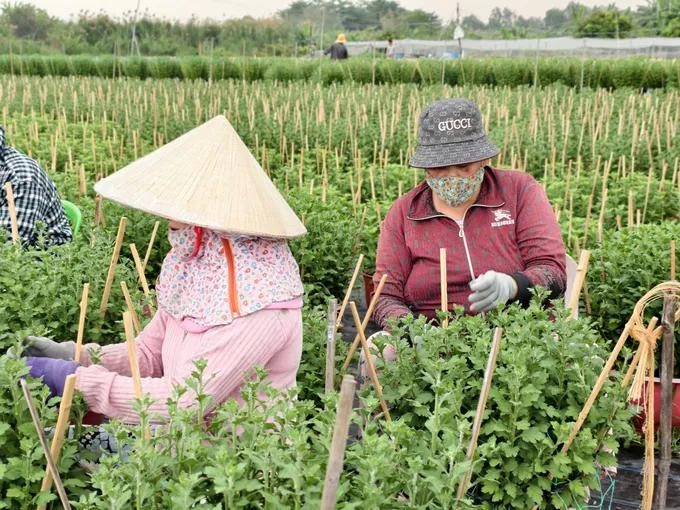
Traditional craft villages in Hanoi , including Nhat Tan peach blossom village, Tu Lien kumquat village and La Ca peach gardens, are already buzzing with buyers and traders. While kumquat growers report a promising crop, early peach blossoms triggered by warmer temperatures are causing concern about whether flowers will peak at the right moment for Tet.
In the orchards of Nhat Tan and La Ca, peach trees have begun to show color earlier than expected. Gardeners say continued warm weather could disrupt the flowering schedule. Dang Ba Lam, a grower in La Ca, noted that peach blossoms tend to bloom best in leap years if leaves are pruned at the right time. This year, growers delayed leaf removal by 10–15 days to better control the bloom.
At Nhat Tan village, Nguyen Duc Quan, who tends about 700 “Huyen” peach trees, said prices depend heavily on bloom quality. His family has already started selling, but business conditions have changed after Hong Ha ward authorities banned the sale of peach and kumquat trees on sidewalks, forcing growers to adjust their trading methods.
Meanwhile, Tu Lien kumquat village is seeing steadier demand, with many customers placing orders in advance. Buyers continue to favor both compact bonsai kumquats and larger trees displayed in Bat Trang ceramic pots or sizeable containers.
In Ho Chi Minh City, Tet trading has picked up along Pham Van Dong Boulevard in Hiep Binh Ward, where dozens of stalls have formed an impromptu apricot blossom street. Gardeners from the long-established Thu Duc apricot blossom village have transported hundreds of trees to the site, ranging from bonsai and grafted varieties to large, sculpted heritage trees.
Local sellers said apricot trees are brought out earlier than other ornamentals to give customers more time to choose. Tran Duy Ngoc, owner of the well-known Thu Ngoc garden, said most of the trees currently on offer still have their leaves intact, with multiple varieties prepared for different preferences.
The Central region’s growing hubs are also in full swing. In Cam Ha Ward, considered the capital of kumquat cultivation, and in the apricot gardens of An Khe in Da Nang City, growers are working long hours to prepare fruit-laden kumquats and blooming apricot trees in time for the holiday market.
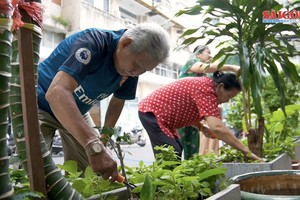
Along roads leading into Cam Ha, gardeners prune branches, shape trunks and carefully remove leaves to refine each tree. Nguyen Thi Be, 58, meticulously trims branches in her ripening kumquat plot, describing the process as decisive for the tree’s final look. “Pruning must be balanced,” she said. “The tree needs an even shape, full fruit and healthy green leaves to attract buyers.”
In Da Lat, the country’s flower capital, attention has shifted to labor shortages and rising costs. Le Van Diep, who manages more than 2,000 square meters of gerberas and 1,000 square meters of lilies in Van Thanh flower village, said lily bulb prices have climbed to over VND20,000 each, up from VND15,000–17,000 in previous years, pushing up investment costs despite favorable growing conditions.
Nearby in Thai Phien flower village, growers are scrambling to hire workers as many laborers return home ahead of Tet. According to local gardeners, peak harvest time comes just days after workers depart, creating shortages. Seasonal wages have surged to about VND1 million per day or VND300,000 per load roughly double the normal rate adding further pressure as the holiday approaches.
In Khanh Hoa, after the historic floods at the end of 2025, despite many difficulties, gardeners are still persevering in production, caring for the remaining flower beds, hoping to supply the market in time for Tet (Lunar New Year). Mr. Trinh Van Trung, manager of Tieu Tu Thien garden in Tay Nha Trang Ward, Khanh Hoa Province said that many apricot blossom trees, about 3 meters tall and worth hundreds of millions of Vietnamese dong, lost their leaves and had their buds damaged by the floodwaters. Contracts to rent apricot blossom trees from agencies and hotels in the Nha Trang, signed previously, now have to be rented from other places to ensure reputation.
Similarly, in Hoa Thang Ward (Khanh Hoa Province), considered a major supplier of chrysanthemums for Tet in the South Central region, people are focusing on overcoming the consequences of the floods. Mr. Doan Truc Hung's family (Hoa Thang Ward) rented land to plant nearly 1,000 pots of crystal chrysanthemums and large-flowered chrysanthemums for Tet. The recent flood submerged the flower gardens to a depth of nearly 1 meter for 4-5 days, damaging more than half of the plants. Many gardeners here had to replace the soil, change pots, and treat fungal diseases; the work was carried out continuously from early morning to late afternoon, even involving eating and sleeping with the flowers.