Energizing people through practical action
In the southern waters of the country, where fishing activities are bustling yet fraught with legal and safety risks, the Coast Guard Region 3 Command has identified itself as a frontline force in law enforcement, linked closely to building a “people’s heart disposition” at sea.
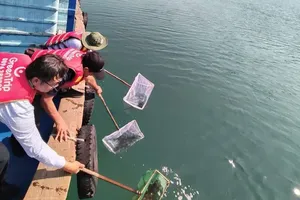
Aboard the vessel CSB 8001 as it cuts through the waves on duty, Lieutenant Colonel Nguyen Van Duc, the ship’s Political Officer, remains diligently focused on stacks of propaganda documents concerning the fight against illegal, unreported, and unregulated (IUU) fishing. For him, advocacy isn’t about dry lectures in a hall; it starts with conversations right at the water’s edge, on boat decks still smelling of shrimp and fish.
“If you want the people to believe and concur, you’ve got to approach them with sincerity first. At the end of the day, if we only mention regulations and sanctions, it’s going to be very difficult to persuade those who are struggling to make a living amidst harsh waves,” shared Lieutenant Colonel Nguyen Van Duc.
To support fishermen, Coast Guard officers provide national flags, fresh water, and regulatory guidance. This sincere companionship proves authorities are a “solid anchor” rather than just enforcers. Consequently, locals gain the confidence to fish lawfully, effectively boosting compliance with sustainable maritime regulations through mutual trust and practical empowerment.
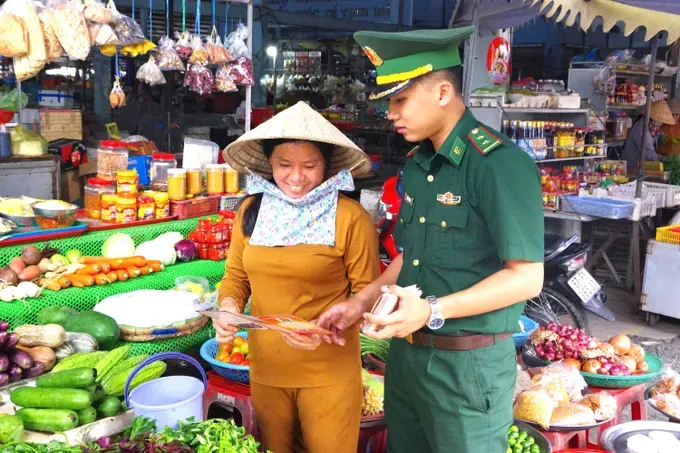
In the border ward of Tinh Bien in An Giang Province, 24-year-old Lieutenant Tran Thanh Luat views mass mobilization as a vital “bridge” connecting border guards with local ethnic minorities. Beyond traditional propaganda, he and his fellow soldiers have pioneered “skilful mobilization” models that empower citizens to safeguard territorial sovereignty.
As the Government transitions to digital platforms, these young Party members have taken the lead, personally guiding residents through the complexities of the National Public Service Portal. By proactively resolving technical hurdles and staying close to the community, they’ve significantly eased grassroots pressure. This hands-on approach hasn’t just simplified bureaucracy; it has profoundly bolstered the trust of border communities in the Party and state authorities.
Persistence at grassroots level
In residential areas, religious regions, or ethnic minority zones, public consensus is built and reinforced through persistence, flexibility, and a deep understanding of community life.
A prime example is the U Minh region in Ca Mau Province, where geographical isolation remains a major hurdle for accessing high-quality healthcare and education. Aware of that, the U Minh Commune Party Committee for the 2025-2030 term has set bold targets of increasing average per capita income by 70 percent, reducing the multi-dimensional poverty rate to below 0.15 percent, and ensuring 100 percent of rural roads are concreted by 2030.
Quach Cam Tu, Chairman of the Vietnam Fatherland Front Committee of U Minh Commune, fosters trust by driving local economic growth. He assists residents in developing signature products like organic shrimp-rice and field fish, successfully pairing them with experiential tourism. By delivering tangible benefits to daily livelihoods, he demonstrates that practical prosperity is the surest way to build public faith, creating a solid foundation for the smooth implementation of broader national policies.
In HCMC’s Hoa Long Neighborhood, its Party Secretary Huynh Thi Thanh Tam builds community trust through genuine connection rather than dogma. By frequently visiting canal-side residents and prioritizing sincere dialogue about their welfare, she has inspired a “green, clean, and beautiful” landscape.
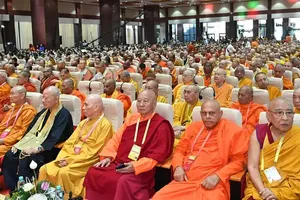
Her devotion has sparked a powerful ripple effect, uniting Catholic and Buddhist volunteers in local initiatives like the “VND0 ($0) Market” and poverty relief. This collaborative spirit proves that empathetic leadership successfully bridges religious lines to achieve shared social goals.
In Quang Ngai Province’s Dak Ro Wa Commune, where over 74 percent of the 18,700-strong population are religious followers, young Party members serve as a vital “soft bridge.” With 172 religious Party members in the commune, this cohort expertly balances government guidelines with the sensitive nuances of faith-based life.
By deeply understanding local spiritual practices and sentiments, they make national policies more accessible and relatable to the community. These pioneering individuals lead by example, contributing both labor and funds to critical social welfare projects, from building “new-style” rural areas to eliminating unstable housing. Their dual identity fosters a unique harmony, ensuring that regional development and the great national unity bloc remain inseparable and resilient.
After every story of young Party members at the wave’s edge or in remote border areas, the most lasting impression is their tireless commitment. They don’t choose to speak eloquently; they choose to do things right, starting from the concerns and obstacles of the people. Just like that, trust is reinforced naturally and enduringly, becoming the sturdiest bridge to bring Party resolutions deep into the pulse of everyday life.
Standing Deputy Secretary Le Van Hung Vuong of the Hoa Vang Commune Party Committee (Da Nang City) commented that in the current context, awakening youthful energy and creating space for young Party members to commit themselves is the key to creating breakthroughs right from the grassroots.
Reality shows that when placed in the right positions, young Party members manifest their roles very clearly, especially in new and difficult tasks like digital transformation, technology application, or administrative procedure support. By starting with specific tasks closely linked to the practical interests of the people, they’re becoming vital bridges to bring Party policies deep into life.
Buddhist nun Hue Hoa, Abbess of Vien Quang Pagoda in Hoa Long Neighborhood of Lai Thieu Ward (HCMC) contently shared that what she appreciates most about the young cadre team today is their persistence, gentleness, and respectful attitude when working with religious establishments.
They don’t impose but frequently come in person to guide and accompany us in every social welfare activity or environmental protection effort. That proximity and transparency have built deep trust, helping guidelines and policies enter life naturally and sustainably.




)