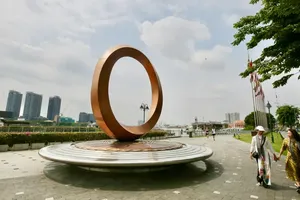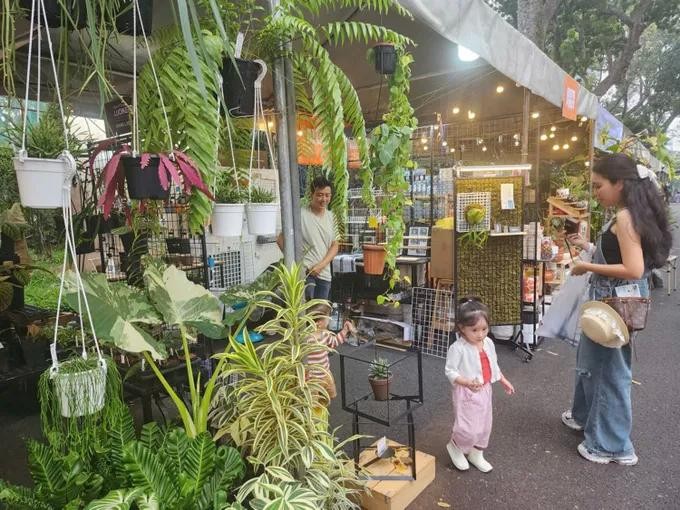
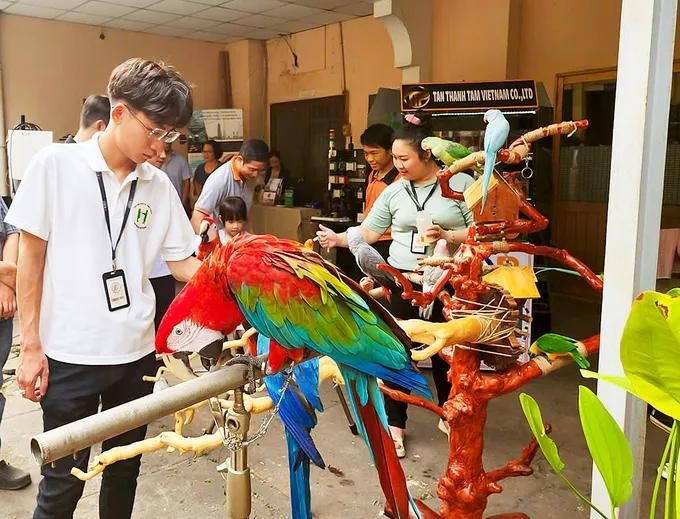
The ornamental plant industry encompassing flowers, bonsai trees, aquarium fish, and even ornamental reptiles is emerging as a vibrant trend in Ho Chi Minh City’s urban agriculture. Beyond its economic potential, this sector plays a vital role in enriching the city’s cultural life and expanding green spaces, helping residents reconnect with nature amid the pressures of urbanization.
Turning barren land into a green paradise
In Xuan Son Commune, Suoi Rao Ecolodge owned by ornamental plant artist Le Thi Nga has become a well-known destination across the Southern Key Economic Region. Few visitors would guess that 15 years ago, the now lush and tranquil landscape was barren land used only for short-term corn and cassava crops.
Driven by her deep love for nature and landscape design, Ms. Nga began transforming the land in 2010, working with architects and biologists to collect rare and valuable plant species. What started with 1,000 trees has now become a living forest of nearly one million trees, representing around 700 species. Among them are rare types of timber such as rosewood, red sandalwood, and red ebony, alongside 300 species of medicinal plants, including betel, ground ginseng, mugwort, wild bitter gourd, and honey locust.
Over time, the thriving ecosystem has drawn countless species of birds, squirrels, and butterflies. “Many eagles, falcons, bulbuls, and doves have made their nests here,” Ms. Nga said, noting that researchers and scientists frequently visit the site for ecological studies.
From fish ponds to export markets
In Tan An Hoi Commune, Saigon Ornamental Fish Cooperative, founded in 2013, has grown into one of Vietnam’s leading ornamental fish exporters. Operating on 15 hectares, the cooperative supplies breeding stock and guarantees product purchases from more than 150 farming households while maintaining close ties with other provinces such as Dong Thap and Tay Ninh—creating jobs for hundreds of local workers.
Director Nguyen Van Thuy shared that the cooperative operates under a closed production chain model, dividing members into six specialized groups focusing on guppies, mollyfish, goldfish, plecos, yellowtail, and blacktail.
Thanks to the cooperative’s steady growth, Ho Chi Minh City’s ornamental fish now swim far beyond domestic markets. Monthly exports of nearly 700,000 ornamental fish to countries including South Korea, Japan, Singapore, Thailand, and the Middle East bring in more than VND2 billion in revenue.
A peaceful haven amid urban hustle
According to the Ho Chi Minh City Department of Agriculture and Environment, the ornamental plant sector now attracts a growing community of artisans, gardeners, and skilled professionals. The city regularly organizes exhibitions, competitions, and themed ornamental plant weeks, alongside online trading platforms for unique and high-value products. Increasingly, ornamental plant cultivation is being integrated with eco-tourism and outdoor recreation, offering residents and visitors spaces to experience both nature and artistry.
In a fast-paced, high-pressure urban environment, returning to greenery has become more than a hobby; it’s a form of therapy. Stones, potted plants, miniature landscapes, and even ornamental pets have evolved from mere decorations into sources of calm and inspiration, nurturing both the city’s landscape and the well-being of its people.
According to Chairman Nguyen Huu Van of the Vietnam Ornamental Plant Association, the global ornamental plant sector experiences an average annual growth rate of 6 percent-8 percent in trade volume. In Vietnam, the production value of ornamental plants ranges from VND800 million to VND2.5 billion per hectare per year, which is 5 to 9 times higher than that of other crops.