“Is that Mr. Dung? I have an old bicycle at home. Please come and pick it up whenever you have time.”
On a hectic late afternoon at year’s end, teacher Le Khac Dung’s phone rang continuously. The calls were short, but the voices on the other end carried trust and respect. Between tutoring sessions, Mr. Dung would hop on his motorbike and set out to collect donated bicycles.
Dressed simply in flip-flops, a T-shirt, and jeans, the teacher crisscrossed neighborhoods in Vung Tau Ward, Ho Chi Minh City. Some bicycles he collected were rusty, others had bent rims, while a few were still in good condition but long unused. To many households, they were just items taking up space. To teacher Dung, they were potential rides to school for children from poor families.
“Before, I had an old motorbike, but it was stolen,” he recalled while carefully tying bicycles onto his vehicle. “I didn’t have money to buy another one, so my father-in-law gave me this.” From that modest motorbike began countless journeys of quiet charity.
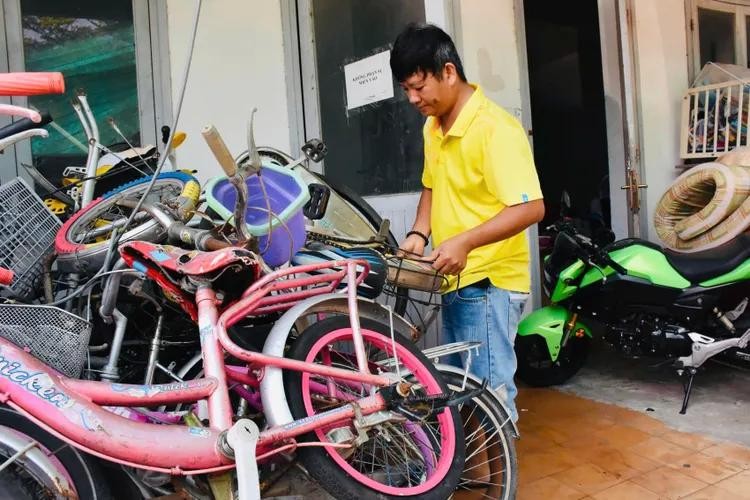
The bicycles are brought back to the small rented house where teacher Dung lives with his wife. Once abandoned and overgrown, the house was later repaired just enough to be livable. During the rainy season, the roof still leaks, and buckets are placed around to catch the water. In front of the house, a makeshift corrugated iron roof shelters the donated bicycles from the sun and rain.
His daily routine revolves around teaching, collecting donations, and repairing bicycles. Though his own life remains modest, he gives wholeheartedly. Each bicycle he hands over carries the sweat and dedication of a teacher who knows hardship firsthand.
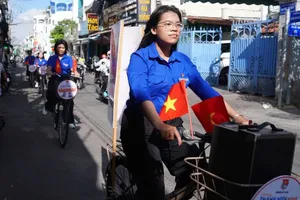
Born into a poor farming family in the Central region, the teacher came to Ho Chi Minh City alone to sit for his university entrance exam. With no relatives in the city, he was helped by student volunteers who met him at the train station, found him a place to stay, guided him to the exam site, and encouraged him. The image of those volunteers in blue uniforms left a lasting impression, planting the seeds of a lifelong commitment to community service.
His charitable work did not stop with bicycles. Over the years, the young teacher has also developed a community health support model, collecting used hospital beds, wheelchairs, and crutches, repairing them, and coordinating with health stations in disadvantaged areas to lend or donate them to poor patients for home treatment.
“Some things are only truly valued when people need them,” he said. “Many want to donate medical equipment after using it, but don’t know where to send it. I just help connect them.”
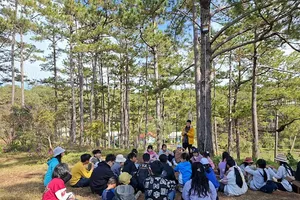
For more than 14 years, teacher Dung has taken part in campaigns supporting students during exam seasons, joined charities to distribute meals to low-income workers, cooked hundreds of meals for cancer patients, and participated in disaster relief efforts.
At the end of 2023, he officially launched his bicycle reuse initiative. Seeing unused bicycles sitting idle in many homes while poor students struggled to get to school, he began asking for donations.
“I told people I would repair the bikes and give them to students in need,” he said. For the past two years, he has quietly kept that promise.
With no prior experience in bike repair, Mr. Dung bought basic tools and taught himself through YouTube. Later, friends guided him further. He cleans wheels, adjusts chains, tightens screws, replaces broken parts, and salvages usable components from badly damaged bikes.
“Taking them to a repair shop is expensive. Doing it myself saves a lot,” he explained. From dusty storage corners, old bicycles gradually regain new life.
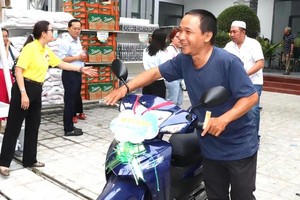
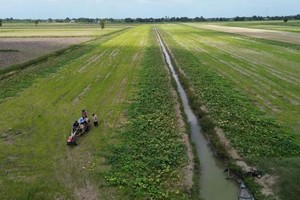
In the past two years alone, nearly 400 bicycles have been delivered to poor students and struggling workers not only in Ho Chi Minh City, but also to flood-hit northern provinces, border areas in Tay Ninh, and his hometown of Thanh Hoa. On one occasion, 50 bicycles were transported by train to the North, along with notebooks, backpacks, and pens, helping students in Lao Cai return to school after typhoon Wipha ( Storm No. 3).
Mr. Dung’s eyes light up when he recalls watching children eagerly practicing riding their new bicycles in schoolyards.
“We will study hard to overcome difficulties,” one student from Gia Phu Ethnic Boarding Secondary School told him. “And we will help others, just like you did for us.”
Late at night, in his modest rented room, Mr. Dung continues repairing bicycles. At dawn, somewhere else, those wheels begin turning again carrying children and hope toward school.
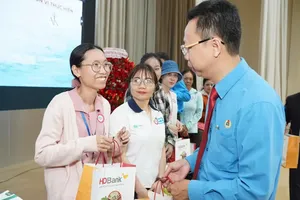
In 2025, teacher Le Khac Dung is set to be recognized as a model citizen of Ho Chi Minh City, receiving commendations from the Prime Minister, the Central Committee of the Vietnam Youth Union, and the city’s People’s Committee. Yet for him, the greatest reward remains unchanged: the bright eyes and joyful smiles of those whose lives move forward on the bicycles he helped restore.