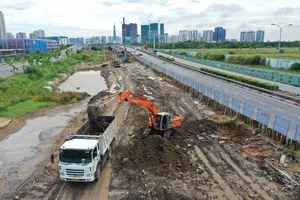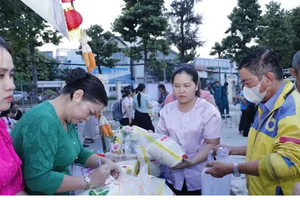
In the early days of 2026, Alley 672 on Huynh Tan Phat Street in Tan My Ward is bustling with the sounds of concrete mixers and neighbors chatting warmly about Tet shopping. Few know that to achieve these sounds of happiness, the local authorities and residents had to undergo a grueling five-year journey of persistent advocacy for land donation and road widening.
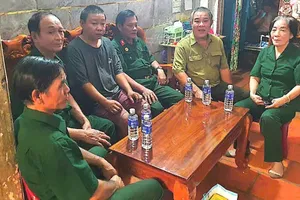
Mrs. Danh Ngoc Mai, Mr. Pham Huu Phuong, and Mrs. Ho Thi Ngoc Hoa, neighborhood officials from that period, recalled this incredulous story of the road. Currently, Mrs. Hoa serves as the Party Cell Secretary of Neighborhood 13, while Mrs. Mai and Mr. Phuong have retired from neighborhood duties.
Alley 672, about 250m long, was a nightmare for over 140 households for several years. Despite being in a busy center, parts of the alley were only 1.5m wide. Two motorbikes passing each other had to inch by, and the walls on both sides were scarred from daily scrapes. Every full moon or month-end, high tides would flood the area up to thigh level.
Born and raised in Alley 672 and serving as the neighborhood head for over 20 years, Mr. Pham Huu Phuong (now over 60) sadly recalled: “The flooding was miserable. Parents had to carry students on their shoulders out to the main road to catch motorbike taxis. The most heartbreaking incident was when a young man had an emergency; the ambulance had to stop at the alley entrance because it couldn’t fit. By the time the doctor ran in, the man had stopped breathing.”
The pain deepened when the Covid-19 pandemic hit. Alley 672 became a “red zone” with over 300 F0 cases and two deaths. During the lockdown days, the helpless sirens of ambulances stuck at the alley entrance became a haunting obsession.
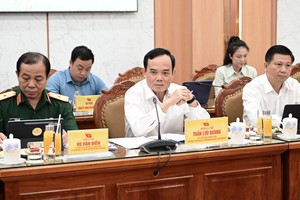
From that harsh reality, the Ward Party Committee determined to widen the alley at all costs to ensure safety and social welfare. However, the biggest hurdle was land value, as the frontage land on Huynh Tan Phat Street costs hundreds of millions of VND per square meter. Mobilizing residents was difficult; initially, many households suspected the government was “colluding” with businesses, causing propaganda efforts to hit a dead end.
Mrs. Ho Thi Ngoc Hoa recalled the arduous five-year journey. Households at the critical bottleneck initially refused all contact. Despite locked doors and three team changes, the group persisted, knowing opening the frontage was essential.
Adhering to a strict “no intimidation” motto, leaders enlisted respected neighbors and conducted tireless night visits. Mrs. Danh Ngoc Mai shared that: “Many of us quietly went to advocate at night when homeowners returned from work, night after night. Ward leaders, old and new, persistently visited concerned families constantly. From being politely chased away to being invited inside, we were overjoyed.”
Simultaneously, while the entrance remained deadlocked, the team continued advocating inside the alley. Residents eagerly donated land and funds to combat flooding, with Mr. Pham Huu Phuong’s family alone contributing over 600m2, showcasing the community’s unwavering resolve to transform their living environment.
Sincerity finally touched hearts. A household that had previously staunchly refused voluntarily donated over 1.3m of frontage width. The owner himself exclaimed: “It’s so good. If not for the state’s policy to open the road and the persistent advocacy, I would never have been able to build a new house on such a wide road in my lifetime.”
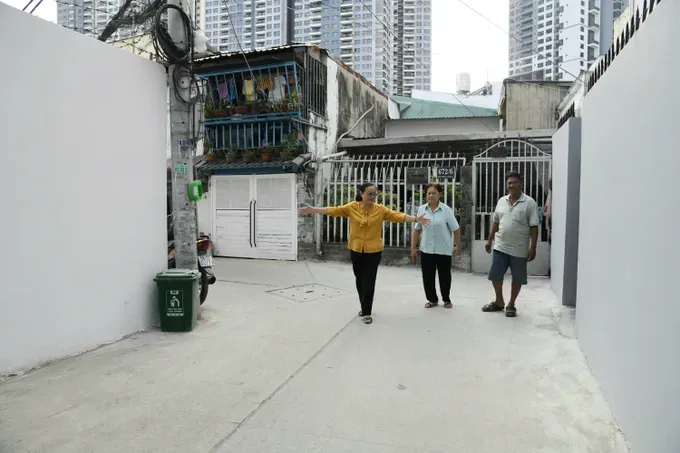
Now, the once shabby 1.5-meter alley has become a spacious 4-meter road. Old walls have been replaced by sturdy new ones. Residents not only donated land but also contributed funds to raise the foundation, turning short-term “loss” into long-term “gain.”
According to Mrs. Ho Thi Ngoc Hoa, for a neighborhood official, the most important thing is implementing grassroots democracy; every policy must be public, transparent, and clear so people understand, trust, and participate. She stated that the greatest contribution to this alley came from the people.
“Inside the alley, people voluntarily donated land and raised the foundation; outside, the government invested and organized advocacy. Thus, the state and the people joined hands to build this work through unity and consensus,” Mrs. Hoa shared.
Standing in the middle of the new road, Mrs. Hoa pointed and calculated excitedly with Mrs. Mai and Mr. Phuong: “Soon we’ll place speed limit signs here. Can we hang Tet flags and place trash cans here? We must remind households not to dry clothes in front of their doors to keep it aesthetic. The alley is dignified now; we must become more civilized step by step.”
“This Tet, we will organize a general cleanup and decorate with flags and flowers to welcome the happiest Tet ever!” Mrs. Mai said excitedly.
Alley 672 is now wide and spacious on the threshold of the New Year. However, what opened up was not just a few meters of road, but consensus and trust cultivated through every persistent conversation and every meter of land voluntarily donated. When hearts open, alleys widen. And from that small alley, a warm, civilized, and strong lifestyle is forming, just like the unity that built the road today.