Once a quiet landscape of rice fields and canals, the Tan Kien Medical Cluster in Ho Chi Minh City’s Tan Nhut Commune now hums with vitality. The rumble of excavators at construction sites blends with the laughter of medical students and the steady footsteps of patients heading to check-ups along tree-lined roads. Few would imagine that just over a decade ago, this area was still a rural expanse with sparse settlements.
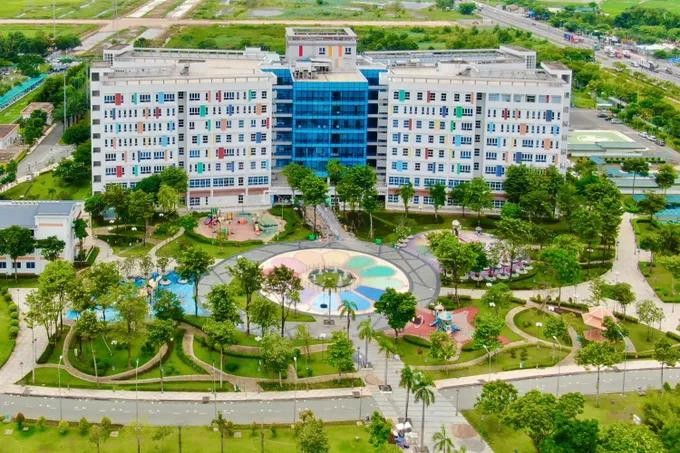
Resident Nguyen Thi Muon, 61, from Vinh Long Province, was waiting for her husband, who was under treatment for multiple myeloma at the Ho Chi Minh City Blood Transfusion and Hematology Hospital. She said that unlike central hospitals, the hospital is not overcrowded; there are wide walkways, green lawns, and bright patient rooms. Coming from the Mekong Delta, patients no longer face long journeys or cramped conditions. The hospital’s environment is clean, and her husband’s condition has improved significantly.
Situated on a key transportation corridor linking Ho Chi Minh City with the Mekong Delta, the Tan Kien Medical Cluster was launched in 2015 with the goal of creating a large-scale and integrated healthcare complex. The once-agricultural land now features modern medical infrastructure, including a helipad for emergency transport.
According to Associate Professor Tang Chi Thuong, Director of the Ho Chi Minh City Department of Health, the project was conceived as a comprehensive medical campus from the outset combining specialized treatment, medical training, research, emergency care, and rehabilitation. Beyond easing the strain on central hospitals, it is envisioned as a regional medical hub serving both Ho Chi Minh City and the Mekong Delta, aligning with international models of advanced healthcare systems.
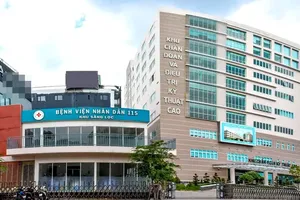
To date, several key institutions, including the City Children’s Hospital, the Ho Chi Minh City Blood Transfusion and Hematology Hospital, the Forensic Center, and Pham Ngoc Thach University of Medicine, are already operational. On January 15, the city broke ground on three new projects such as the Blood Bank, the Facility 2 of the 115 Emergency Center, and the Laboratory Quality Control Center, with a total investment exceeding VND1.4 trillion. Future plans include constructing the Trauma Hospital and a 500-bed Teaching Hospital affiliated with Pham Ngoc Thach University of Medicine.
The Tan Kien Medical Cluster is also positioning itself as a pioneer in green and high-tech healthcare. The City Children’s Hospital has established multiple specialty centers and gained global recognition for performing the complex surgery that successfully separated conjoined twins Truc Nhi and Dieu Nhi. Meanwhile, the Blood Transfusion and Hematology Hospital has advanced rapidly, applying cutting-edge treatments such as chemotherapy, stem cell transplantation, cytopathology, and modern diagnostic imaging previously impossible at its old facility.
Following the success of its first phase, Ho Chi Minh City has expanded the project’s planned area from 55.03 hectares to 73 hectares for Phase 2. The goal includes building a high-tech medical hub in the gateway of the city, reducing pressure on downtown hospitals, and elevating Ho Chi Minh City as a leading medical center in Southeast Asia.
Future developments will focus on comprehensive infrastructure improvements, including public service zones, parks, sports areas, and accommodation for patients’ families. “All of this aims to develop a modern, integrated, and people-centered healthcare sector,” said Associate Professor Tang Chi Thuong.
“These projects will lay the groundwork for cultivating high-quality medical professionals, meeting the city’s development needs in this new era,” he added.