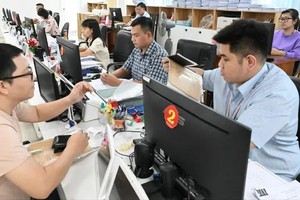
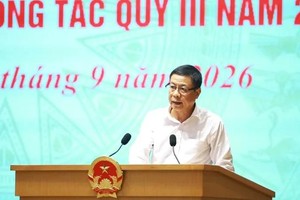
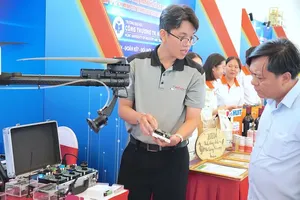
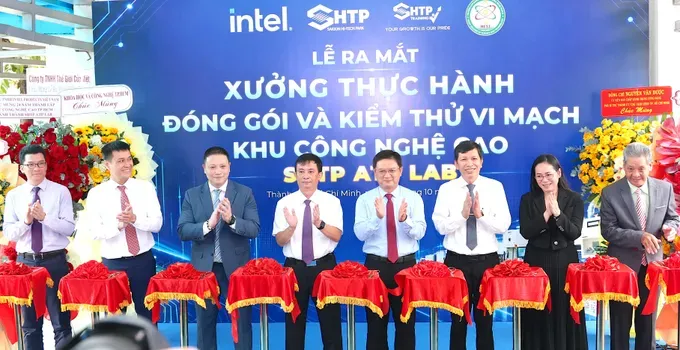
On October 23, Saigon Hi-Tech Park (SHTP) celebrated its 24th anniversary (October 24, 2002 - October 24, 2026) and inaugurated the Semiconductor Assembly, Packaging and Testing Laboratory (SHTP ATP Lab). The event marked a strategic milestone for the city in proactively developing a high-quality workforce to support the core semiconductor technology sector.
Among those attending were Pham Chanh Truc, former Deputy Head of the Central Economic Commission, former Standing Deputy Secretary of the Ho Chi Minh City Party Committee, and former Chairman of the Ho Chi Minh City People's Council and Vice Chairman Nguyen Manh Cuong of the Ho Chi Minh City People's Committee along with leaders of government agencies, research institutes, universities, and technology corporations.
At the ceremony, Prof. Nguyen Ky Phung, head of the SHTP Management Board, said that after 24 years of development, SHTP has attracted 165 investors, including foreign direct investment totaling US$11.005 billion and domestic investment totaling VND74,290.7 billion. The park has helped place Vietnam on the global high-tech map with the presence of companies such as Intel, Samsung and Nidec.
Currently, 115 projects are operating steadily, providing jobs for more than 53,000 workers and contributing a cumulative US$1.82 billion to the state budget. By the end of 2026, budget contributions are projected to reach VND899.7 billion. Science and technology activities at SHTP are built on four strategic pillars: research and development, business incubation, training, and biotechnology.
Looking ahead, SHTP will prioritize an expansion project with total investment exceeding VND16 trillion, aiming to complete the recovery of a 200-hectare site by 2027 and prepare cleared land for infrastructure development in 2028. At the same time, the city plans to approve a master plan for a network of 11 concentrated digital technology zones covering 11,000 to 12,000 hectares in supporting areas such as Chau Duc, Bau Bang and Phu My Hung.
SHTP is also accelerating the implementation of new decentralization and autonomy mechanisms under Article 32 of the Urban Development Law. By 2030, its development focus will shift toward high-value, core sectors, attracting investments in electronics, semiconductor integrated circuits and artificial intelligence.
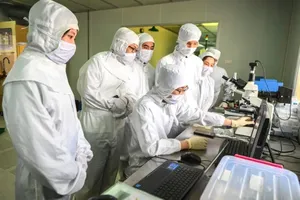
To realize its strategic vision of bringing semiconductor manufacturing technology into hands-on training environments, the SHTP Management Board has officially launched SHTP ATP Lab. The facility is intended to address the shortage of highly specialized talent through a shared training model serving universities, colleges, research institutes and businesses.
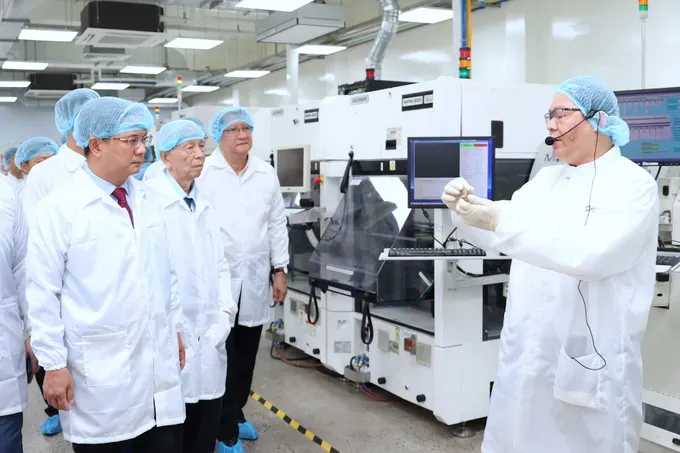
The laboratory was established based on a production line consisting of 13 modules of modern industrial machinery and equipment donated by Intel Products Vietnam and installed in an ISO 8 international-standard cleanroom environment.
A key feature of the facility is its automated Flip-Chip Ball Grid Array (FCBGA) chip packaging line, integrated with the Advantest T2000 automated testing system, the Delta Pyramid 6200 handler, and the ICOS CI-T130 optical inspection system utilizing machine-vision technology. The integrated system allows learners to gain direct experience and master specialized back-end semiconductor manufacturing processes rather than relying solely on theoretical simulations.
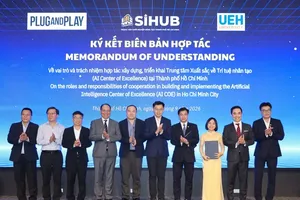
SHTP and the SHTP Training Center also announced a series of strategic partnerships. SHTP will cooperate with Becamex Corporation on planning a network of high-tech parks linked to innovation corridors and work with VinaCapital Group to develop green energy infrastructure, clean electricity and direct power purchase agreement (DPPA) mechanisms.
Meanwhile, the SHTP Training Center signed memorandums of understanding with VSAP LAB JSC and Ho Chi Minh City University of Technology and Education, through its Faculty of Electrical and Electronics Engineering, to integrate practical training modules, enhance faculty development and collaborate on applied research.
On the occasion, several organizations and individuals received certificates of merit from the Prime Minister and the Ho Chi Minh City People's Committee in recognition of their contributions.