The Politburo has issued Conclusion No. 99-KL/TW on the exploitation, governance, and protection of low-altitude airspace to serve national development in the new situation.
One of the notable points of Conclusion No. 99-KL/TW is a fundamental shift in the approach to low-altitude airspace. Under the conclusion, low-altitude airspace is no longer viewed solely from the perspective of managing flight activities but is defined as a “national resource, a new space for the country’s development and a special domain of sovereignty,” linked to the protection of airspace sovereignty and data sovereignty, cybersecurity, and other strategic objectives.
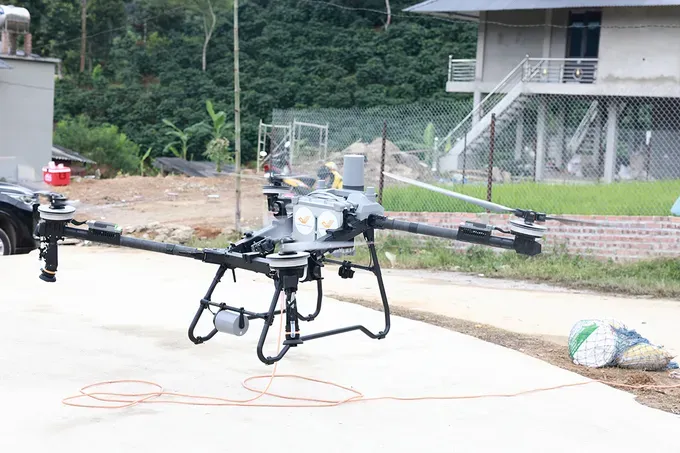
Under this approach, the low-altitude economy is not synonymous with unmanned aerial vehicles (UAVs). UAVs are only one of the technological means used to exploit this space. When UAVs are combined with artificial intelligence (AI), data, sensors, telecommunications, positioning technology, automation, and digital platforms, a new economic ecosystem can emerge, spanning research, vehicle design and manufacturing, infrastructure, data, operations, services, and specialized applications.
Ultimately, the outcome is not measured by the number of UAVs in operation but by higher productivity, lower costs, improved services, the creation of new markets, and new value for the economy and the public.
Conclusion No. 99-KL/TW sets a target for Vietnam to put three national-level flight testing zones into operation by 2030, representing different geographical terrains, along with at least one national UAV research and testing center. By 2045, the low-altitude economy is expected to become an important economic and technical sector and one of the economy’s new growth drivers, with high regional competitiveness and contributing about 1.5 percent of national GDP. Vietnam also aims to raise the localization rate of key UAV models serving production to more than 30-40 percent by 2030 and above 85 percent by 2045.
These targets show that developing the low-altitude economy is not simply about expanding the market for applications. It is also aimed at mastering technologies, developing industrial capacity, and gradually establishing domestic supply chains, thereby strengthening technological self-reliance as well as autonomy in infrastructure and strategic data.
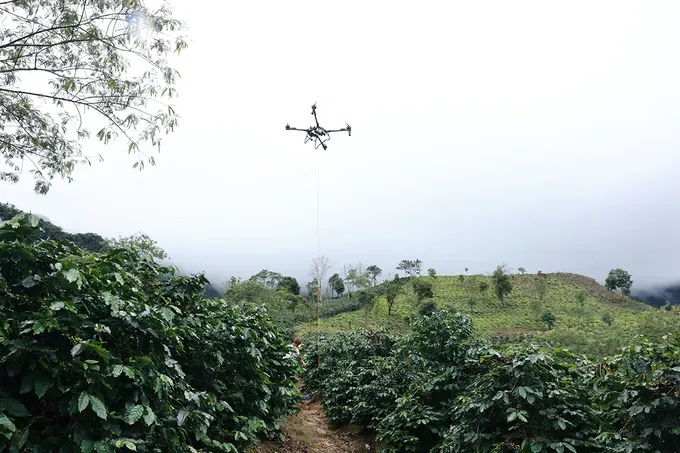
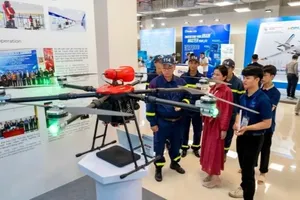
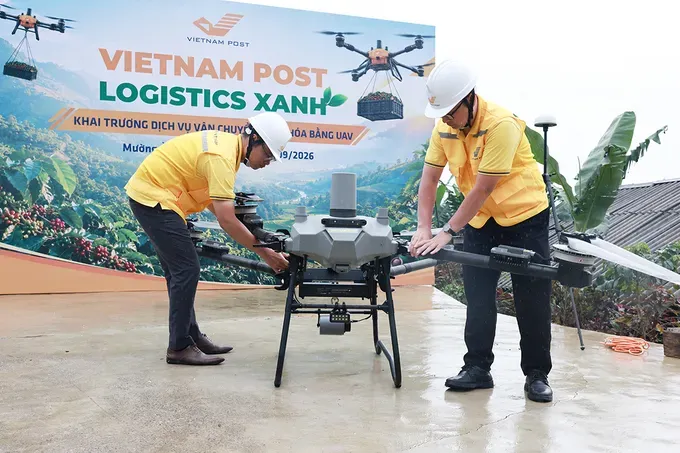
Many Vietnamese companies, including Viettel, FPT, CT Group, and Vietnam Post, are currently investing in research and development of various UAV models for different applications. In Ho Chi Minh City, Hanoi, Dien Bien, and several localities in the Mekong Delta, UAV use is being piloted under controlled conditions to support agricultural production, transport goods and medical biological products, and serve tourism activities.
According to the Ministry of Science and Technology, localities face the challenge of identifying appropriate technologies, users, service delivery models, investment resources, and the socioeconomic outcomes to be achieved when developing the low-altitude economy in general and UAVs in particular.
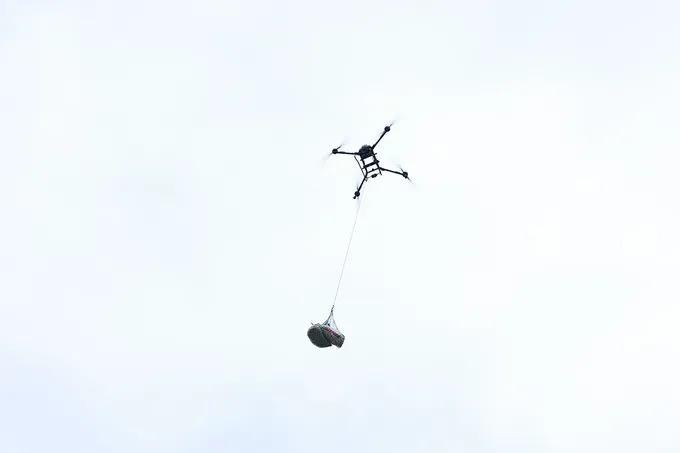
This approach can help avoid investment driven by trends or spread too thinly while preventing the development of infrastructure and models that lack real demand, cannot operate sustainably, or fail to generate a viable market.
A locality that moves ahead is not necessarily one with more UAVs, but one that identifies the right problems, develops effective operating models, and generates measurable value.
The measure of success is not how many UAVs Vietnam has in the sky, but how much new value the country can create from this new space for development.