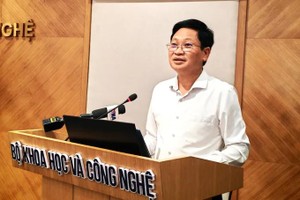
According to Director Le Van Thang of the HCMC Department of Science and Technology, the city allocated over VND12.7 trillion (US$488.5 million) in 2026 to heavily invest in science, innovation, and digital data infrastructure.
Within that figure, more than VND3 trillion ($115.4 million) is explicitly earmarked for digital transformation. This massive capital influx, harmonizing with roughly 30,000 tech enterprises, will ostensibly forge a launchpad for deploying cutting-edge tech projects. HCMC, obviously, sets a firm target to become a premier smart city by 2030.
Operating a megacity of 14 million residents, HCMC currently grapples with transitioning toward a data-driven governance model, applying advanced technological solutions to resolve chronic urban troubles, and adequately training high-quality human resources.
The Law on Urban Development permits HCMC to establish a controlled testing sandbox for unprecedented technologies, AI, alongside big data. Concurrently, the city determinedly propels AI applications in urban governance to tackle pressing megacity challenges.
Recently, HCMC rolled out its 2020-2030 AI application program aiming to vigorously boost research and commercialization. The municipality targets an application rate of 60 percent or higher for AI research outcomes.
To achieve this, authorities mapped out pivotal tasks, particularly expanding 5G coverage quality. It’s the foundational bedrock supporting AI applications across urban management. The city also focuses on establishing high-performance computing capacity to train large-scale AI models.
For Assoc Prof Dr Pham Tran Vu, Vice President of HCMC University of Technology (HCMUT) under Vietnam National University- Ho Chi Minh City, the new legislation holds immense potential. He noted that if optimally utilized, HCMC could ostensibly morph into an “urban laboratory” where tech solutions get rigorously verified under real-world conditions before broader replication. This law will aid the metropolis in unleashing vital resources for high efficacy.
If AI is likened to the “digital brain” orchestrating the megacity, then data is exactly the essential “nutrient source” sustaining that brain’s life. “However, AI can only analyze and deliver accurate forecasts when fed with high-quality input data. If the data lacks homogeneity in structure and format or isn’t frequently updated, AI’s analytical and decision-supporting capabilities will be severely constrained,” he analyzed.
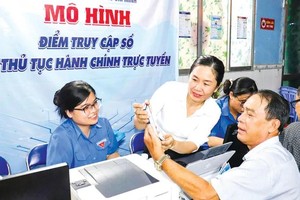
From the frontline reality of grassroots administration, Chairwoman Nguyen Thi Nhu Y of the Phu Nhuan Ward People’s Committee posited that AI’s evolution will heavily assist grassroots authorities in handling tasks faster and more accurately. For Ms. Y, a local leader navigating daily administrative hurdles, interconnected data serves as a highly practical asset.
“In the long run, what we genuinely desire isn’t hoarding tons of software or tech gadgets, but rather architecting a smart governance ecosystem where data is updated once, exploited multiple times, shared collectively, and boasts interoperability,” she explained. She also emphasized that this would dramatically slash manual labor for officials, promptly detect emerging issues, and elevate the quality of public services.
Dr Nguyen Van Dang, an urban governance expert, cautioned that if HCMC wishes to triumph in governing the megacity using AI, the vital puzzle is fundamentally resolving the data issue at its root.
The city doesn’t necessarily need to lump all data into a singular, monolithic system. Rather, the crucial imperative is that data sources must be capable of seamless connection and sharing while being governed under unified standards. The municipality needs to steer toward a shared urban data ecosystem, permitting the integration of data from departments, sectors, localities, alongside infrastructure enterprises according to appropriate levels of decentralization.

For Prof Dr Nguyen Ky Phung, Head of Saigon Hi-Tech Park Management Board, the new Law on Urban Development brings landmark opportunities. He noted Article 32 significantly diversifies high-tech models, empowering the HCMC People’s Council to stipulate preferential infrastructure mechanisms.
This essentially throws doors wide open for strategic investors bringing R&D projects scaled from VND3 trillion ($115.4 million) upwards, or microchip manufacturing projects starting at VND30 trillion ($1.15 billion). These investors are entitled to sweeping incentives, including 70-year project durations alongside five-year corporate and personal income tax exemptions.
The embedded sandbox mechanism explicitly allows HCMC to pilot core technologies like AI. Preemptively seizing this chance, the city authorities are architecting a 52.92-hectare Strategic Technology Development Center within the park. It’s practically a custom-tailored ecosystem for global conglomerates, seamlessly integrating tech services, smart manufacturing, and R&D incubation.
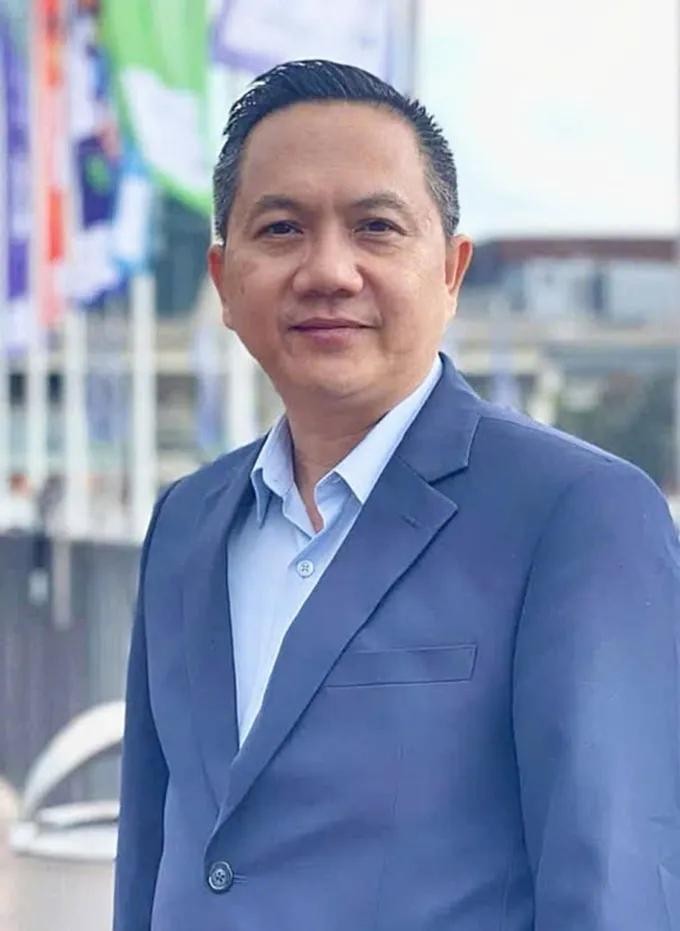
For Dr Nguyen Thanh Hoa, Deputy Director of the HCMC Digital Transformation Center, establishing an independent Sandbox Council remains paramount. To turn these institutional frameworks into practical results, he argued HCMC must swiftly deploy strategic actions.
The utmost priority is gathering elite experts to rapidly approve breakthrough pilot projects like autonomous vehicles or medical drones within just 30 days. Concurrently, it’s highly imperative to promote the “triple helix” model, allowing scientists to forge spin-off enterprises directly from their research.
Regarding AI, officials identify data as the most fundamental resource. Without standardized warehouses, cutting-edge algorithms merely generate skewed results. Consequently, the center is currently laser-focused on meticulously cleansing data. Coupled with talent-attracting policies like the Tech Visa, the city is steadily forging a rock-solid foundation for AI to truly become the digital brain operating this sprawling smart metropolis.
Alongside robust data infrastructure, HCMC desperately needs officials who know how to exploit data, ask the right questions, and utilize analytical results as a firm basis for decision-making. At that juncture, AI won’t just stop at being a mere tech tool, but will step-by-step morph into the administrative apparatus’s core governance capacity.
That’s exactly where the intrinsic value of the Law on Urban Development is most vividly manifested: carving out an institutional space so technology can be rigorously tested, resources mobilized, and unprecedented solutions practically deployed to solve the city’s real-world problems.