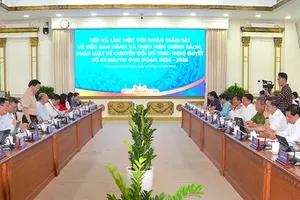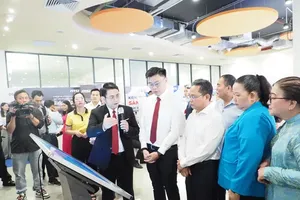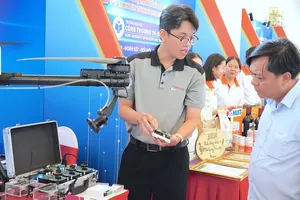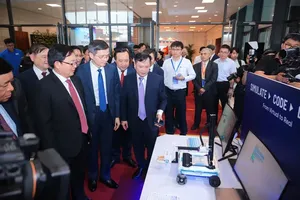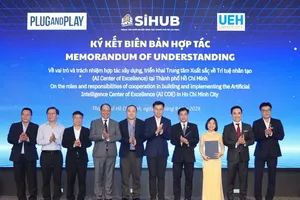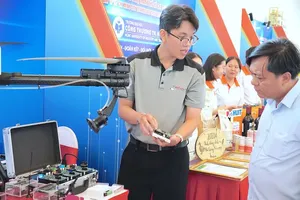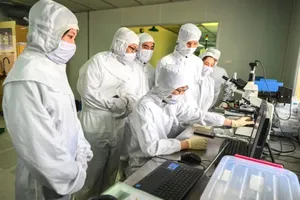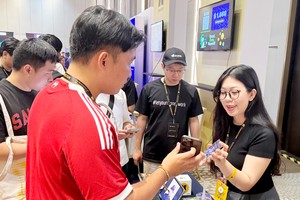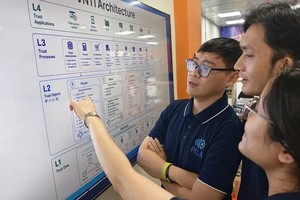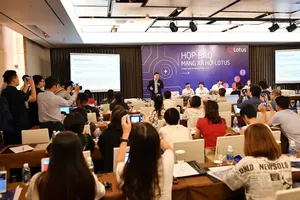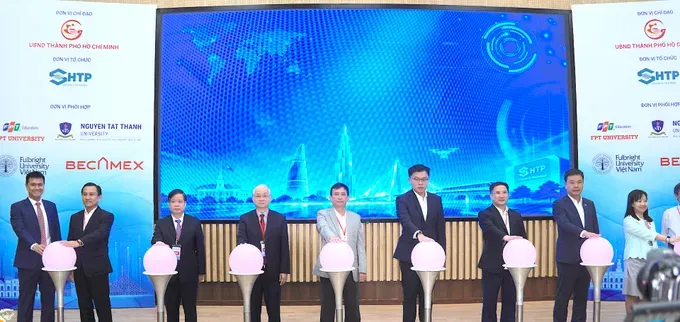
On October 16, the Management Board of Ho Chi Minh City Hi-Tech Park (SHTP) hosted the 8th Annual SHTP International Conference 2026 and the Southeast Region Research and Innovation Day. Centered on the theme "High-Tech Urban Area – Ho Chi Minh City's Growth Driver in the New Era," the event gathered more than 300 experts, scientists, and corporate representatives from Vietnam and abroad.
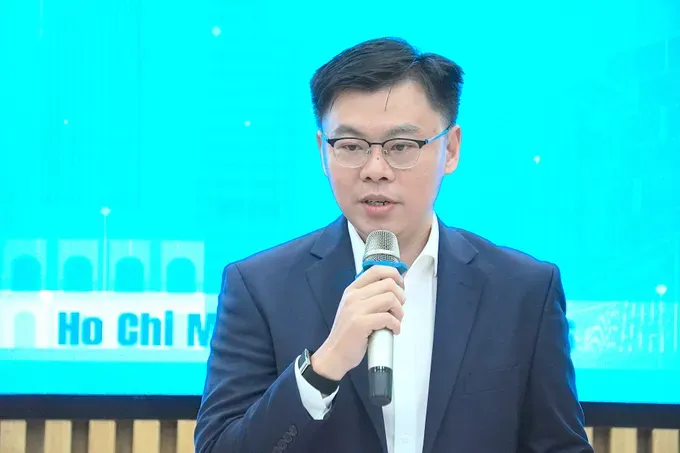
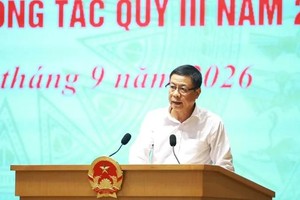
Speaking at the conference, Truong Minh Huy Vu, Vice Chairman of the Ho Chi Minh City People's Committee, highlighted high technology's strategic role as an economic driver while affirming the city's ongoing efforts to attract global investment capital. To date, SHTP has established itself as a destination for major international tech corporations, including Intel, Samsung, and Nidec Corporation, alongside investors in modern data centers.
According to Mr. Vu, building on initiatives from the 7th conference in 2025, Ho Chi Minh City aims to transition decisively from a single-function dedicated zone model to a comprehensive high-tech urban area. Although occupying a modest footprint, this model carries a strong spillover effect and yields particularly high economic value.
To realize this goal, the city plans to forge tighter links between industrial sectors and the higher education ecosystem, centered around Vietnam National University - Ho Chi Minh City (VNU-HCM), across a connected space exceeding 900 hectares.
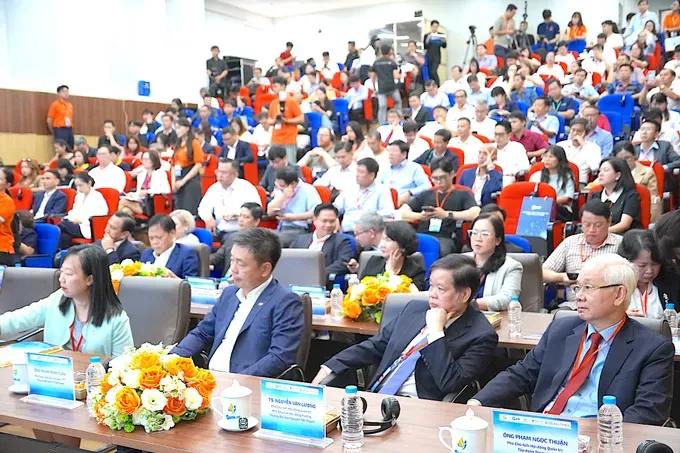
City leaders expressed hope that conference participants would offer actionable proposals to create breakthroughs in strategic tech sectors, including semiconductor chips, artificial intelligence (AI), and digital technologies. Additionally, the city seeks to develop a highly interactive urban master plan through deeper convergence among government, academic institutions, enterprises, scientists, and investors.
This model serves to complete a closed-loop innovation cycle: the State creates institutional frameworks; universities supply human resources; enterprises handle commercialization; scientists connect global knowledge; and investors unlock venture and insurance capital to transform research ideas into large-scale production.
Concurrently, the city will develop a comprehensive living ecosystem—spanning healthcare, education, and culture—to attract and retain international talent and experts for long-term engagement.
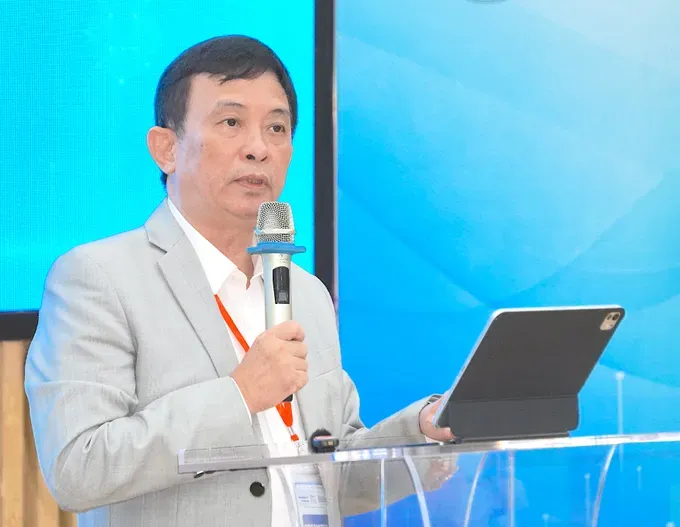
In his keynote address, Prof. Dr. Nguyen Ky Phung, Head of the SHTP Management Board, noted that the conference takes place at a particularly meaningful time as the city embraces highly favorable new legal and institutional frameworks. These include Resolution No. 09-NQ/TW issued by the Politburo on May 19, 2026, regarding the construction and development of Ho Chi Minh City in the new era, alongside the Law on Urban Development, which took effect on October 1, 2026.
With an expanded area of nearly 195 hectares approved by the Prime Minister, SHTP will immediately establish a Science and Technology Park model to enhance research and development (R&D) capacity, accelerate technology transfer, and advance toward green, sustainable development goals aimed at achieving Net Zero by 2045.
SHTP plans to implement five core solution groups concurrently, focusing on cutting-edge technological fields, developing high-quality human resources, driving digital and green transitions in operations, and applying controlled testing mechanisms (sandboxes) for emerging technologies.
During the presentation sessions, domestic and international experts shared valuable insights and strategic recommendations for Vietnam. Presenting on "High-Tech Cities—Strategies and Policy Recommendations for Vietnam," Prof. Dr. Sc. Nguyen Ngoc Thanh from Wroclaw University of Science and Technology in Poland outlined successful global models and proposed a roadmap to transition tech zones to fit the domestic context.
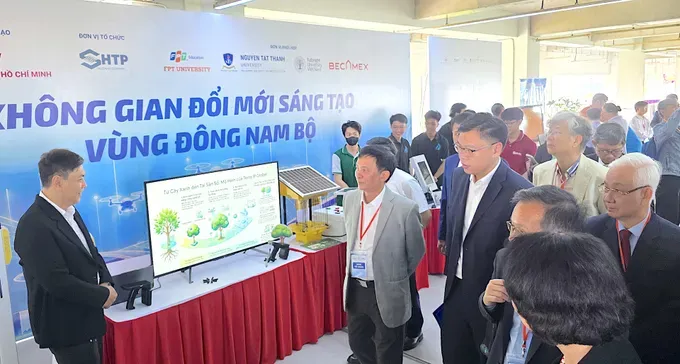
Addressing the semiconductor industry, Prof. Dr. Hiroshi from Kurume Institute of Technology in Japan proposed a three-stage roadmap. The first five years would focus on completing essential technical infrastructure, including electricity, ultrapure water, and logistics, while developing capabilities in outsourced semiconductor assembly and testing (OSAT). In the following five to 10 years, the focus would shift toward higher-value activities involving analog chips, microelectromechanical systems (MEMS), and the development of domestic suppliers. Beyond the 10-year mark, the long-term vision is to master chip design and conduct R&D on AI chips and chips for electric vehicles.
Assoc. Prof. Dr. Lam Quang Vinh from Vietnam National University, Ho Chi Minh City, together with representatives from FPT Corporation and Becamex, also engaged in detailed discussions on building digital infrastructure and applying AI to urban management.