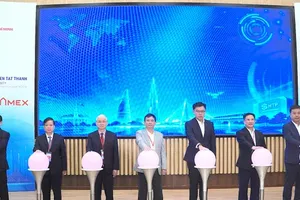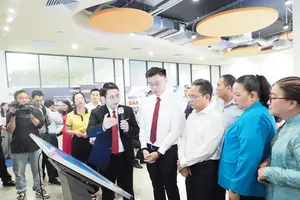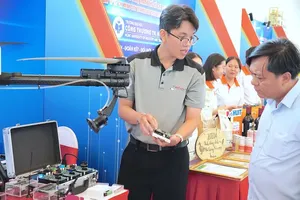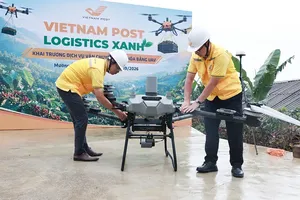
In today’s innovation landscape, there’s a remarkably familiar predicament of constructing numerous centers, signing countless memorandums of understanding, and organizing a plethora of seminars. Metrics are easily tallied, while visuals effortlessly look spectacular. Yet following those ceremonial inauguration ribbons, pressing questions of what concrete products have been generated or how much they’ve contributed frequently lack a definitive answer.
The recent conclusion drawn by Deputy Prime Minister Ho Quoc Dung regarding the national innovation ecosystem, officially delineated in Notice No. 538/TB-VPCP dated October 20, 2026, diagnosed that exact systemic ailment. The ecosystem has undeniably materialized. Still, it hasn’t successfully morphed into the primary catalyst for double-digit economic growth.
The bottleneck doesn’t merely stem from a scarcity of ideas or policy deficits. It predominantly lies within the execution phase, specifically the complex metamorphosis of knowledge, technology, finance, plus market dynamics into tangible commercial products.
The required remedy has also been clearly prescribed. It’s recommended to develop a network of innovation centers that doesn’t blindly chase quantity, but rather heavily prioritizes operational efficacy, intrinsic connectivity, and successful commercialization.
HCMC is currently seeking a pragmatic solution to that rigorous mandate through an approach neatly encapsulated by the phrase “specialized themes – strategic partners.” Looking closely at the distinct models the municipality is determinedly propelling, each center essentially selects its own unique runway.
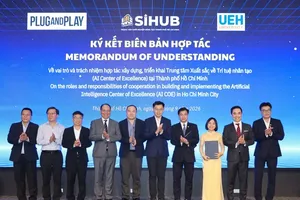
The Artificial Intelligence Center of Excellence (AI COE), collaboratively launched by SIHUB, the University of Economics HCMC, alongside Plug and Play, is placing heavy bets on applied AI. They utilize real-world problems from state agencies as well as private enterprises for tech startups to rigorously test. Meanwhile, Saigon AI Hub, co-founded by VNG and Vietnam National University – Ho Chi Minh City, delves profoundly into advanced AI research.
The 84X program, a joint venture between Block71 and Van Lang University, strictly selected a single value chain for its inaugural year, namely consumer goods plus retail. The Saigon Hi-Tech Park Innovation Center (SHTP-IC), having just undergone a comprehensive restructuring, steers its focus toward deep tech, particularly microchips, robotics, alongside novel materials. SoiHub, a privately funded innovation hub, relentlessly pursues cutting-edge technology facilitating green growth.
This specific role division isn’t merely a technicality. Rather, it possesses the sheer capability to dictate whether these centers ultimately compete against or actively supplement one another. A dedicated research group nestled within Saigon AI Hub could seamlessly evolve into a startup at AI COE, subsequently introducing their prototype into a highly controlled testing environment at SHTP-IC.
A genuine network intrinsically needs to function exactly like that. Every single node flawlessly executes its designated task so the entire ecosystem can collaboratively achieve monumental feats. Without strong mechanisms for connectivity and resource sharing, hyper-specialization can mistakeably trigger severe fragmentation. This causes each center to operate in complete isolation, potentially overlapping or fiercely competing for scarce resources.
A remarkable highlight within these contemporary models is that international partners are officially invited to handle daily operations, rather than just serving as a prestigious nameplate.
Plug and Play, recognized as a world-leading startup accelerator network, purportedly brings unparalleled connections to hundreds of multinational conglomerates alongside global investors. Block71 and the National University of Singapore intrinsically contributes invaluable expertise in entrepreneurial training, effectively serving as a strategic gateway to Southeast Asia and Japan.
It’s particularly noteworthy that the Google AI Futures Fund handpicked Saigon AI Hub as its inaugural research institution in Vietnam to successfully roll out the Applied AI Lab, where every center needs a formidable partner whose inherent strengths perfectly align with its chosen specialization.
They supposedly possess the necessary brand equity, financial muscle, strict standards, expansive client networks, alongside an ironclad discipline regarding quantifiable results. Those are precisely the critical resources the domestic ecosystem currently needs to vigorously replenish.
The true value of such collaborations must be unequivocally proved through transferred technologies, successfully commercialized products, plus the substantive capacities that the Vietnamese side effectively accumulates.
Selecting the right tasks and choosing the perfect partners still isn’t quite enough if genuine internal cohesion remains alarmingly absent. Universities simply can’t persist in merely training then “delivering” graduates to the labor market; they must rapidly transition toward a co-creation model.
Private enterprises, together with investment funds, must proactively act as problem-setters, essentially serving as the very first customers. Every single commitment urgently needs translating into an actionable implementation agreement featuring strict timelines, allocated budgets, and highly specific targets.
Rigorous evaluation cycles are required, spanning from six months to a full year, so that concrete outcomes are highly visible, allowing for prompt adjustments. The metrics must be exceptionally specific.
The questions now should be how many experimental projects were rigorously tested, applied contracts officially signed, capital successfully mobilized, personnel comprehensively trained, and more importantly, how many products have genuinely entered commercial production, successfully generating unprecedented economic value.
The municipality also needs a cohesive coordination mechanism enabling individual centers to seamlessly share problem statements, top-tier experts, eager investors, alongside robust testing spaces. Once implemented, a promising startup only needs to “enter through a single door” to effortlessly tap into the entire network.
Highly effective models should be quickly replicated, while underperforming ones must be boldly recalibrated, even terminating investments entirely if fundamental objectives aren’t met. Innovation outcomes must be quantified by the sheer volume of products reaching end-users, alongside the tangible macroeconomic value injected into the economy.
It’s about tackling fewer tasks while ensuring they’re the right ones, and selecting companions who prove to be incredibly genuine partners.
The remaining part involves persistently executing initiatives to completion, securing measurable outcomes, and shouldering accountability for those results. Upon achieving success, today’s thematic innovation centers will solidify into a highly tangible catalyst fueling the double-digit growth trajectory for HCMC and the nation alike.