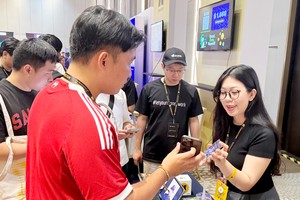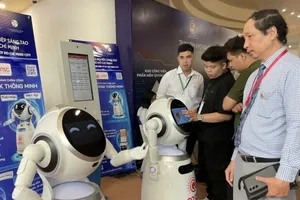
For HCMC residents, utilizing QR codes to settle expenses or swiping Visa cards to unlock metro gates before boarding trains has become remarkably commonplace and familiar.
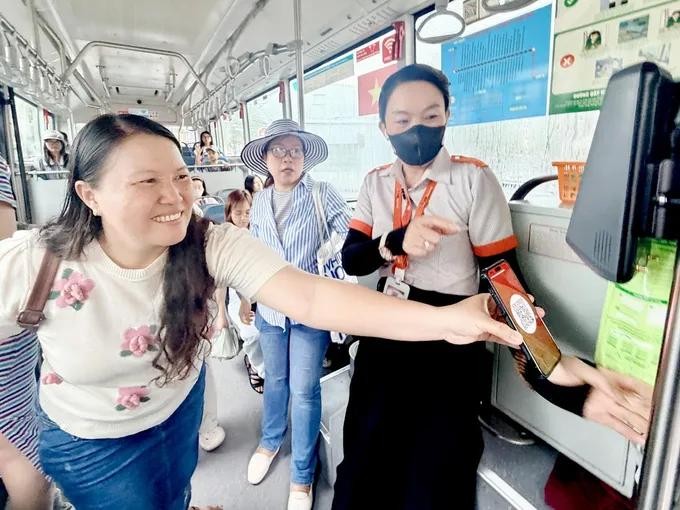
Most recently, the rollout of authentication via citizen identification cards, QR code scanning on the VNeID app, or bank card use to secure free tickets across 134 bus routes in HCMC continues to vividly depict a burgeoning digital society.
For Thanh Tuan, a student at the HCMC University of Technology and Engineering, this tech integration presents a notable shift. He explained that although the authentication process takes merely a few seconds, it essentially represents a massive transformation in applying technology to everyday life. Furthermore, foreign passengers can seamlessly use EMV-standard chip bank cards (Visa, Mastercard) or cards integrated into Apple Pay, Google Wallet, or Samsung Pay for authentication, showcasing remarkable diversity in deploying technological platforms.
According to Director Pham Ngoc Dung of the HCMC Public Transport Management Center (under the HCMC Construction Department), the free ticket policy across 134 bus routes is implemented to heavily encourage locals to utilize public transit, while passenger data is simultaneously harnessed to elevate service quality. This is ultimately how HCMC is determinedly architecting its digital society.
Throughout the ongoing process of forging a smart metropolis, the HCMC Digital Citizen application is continuously adding new features aiming to boost convenience, enhance user experiences, and directly serve the population’s daily needs.
Alongside dozens of previously existing features, city dwellers can currently access electronic health records right on this app to effortlessly monitor their personal well-being via smartphones. This highly anticipated product was reportedly developed through a collaboration between the municipal Department of Health, the Department of Science and Technology, and the HCMC Digital Transformation Center, fundamentally built upon the community health management platform alongside electronic medical records from various hospitals.
For Ms. Hanh Thuong, a resident of Cho Quan Ward, the digital tool has proven invaluable. “Thanks to electronic health records, my medical check-up results aren’t just isolated pieces of information anymore; they’ve essentially morphed into long-term health data, helping me proactively and continuously monitor my condition,” she enthusiastically shared.
The HCMC Digital Transformation Center has already connected data spanning 168 wards, communes, and special zones across HCMC so every single citizen can easily access and optimally exploit the myriad features housed within the HCMC Digital Citizen application.
HCMC is steadily standardizing data sources ranging from traffic, urban planning, and infrastructure to socio-economic indicators, clearly demonstrating that data-driven urban governance is the definitive strategy making the city inherently smarter.
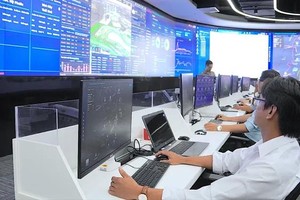
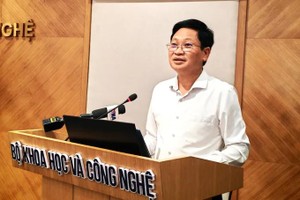
To robustly consolidate this data application foundation, the HCMC People’s Committee has officially promulgated a plan to deploy Digital Twins in urban management and development through 2030. The master plan’s focal objective is to systematically perfect the spatial data platform, seamlessly integrating 2D and 3D data to serve monitoring, analysis, forecasting, and decision-making support at the Intelligent Operations Center (IOC).
Director Vo Thi Trung Trinh of the HCMC Digital Transformation Center noted that Digital Twins aren’t exclusively applied in the transportation sector; they essentially help authorities grasp real-time conditions while simultaneously simulating the future across multiple other domains.
Once data is synchronously connected, the city can accurately simulate various scenarios before making final decisions, ultimately helping social management and operational tasks achieve significantly higher efficiency.
Driven by the municipality’s forceful policy decisions coupled with tight coordination among departments, agencies, and localities, a unified, interconnected data ecosystem is gradually taking shape. Through these concerted efforts, digital life is widely expected to establish a profound presence across all sectors, substantially contributing to transforming HCMC into a fully fledged smart metropolis.
Top 50 smart cities globally
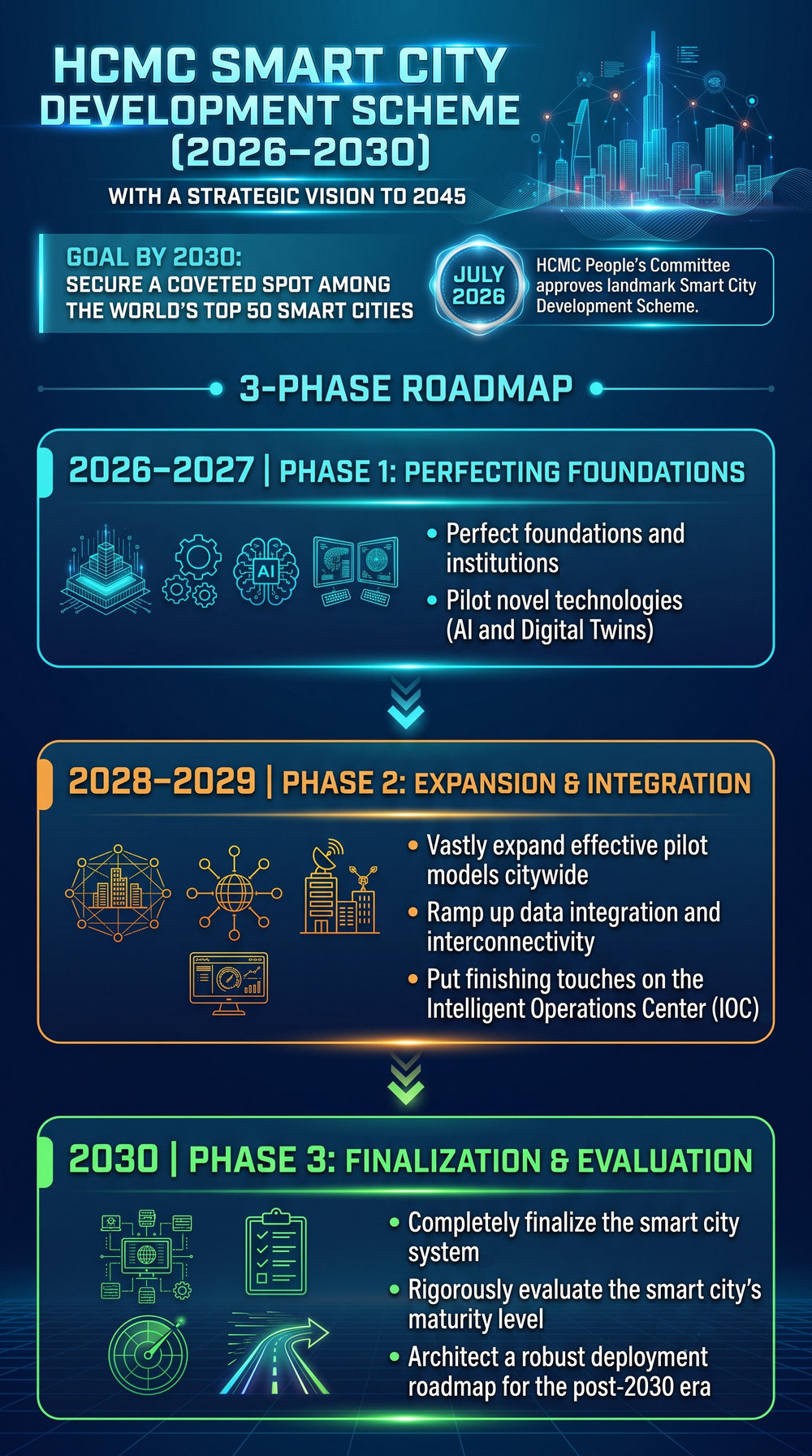
In July 2026, the HCMC People’s Committee issued a landmark decision approving the Smart City Development Scheme for the 2026-2030 period, boasting a strategic vision stretching to 2045. The city ambitiously aims to secure a coveted spot among the world’s top 50 smartest cities by 2030.
According to the blueprint, during the 2026-2027 phase, the municipality will heavily focus on perfecting foundations and institutions while piloting novel technologies like AI and Digital Twins. Subsequently, in the 2028-2029 phase, officials will vastly expand effective pilot models citywide, ramping up data integration and interconnectivity, while putting the finishing touches on the Intelligent Operations Center (IOC).
Heading into the 2030 phase, the city will completely finalize the system, rigorously evaluate the smart city’s maturity level, and architect a robust deployment roadmap for the post-2030 era.