Some 38 strategic technology tasks worth nearly US$30 million focus on strategic sectors including satellites, UAV chips, railway infrastructure, and digital technologies, with 30 proposals already evaluated by the Ministry of Science and Technology.
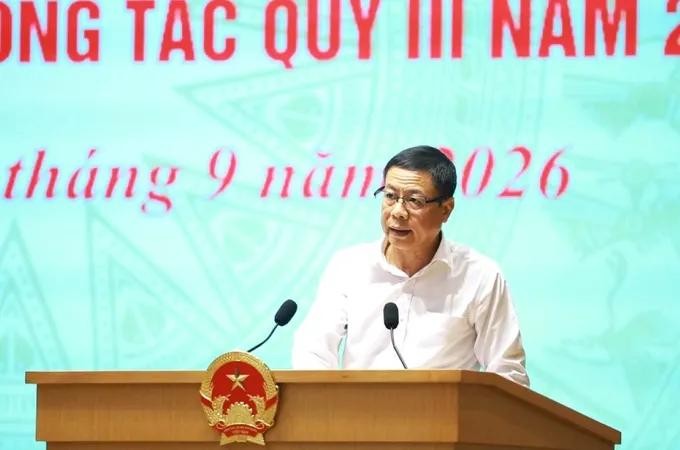
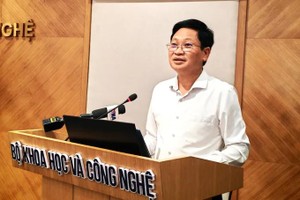
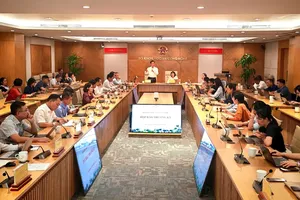
During the topical session addressing science and technology, innovation, and digital transformation as drivers of socio-economic development, and reviewing third-quarter 2026 performance outcomes held on the afternoon of September 28, Deputy Minister of Science and Technology Le Xuan Dinh reported that the comprehensive legal framework governing strategic technology has been systematically enacted.
This framework encompasses the High Technology Law No. 133/2025/QH15, Decree No. 260/2026/ND-CP, and Decision No. 1493/QD-TTg, which approves the specialized national initiative on strategic technology.
Furthermore, the Ministry of Science and Technology has promulgated five circulars establishing regulations pertaining to business incubation, enterprise and product recognition, approval procedures, task assignment, and financial policy mechanisms.
According to Deputy Minister Le Xuan Dinh, the management mechanism incorporates an innovative approach wherein assignments are segmented into distinct work packages, each characterized by explicitly established objectives, deliverables, financial allocations, and completion benchmarks. Financial resources are distributed in accordance with the achievement of each benchmark; assignments that successfully attain a benchmark advance to receive funding for subsequent phases, whereas those failing to meet requirements are terminated.
Procurement processes are initiated in response to particular operational challenges, incorporating explicit specifications concerning deliverables, technical parameters, and intended beneficiaries. Business entities engage throughout the process beginning with the phase of establishing technical specifications, contributing matching financial resources, and ultimately obtaining the finished products.
According to the report from the Ministry of Science and Technology, as of September 27, ministries and agencies had proposed 38 tasks with a total budget of VND13,750 billion, of which non-state budget sources accounted for VND8,860.2 billion, or 64.4 percent. The Ministry of Science and Technology has evaluated 30 tasks; 14 tasks were approved, 8 tasks were unqualified for approval, and 8 tasks have not been evaluated. The proposed tasks focus on fields such as earth observation satellites, RF chips for unmanned aerial vehicles (UAVs), railway tracks, digital twins for power systems, and CAR-T cell therapy.
Through evaluation, the Ministry of Science and Technology noted several issues that need continued handling, such as not separating research expenditure from investment capital; overlap between some tasks; lack of receiving units for products and reciprocal capital; and unclear evaluation milestones.
Regarding local tasks, as of September 14, 30 out of 34 localities had proposed 113 tasks. The Ministry of Science and Technology proposed classifying them into 3 tiers: Tier 1, national and inter-regional problems and complex core technologies, aggregated into national tasks to report to the Prime Minister; Tier 2, a common technology tested across multiple areas, coordinated by the Ministry of Science and Technology; and Tier 3, application of completed technologies, to be decided proactively by localities.