More than simply increasing its physical footprint, the decision marks a strategic transformation that will enable SHTP to evolve from a high-tech manufacturing hub into a comprehensive innovation ecosystem.
In an interview with Sai Gon Giai Phong (SGGP) Newspaper, Prof. Dr. Nguyen Ky Phung, Head of the SHTP Management Board, shared insights into the vision and roadmap for this transformation.
Primary drivers determine pace, quality of socio-economic growth
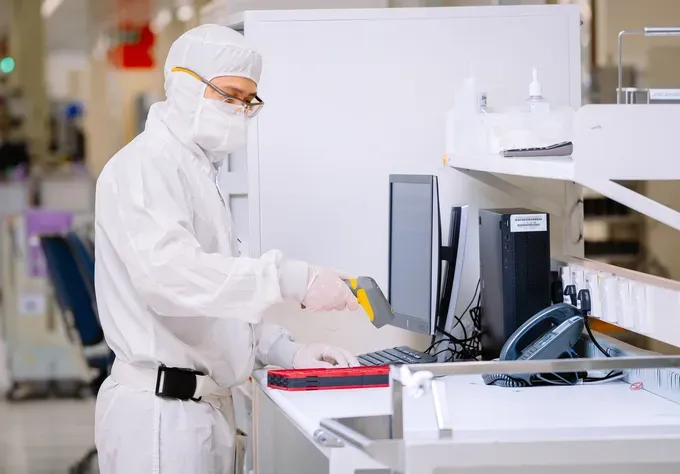
Science and technology have been identified by Ho Chi Minh City not only as a fundamental pillar but also as one of the primary drivers determining the pace and quality of the city's socio-economic growth. To realize its ambition of becoming a regional hub for technology and innovation, the city is accelerating the restructuring of its science and technology capabilities while fostering a conducive environment to attract high-tech investment. This is regarded as the strategic key to enabling Ho Chi Minh City to achieve breakthrough growth, sustainably modernize its economic structure, and strengthen its competitiveness in the digital era.
Prof. Dr. Nguyen Ky Phung said that the Government’s decision to expand the Saigon Hi-Tech Park (SHTP) carries exceptional strategic significance, creating a dedicated technology space for the park’s next phase of development. After more than two decades of operation, SHTP has effectively reached its land capacity for accommodating large-scale projects. The addition of nearly 195 hectares will not only address the infrastructure needs of next-generation technology projects but also provide the essential foundation for transforming SHTP from a destination focused primarily on attracting manufacturing investment into a comprehensive innovation ecosystem.
Within this expanded area, SHTP envisions fostering strong synergies among research and development (R&D), high-quality human resource training, innovative entrepreneurship, and advanced manufacturing. This integrated ecosystem will lay the groundwork for realizing SHTP's vision of becoming an internationally benchmarked smart innovation hub.
The new development space will also serve as an incubator for emerging industries, generating high-value employment through the commercialization of technology while strengthening the nation's research and development capabilities.
The expansion area of the Saigon Hi-Tech Park (SHTP) in Long Phuoc Ward will indeed provide the foundation for the gradual development of the city's Science and Technology Park. The park is envisioned as a dedicated hub for advancing research and development (R&D), technology transfer, and, most importantly, strengthening collaboration among the three key stakeholders, including universities, research institutes, and enterprises.
SHTP's overarching objective is to develop the Science and Technology Park into a leading science and technology hub for Ho Chi Minh City and the Southeast region. To achieve this vision, the park’s management board has identified five strategic priorities, including investing in state-of-the-art research infrastructure, building a robust business incubation ecosystem, strengthening collaborative networks, focusing on strategic high-tech sectors, and developing a highly skilled workforce.
Through these initiatives, the science and technology park is expected to serve as the driving force behind innovation across the region in the years ahead.
To date, the Saigon Hi-Tech Park (SHTP) is home to 166 valid investment projects with a combined registered investment capital of approximately US$13.75 billion. Of the total, foreign investors account for more than US$11 billion, while domestic enterprises have invested over US$2.7 billion.
These figures reflect strong investor confidence and demonstrate that manufacturing development and investment attraction at SHTP have been progressing steadily, providing a solid foundation for the successful development of its expansion area.
Opportunity to unlock new value in next phase of development

The Head of the SHTP Management Board affirms that the park continues to maintain its strong investment appeal despite global economic uncertainties. In the first six months of 2026 alone, SHTP granted investment certificates to four strategic projects with a combined registered capital of more than US$1.23 billion, achieving nearly 90 percent of its annual target.
Of the total investment, domestic investors contributed approximately US$640 million through two projects, while foreign investors accounted for nearly US$590 million across two projects. In addition, existing enterprises increased their registered investment capital by more than VND440 billion (US$16.7 million) through project expansion.
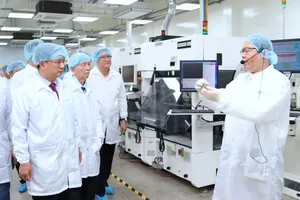
After more than two decades of development, the Saigon Hi-Tech Park is proud to be home to leading global corporations such as Intel, Samsung, Nidec, Jabil, and Schneider Electric. The year 2026 marks a pivotal point as SHTP reinvents itself to capitalize on a new wave of investment in strategic sectors, including semiconductors, artificial intelligence (AI), data centers, and digital technologies.
Among the four newly licensed projects, two are large-scale data center developments with a combined investment of nearly US$1 billion. These projects will provide the foundational infrastructure for Ho Chi Minh City's future AI and cloud computing ecosystem.
Meanwhile, Techtronic Industries (TTI)'s decision to increase its investment by more than US$730 million to develop smart electronic products integrated with the Internet of Things (IoT) underscores the confidence of international investors in SHTP's long-term growth potential.
The expansion will enable SHTP to evolve into a significantly more advanced and influential technology hub. Looking ahead, Prof. Dr. Nguyen Ky Phung envisions it as a fully integrated science and technology ecosystem capable of developing homegrown technologies and products bearing Vietnamese brands, rather than serving solely as a manufacturing and assembly base.
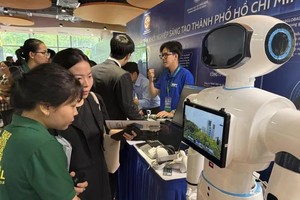
SHTP will host state-of-the-art R&D centers in strategic fields, including microelectronics and semiconductors, artificial intelligence (AI), automation, and green energy. He also believes that closer integration between research and market demand will strengthen the technological self-reliance of Vietnamese enterprises.
Beyond generating export value, the park will play a pivotal role in cultivating a highly skilled workforce for the country and spearheading the implementation of Vietnam's national strategies on semiconductors and digital transformation. It is set to become the core engine that elevates Ho Chi Minh City's position on the regional technology map.
Prioritizing financial resources for the expansion of SHTP
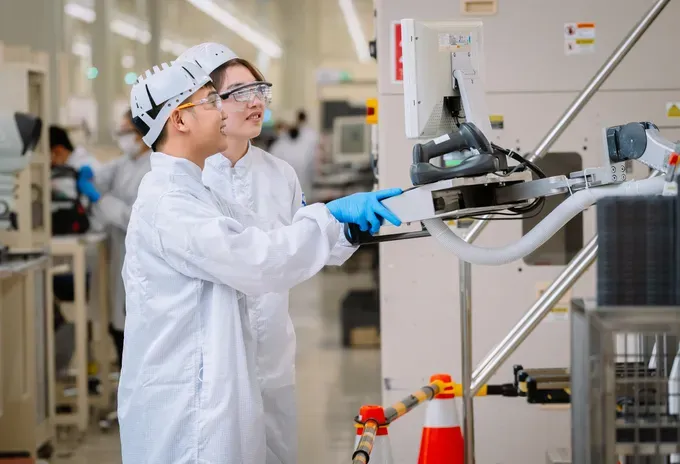
The Ho Chi Minh City People's Committee has drafted an implementation plan for the expansion of the Saigon Hi-Tech Park (SHTP), focusing on several key priorities. These include establishing a steering committee to oversee the implementation of the expansion project and prioritizing financial resources by allocating the city's budget for the development of infrastructure in the expanded area, while proposing central government funding to complement municipal resources for this key project.
The draft also prioritizes investment to complete and upgrade transport infrastructure, providing access to the expanded site, with particular emphasis on constructing a road linking the existing SHTP to its new expansion area. In addition, the city plans to refine policies and mechanisms to attract investment more effectively, including the introduction of policies and programs to support the transformation and development of a comprehensive innovation ecosystem.