According to the forecast, salinity intrusion in the Mekong Delta will fluctuate at high levels in the first days of the 2025–2026 dry season, from April 21 to April 30, then gradually decrease toward the end of the week.
The situation is influenced by slow changes in upstream Mekong River flow, with water levels in the upper reaches 0.1–1 meter lower than the long-term average, while middle and lower sections are 0.05–0.75 meters higher.
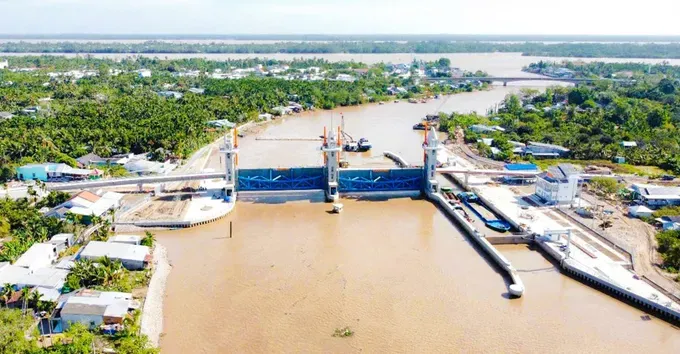
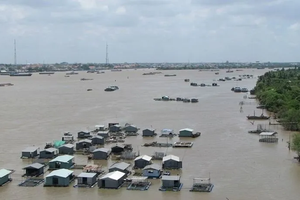
Tidal fluctuations in the Tien and Hau rivers continue, with high tides remaining a key factor. Hot and sunny weather in the Southwest, with temperatures reaching 31–34 degrees Celsius or higher in some areas, is also altering the balance between freshwater and seawater.
Forecast data shows that the 4‰ salinity boundary is pushing further inland in several main river systems, including 55–62 kilometers in the Vam Co Dong and Vam Co Tay rivers; 35–45 kilometers in the Cua Tieu and Cua Dai rivers; 35–42 kilometers in the Ham Luong and Cai Lon rivers; and 35–45 kilometers in the Co Chien and Hau rivers.
The strongest salinity intrusion is expected between April 21 and April 23. After this period, conditions are forecast to ease gradually, though authorities still recommend close monitoring of upstream water flow and tidal conditions.
Overall, experts assess that salinity intrusion in the 2025–2026 dry season will be lower than in the 2024–2025 season and also below the long-term average.




)