According to a report submitted to the National Steering Committee for Civil Defense by the Lao Cai Department of Agriculture and Rural Development, the extreme weather—characterized by thunderstorms, whirlwinds, and powerful gusts—intensified from the night of April 15 through the early hours of April 16. The communes of Bac Ha and Muong Khuong were among the hardest hit.
Local authorities confirmed four casualties, all of whom are laborers who were caught in the storm while sleeping in a temporary shelter in Ngai So Village, Bac Ha Commune. The victims are currently receiving medical treatment at the Bac Ha Regional Medical Center.

The extreme weather left a trail of destruction across the region, with 338 homes reported damaged. Among these, 333 residences in Bac Ha Commune sustained partial damage—primarily shattered fibro-cement roofing—while five homes in Muong Khuong Commune had their roofs completely blown off.
The Department of Agriculture and Rural Development of Lao Cai Province further detailed the devastation to the agricultural sector, reporting that 485.5 hectares of crops were affected. The breakdown includes 370 hectares of industrial and fruit trees in Bac Ha Commune and 115.5 hectares of annual crops, consisting of 115 hectares in Bac Ha Commune and 0.5 hectares in Muong Khuong Commune.
According to the Lao Cai provincial Department of Agriculture and Environment, the total damage is estimated at over VND30 billion (US$1.14 million). The figures are being further reviewed and updated by local authorities.
In the immediate aftermath of the disaster, Lao Cai’s standing agency for natural disaster prevention and control ordered local authorities to conduct rapid assessments and compile comprehensive damage statistics.
At the commune level, Civil Defense Steering Committees mobilized rapid response forces, police, militia, and mass organizations to assist residents in overcoming the aftermath, repairing and reinforcing damaged houses, and continuing to assess damage down to each household.
Local authorities have supported residents in relocating property, clearing debris, and carrying out temporary reinforcement of damaged roofs. The injured were promptly taken for emergency medical treatment.

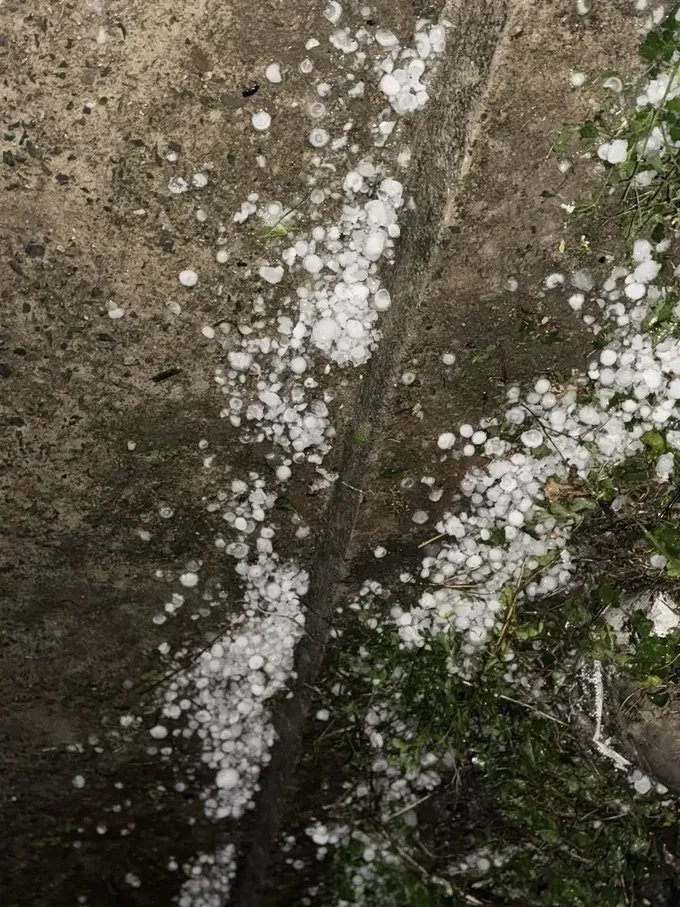

Also on April 16, Mr. Tran Quoc Huy, Chairman of the People’s Committee of Tu Mo Rong Commune, Quang Ngai Province, said he had directed an on-site inspection of the hailstorms and the assessment of damages in order to propose support measures to help residents soon stabilize their lives.
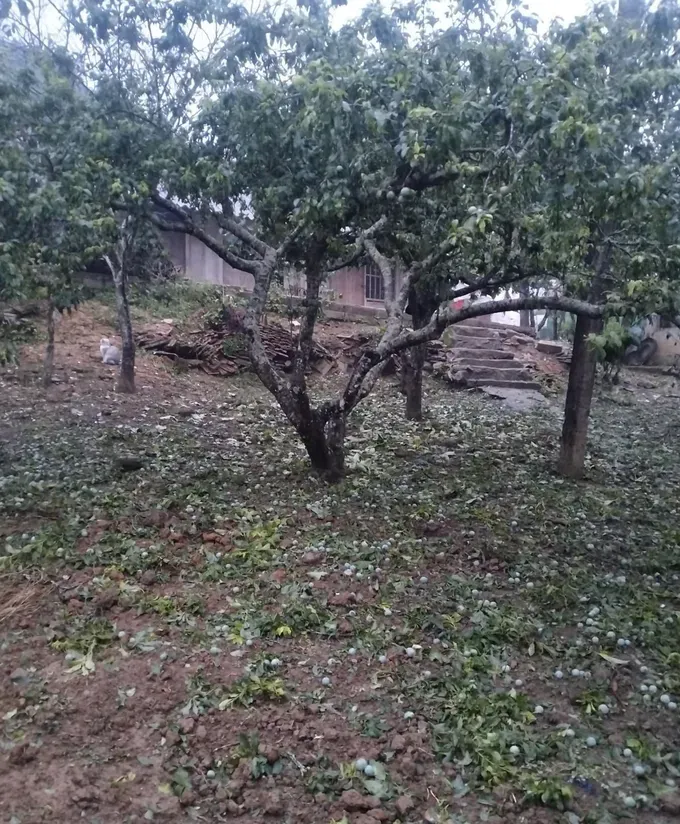
According to residents, on April 14 and 15, a series of heavy hailstorms occurred in Tu Mo Rong Commune, mainly concentrated in the hamlet of Dak Chum 1. Each episode lasted from 30 minutes to one hour, with finger-sized hailstones falling densely and covering the ground in white. During the hailstorms, residents stayed indoors and did not dare to go outside.
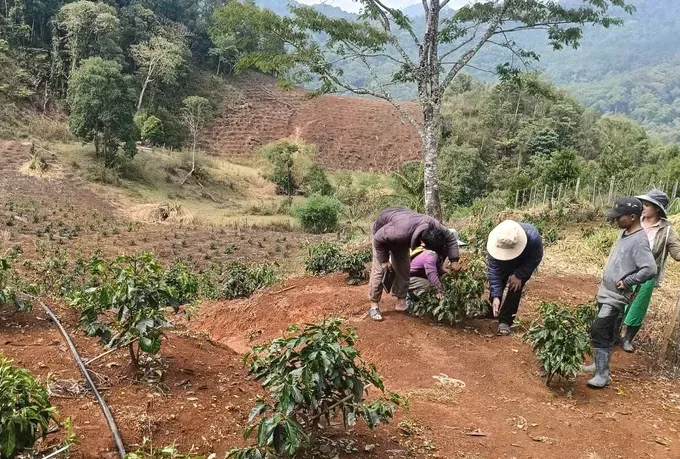
The hailstorms caused damage to large areas of crops. In Dak Chum 1 hamlet alone, coffee and strawberry farms belonging to around 20 households were affected. As for Ngoc Linh ginseng cultivated under forest canopies, residents are continuing to conduct field checks to assess the extent of the damage.
Mr. A Kru, head of Dak Chum 1 hamlet, said that, although hailstorms had occurred in the locality in the past, their scale and intensity were not as severe as the two recent events. This time, the hailstones were larger, fell more densely, and lasted longer, causing significant concern among residents.
The meteorological and hydrological authorities have forecast that from the night of April 16 to April 19, the northern mountainous region and the Central Highlands are likely to continue experiencing thunderstorms, whirlwinds, lightning, and strong gusty winds, which may further damage homes, property, and agricultural production. Localities are required to closely monitor weather developments and proactively implement response measures.










)