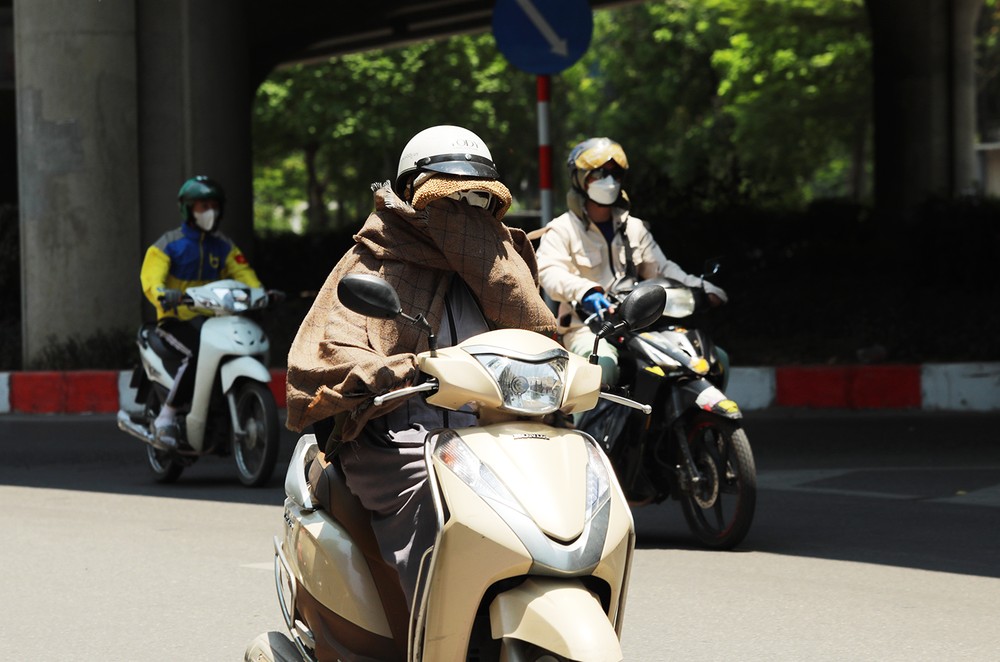
The National Center for Hydro-Meteorological Forecasting reported that, as of the afternoon of April 6, widespread heatwaves had affected multiple regions nationwide, with some areas experiencing severe conditions. The northwest of Northern Vietnam, the belt from Thanh Hoa to Da Nang, and eastern parts of Quang Ngai–Dak Lak recorded daily highs of 35–38 degrees Celsius, with some locations exceeding 39 degrees. Notably, Nghe An and Ha Tinh saw temperatures nearing 40 degrees Celsius, while relative humidity hovered at 45–50 percent.
In the Central Highlands and Southeastern region, temperatures generally ranged from 35 to 36 degrees Celsius, with some areas surpassing 36–37 degrees. Dry conditions and prolonged high temperatures persisted throughout the day.
Forecasts indicate that from April 7 to 8, the heatwave will intensify and expand in scope. The Northwest is expected to see temperatures of 36–38 degrees Celsius, with isolated peaks above 39 degrees and humidity at 40–45 percent. The heat will extend into the Northeast (excluding Quang Ninh and Hai Phong), where highs may reach 35–36 degrees, locally higher, with humidity at 55–60 percent.
From Thanh Hoa to Da Nang and eastern Quang Ngai–Dak Lak, temperatures are forecast at 37–39 degrees Celsius, with some areas exceeding 40 degrees and humidity dropping to 35–40 percent. The Central Highlands and Southern Vietnam will continue to record 35–36 degrees, with localized spikes above 37 degrees and humidity at 45–50 percent.
Meteorological experts noted that peak heat typically occurs between 10 a.m. and 4 p.m., with actual outdoor temperatures potentially 2–4 degrees higher than forecasts, especially in urban areas with concrete surfaces and asphalt roads. Authorities advise residents to limit outdoor activities during midday, particularly between 1 p.m. and 3 p.m., and to take precautions against fire and explosion risks driven by dry weather and surging electricity demand, including the prudent use of air conditioning.