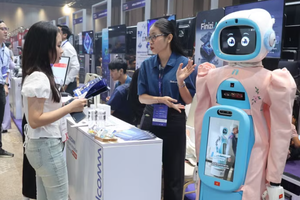
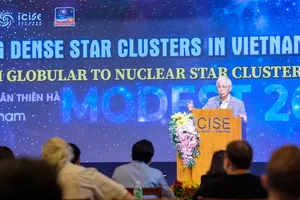
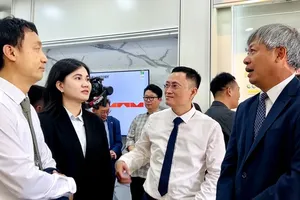
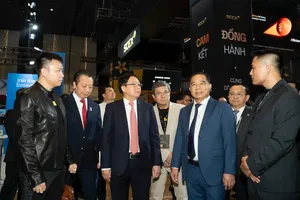
According to Professor Dr. Nguyen Ky Phung, Head of the SHTP Management Board, after more than 20 years of development, SHTP has emerged as one of Vietnam’s top high-tech centers and a core innovation nucleus for Ho Chi Minh City and the Southern Key Economic Region. The park has built a dynamic high-tech ecosystem, attracting global technology giants such as Intel, Samsung, Nidec, Jabil, Sanofi and Schneider Electric, with more than 160 projects and total registered investment exceeding US$12 billion.
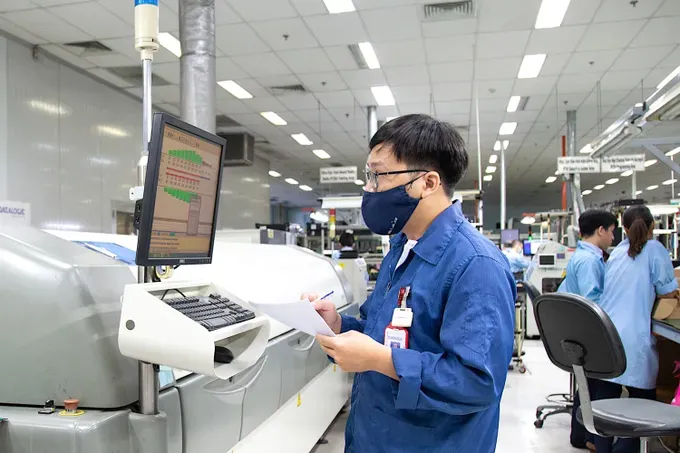
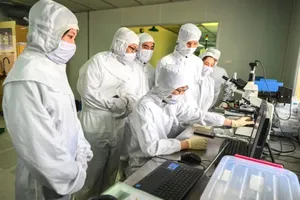
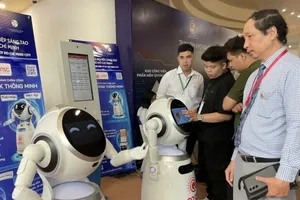
SHTP has made significant investments in research and innovation infrastructure, including an R&D Center, a Training Center and a High-Tech Business Incubator, helping to commercialize “Make in Vietnam” technologies and strengthen national competitiveness. It was also among the first in Vietnam to deploy AI (artificial intelligence), IoT (Internet of Things) and semiconductor technologies, and has set a target of achieving net-zero emissions by 2045.
A key feature of SHTP’s development model is the integration of green growth and digital transformation through smart industrial park management. The application of AI and IoT in smart factories has reduced energy and material consumption by 20 percent to 30 percent, while smart energy systems have enabled solar power to account for up to 50 percent of total energy use.
Amid the country’s transition to a new development stage, the Politburo promulgated Resolution No. 57-NQ/TW on December 22, 2024, to drive breakthroughs in science and technology, innovation, and national digital transformation. At the same time, Ho Chi Minh City introduced a scheme to build a diversified network of international-caliber innovation centers under the coordination of municipal authorities.
Currently, home to 112 operating projects and more than 52,000 workers, SHTP has become a major contributor to Ho Chi Minh City’s exports and state budget revenue.
In the 2025–2030 period, the park aims to further strengthen its role within the innovation ecosystem, with the goal of becoming an international-standard research and development center and contributing to Ho Chi Minh City’s ambition to become a smart city and a regional hub for technology and innovation in Southeast Asia.
Designed to meet diverse innovation needs, the system forms a strategic foundation for transforming the city into an international startup hub with four components, including the International Innovation Center at Vietnam National University, Ho Chi Minh City (VNU-HCM); Startup & Innovation Hub of Ho Chi Minh City - SIHUB; the Saigon Hi-Tech Park (SHTP); and PPP-based, enterprise-led centers. SHTP specializes in R&D linkages, talent development, and high-tech incubation, and also serves as a hub for regulatory sandboxes and technology transfer.
Professor Dr. Nguyen Ky Phung affirmed that this is a critical opportunity for SHTP to reinforce its leadership in science, technology, innovation, and digital transformation. By selectively attracting high-quality investors and leveraging expert input, SHTP aims to develop into an internationally standardized R&D hub, supporting Ho Chi Minh City’s transformation into a smart city and a leading technology and innovation center in Southeast Asia.